



Juxtaposition of Intensive Agriculture, Vulnerable Aquifers, and Mixed Chemical/Microbial Exposures in Private-Well Tapwater in Northeast Iowa
Supporting Files

-
4 10 2023 ; 4-10-
-
Available in CDC Stacks on April 10, 2024, 12:00 AM
File Language:
English
Details
-
Alternative Title:Sci Total Environ
-
Personal Author:Bradley, Paul M. ; Kolpin, Dana W. ; Thompson, Darrin A. ; Romanok, Kristin M. ; Smalling, Kelly L. ; Breitmeyer, Sara E. ; Cardon, Mary C. ; Cwiertny, David M. ; Evans, Nicola ; Field, R. William ; Focazio, Michael J. ; Beane Freeman, Laura E. ; Givens, Carrie E. ; Gray, James L. ; Hager, Gordon L. ; Hladik, Michelle L. ; Hofmann, Jonathan N. ; Jones, Rena R. ; Kanagy, Leslie K. ; Lane, Rachael F. ; McCleskey, R. Blaine ; Medgyesi, Danielle ; Medlock-Kakaley, Elizabeth K. ; Meppelink, Shannon M. ; Meyer, Michael T. ; Stavreva, Diana A. ; Ward, Mary H.
-
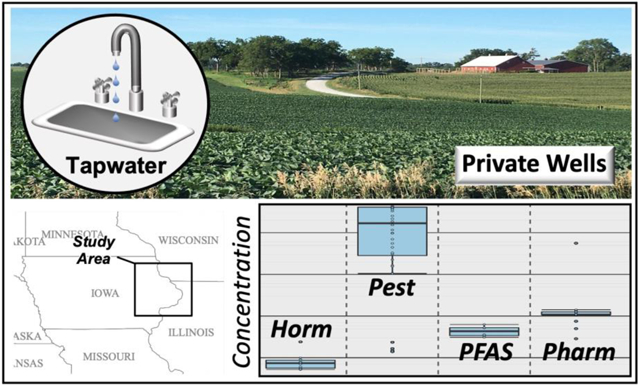
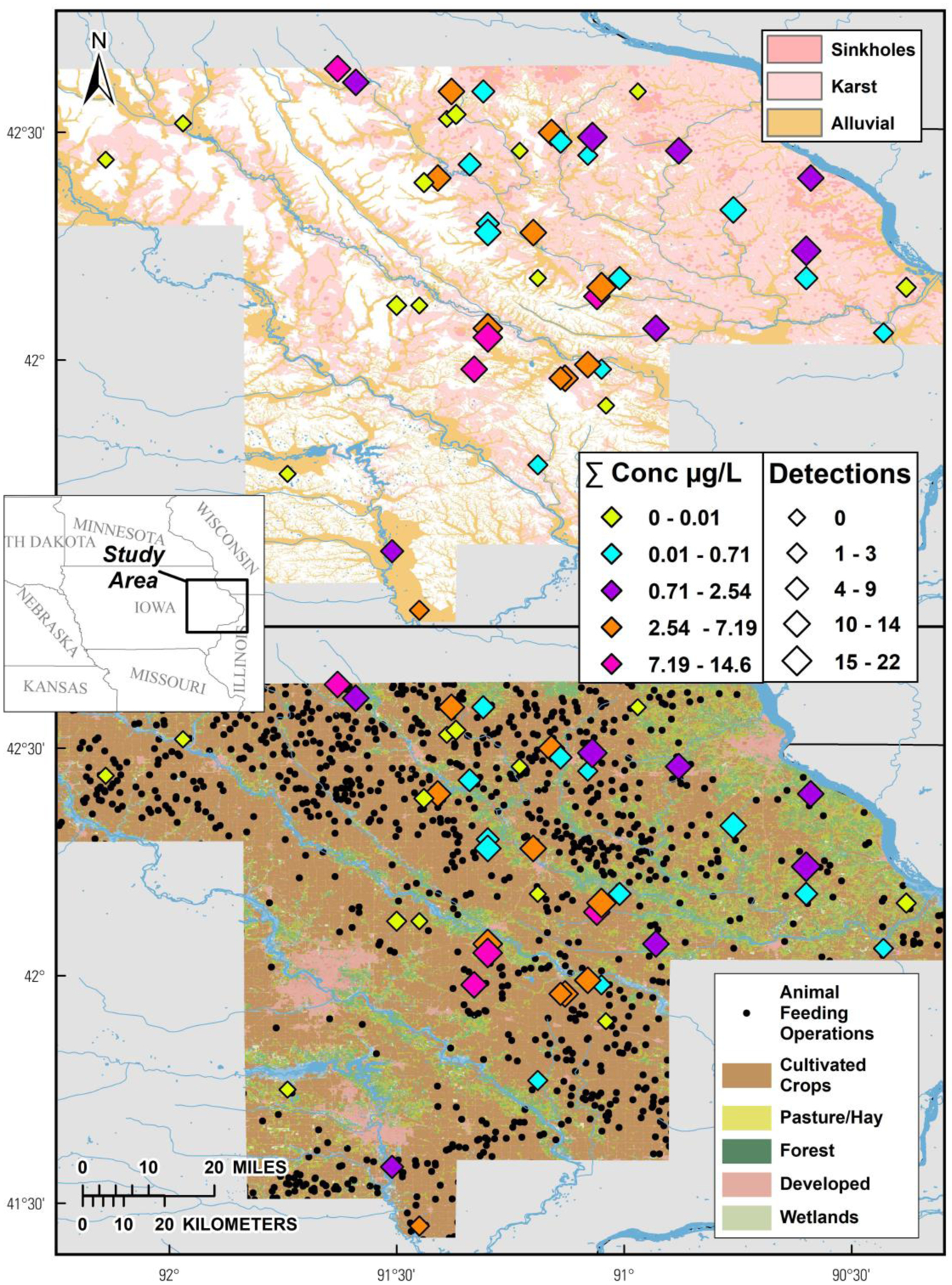
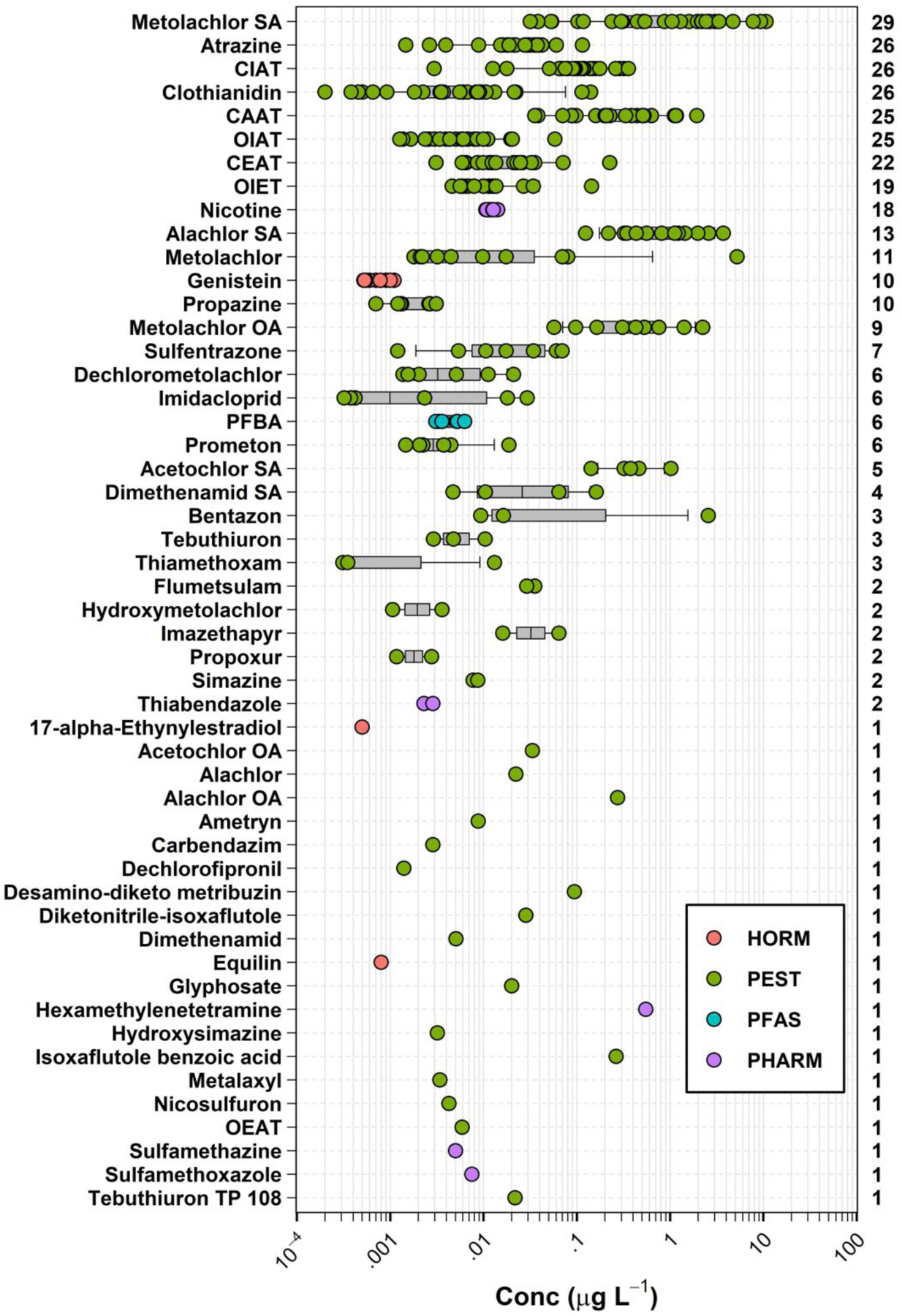
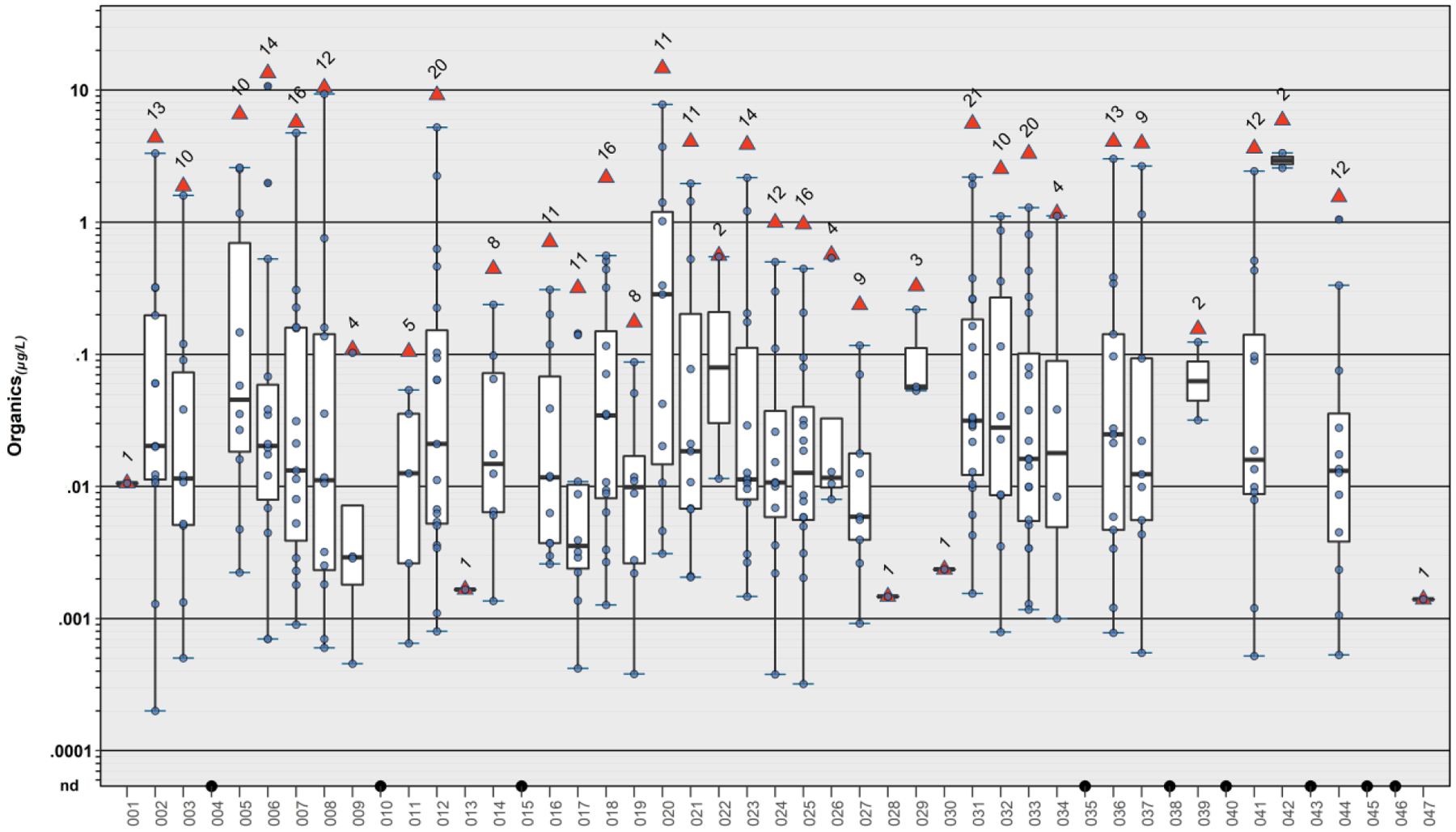
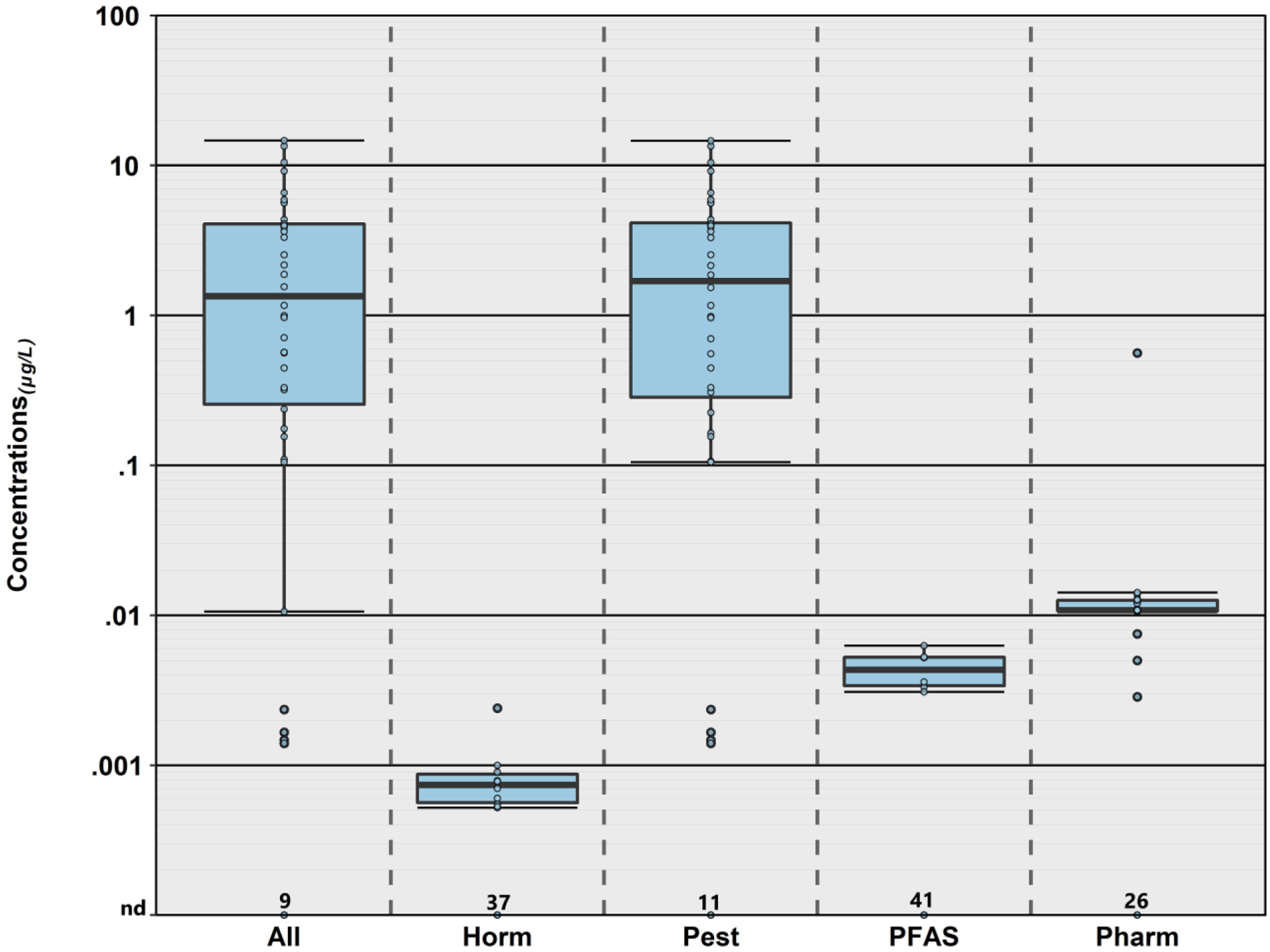
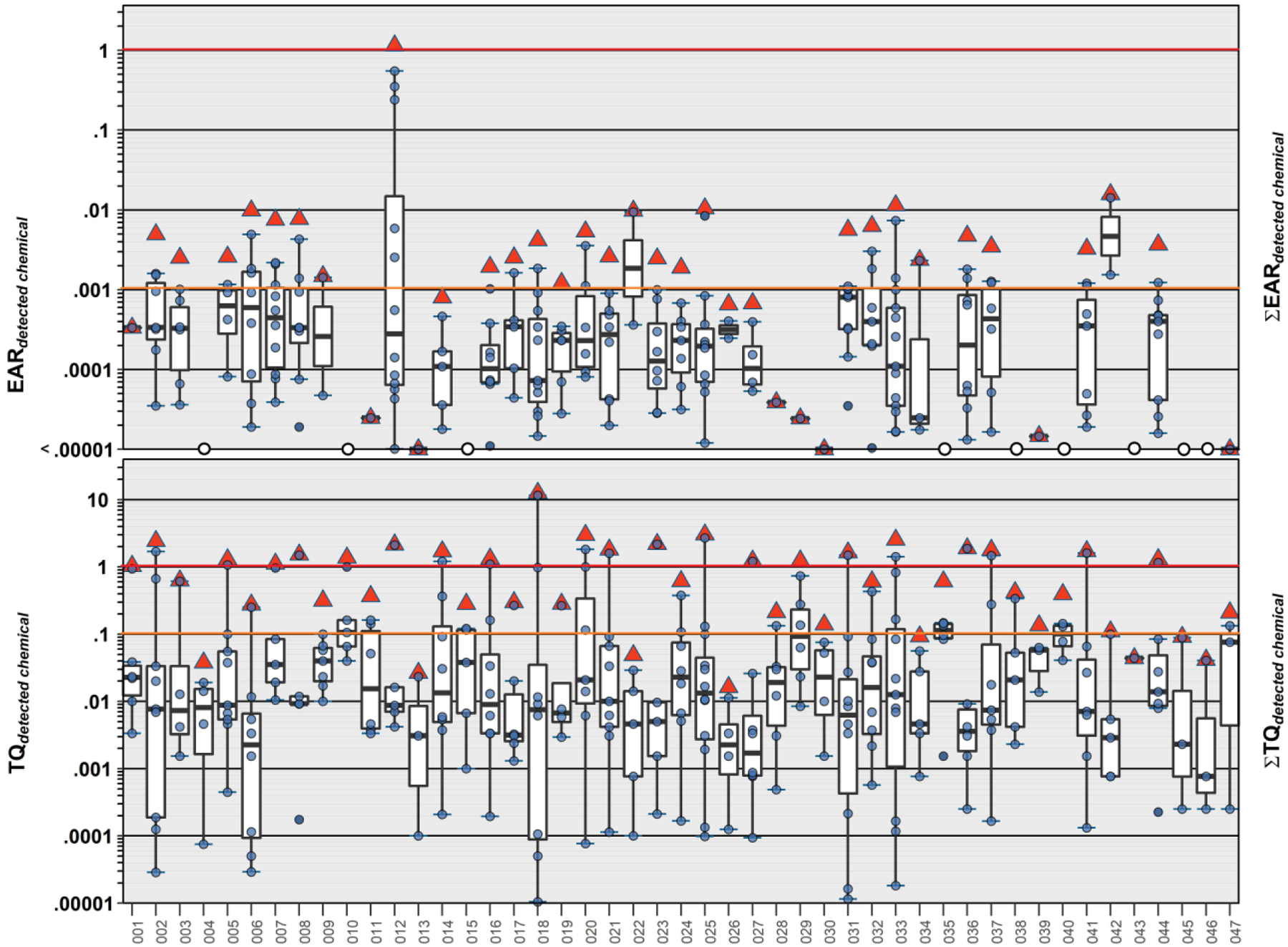
Description:In the United States and globally, contaminant exposure in unregulated private-well point-of-use tapwater (TW) is a recognized public-health data gap and an obstacle to both risk-management and homeowner decision making. To help address the lack of data on broad contaminant exposures in private-well TW from hydrologically-vulnerable (alluvial, karst) aquifers in agriculturally-intensive landscapes, samples were collected in 2018-2019 from 47 northeast Iowa farms and analyzed for 35 inorganics, 437 unique organics, 5 in vitro bioassays, and 11 microbial assays. Twenty-six inorganics and 51 organics, dominated by pesticides and related transformation products (35 herbicide-, 5 insecticide-, and 2 fungicide-related), were observed in TW. Heterotrophic bacteria detections were near ubiquitous (94 % of the samples), with detection of total coliform bacteria in 28 % of the samples and growth on at least one putative-pathogen selective media across all TW samples. Health-based hazard index screening levels were exceeded frequently in private-well TW and attributed primarily to inorganics (nitrate, uranium). Results support incorporation of residential treatment systems to protect against contaminant exposure and the need for increased monitoring of rural private-well homes. Continued assessment of unmonitored and unregulated private-supply TW is needed to model contaminant exposures and human-health risks.
-
Subjects:
-
Keywords:
-
Source:Sci Total Environ. 868:161672
-
Pubmed ID:36657670
-
Pubmed Central ID:PMC9976626
-
Document Type:
-
Funding:
-
Volume:868
-
Download URL:
-
File Type:
 [PDF - 2.02 MB]
 -
Collection(s):
-
Main Document Checksum:urn:sha256:dc7a36482f07a6381826d77e8c32d10b5e7a8a13ee53451c2c342d7a9a9d715f
Supporting Files


File Language:
English
 Was this page helpful?
 Found an issue?

CDC STACKS serves as an archival repository of CDC-published products including
scientific findings, journal articles, guidelines, recommendations, or other public health information authored or
co-authored by CDC or funded partners.
As a repository, CDC STACKS retains documents in their original published format to ensure public access to scientific information.
As a repository, CDC STACKS retains documents in their original published format to ensure public access to scientific information.
You May Also Like
COLLECTION
CDC Public Access