



Work Tasks as Determinants of Respirable and Inhalable Indium Exposure among Workers at an Indium–Tin Oxide Production and Reclamation Facility
Supporting Files

-
2-20-
-
Available in CDC Stacks on 2023-02-27T00:00:00Z

File Language:
English
Details
-
Alternative Title:Ann Work Expo Health
-
Personal Author:
-
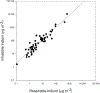
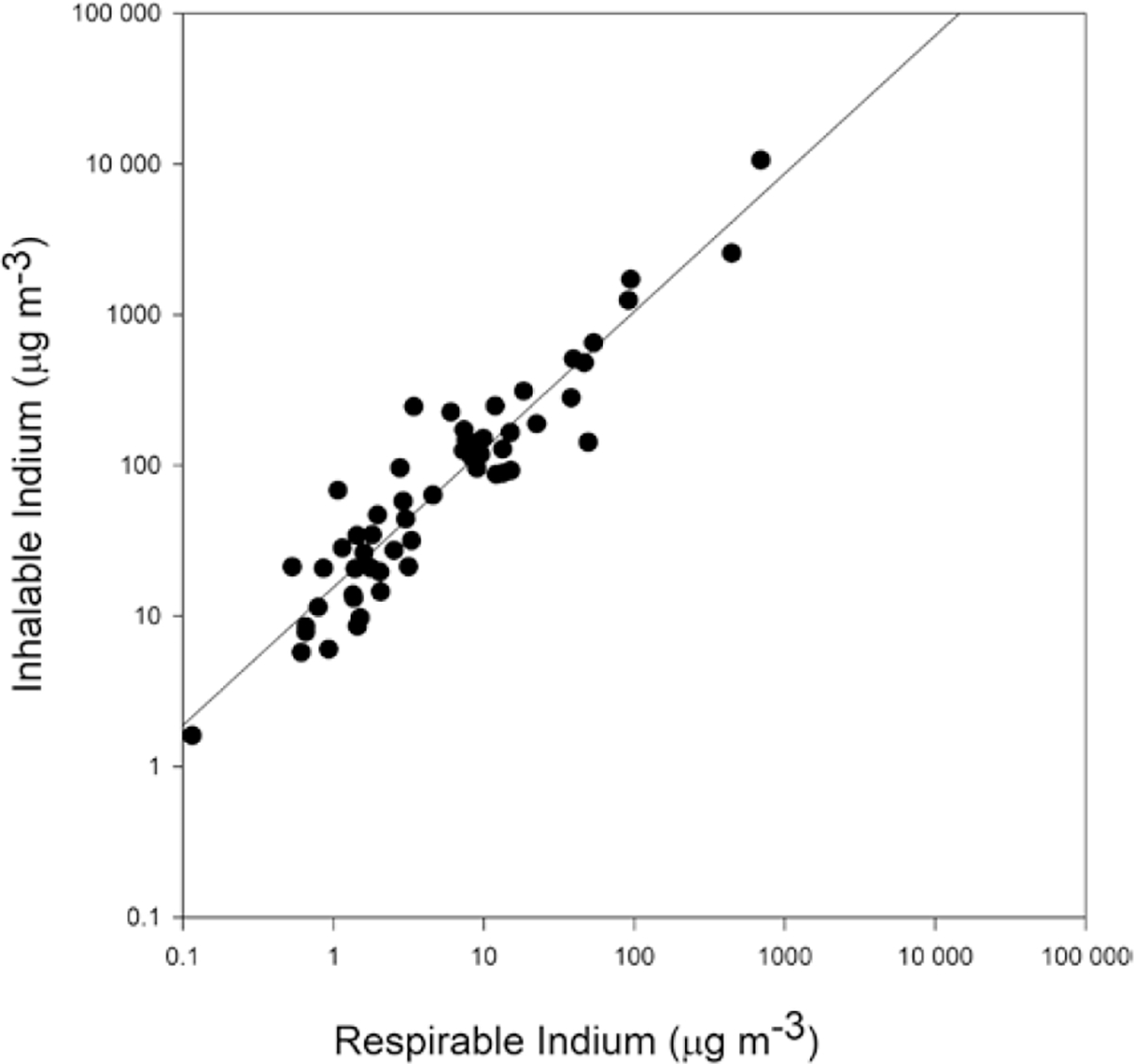
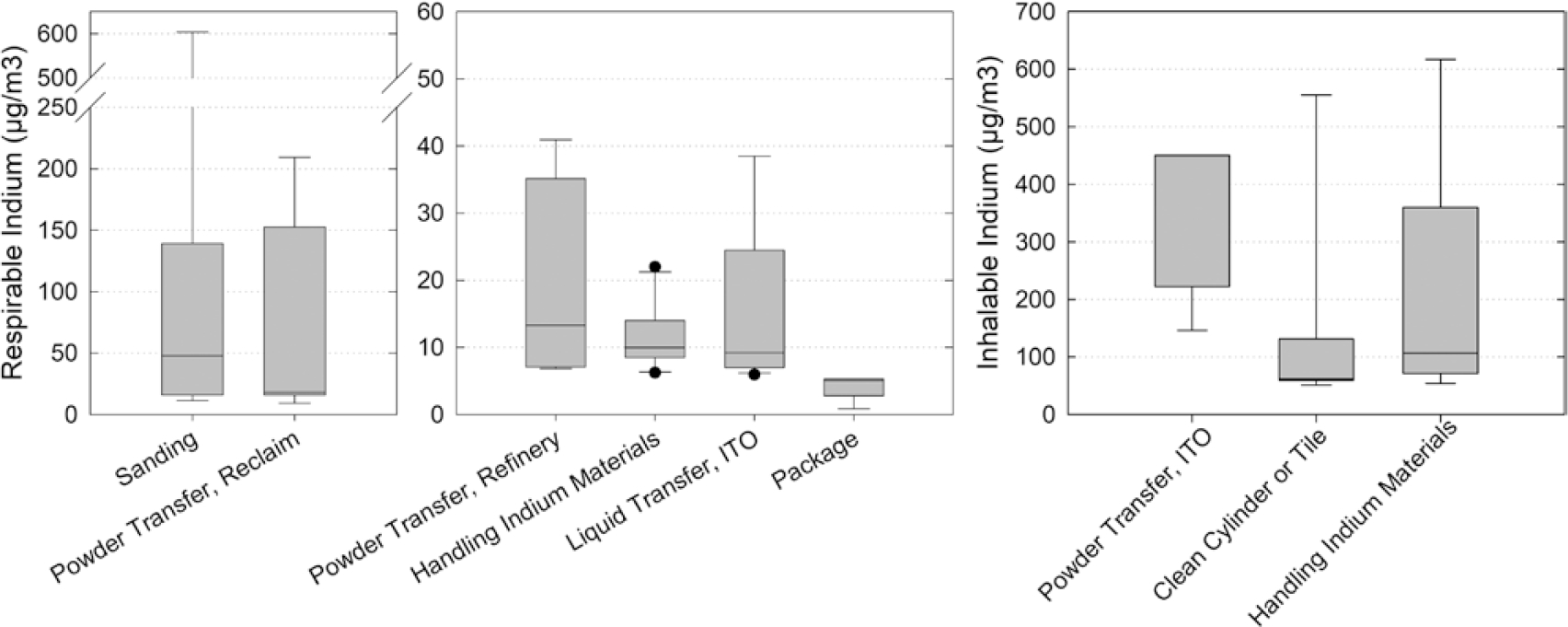
Description:Increased global demand for touch screens, photovoltaics, and optoelectronics has resulted in an increase in the production of indium-tin oxide (ITO). Occupational exposure to indium compounds is associated with the development of indium lung disease. Although many previous epidemiologic investigations highlight an excess of lung abnormalities in workplaces where ITO is produced, few assessments of occupational exposure to respirable and inhalable indium are reported to date. The objective of this study was to identify the determinants of respirable and inhalable indium at an ITO production facility to target exposure interventions. In 2012 and 2014, we conducted exposure assessments at an ITO production facility and collected full-shift personal respirable (n = 159) and inhalable (n = 57) indium samples. We also observed workers and recorded information on task duration and location, materials used, and use of personal protective equipment (PPE). Tasks (n = 121) recorded in task diaries were categorized into 40 similar task groups using the Advanced REACH Tool and process-related information. Mixed-effects models were fit separately for log-transformed respirable and inhalable indium, with random effect of subject and fixed effects of task groups. Overall, respirable and inhalable indium measurements ranged from 0.1 to 796.6 µg m-3 and 1.6 to 10 585.7 µg m-3, respectively, and were highly correlated with Spearman correlation coefficient of 0.90. The final model for respirable indium explained 36.3% of total variance and identified sanding, powder transfer tasks in reclaim, powder transfer tasks in refinery, handling indium materials, and liquid transfer tasks in ITO production as tasks associated with increased respirable indium exposure. The final model for inhalable indium explained 24.6% of total variance and included powder transfer tasks in ITO production, cleaning cylinder or tile, and handling indium material tasks. Tasks identified as strong predictors of full-shift exposure to respirable and inhalable indium can guide the use of engineering, administrative, and PPE controls designed to mitigate occupational exposure to indium. Moreover, since the tasks were aligned with REACH activities, results from this study can also be used to inform REACH activity scenarios.
-
Subjects:
-
Source:Ann Work Expo Health. 64(2):175-184
-
Pubmed ID:31803905
-
Pubmed Central ID:PMC9969414
-
Document Type:
-
Funding:
-
Volume:64
-
Issue:2
-
Download URL:
-
File Type:
 [PDF - 485.00 KB]
 -
Collection(s):
-
Main Document Checksum:urn:sha256:ee2c5cc0cc83dd474cc770c164439128818ff370b1b35641615155a53de6674a
Supporting Files


File Language:
English
 Was this page helpful?
 Found an issue?


CDC STACKS serves as an archival repository of CDC-published products including
scientific findings, journal articles, guidelines, recommendations, or other public health information authored or
co-authored by CDC or funded partners.
As a repository, CDC STACKS retains documents in their original published format to ensure public access to scientific information.
As a repository, CDC STACKS retains documents in their original published format to ensure public access to scientific information.
You May Also Like
COLLECTION
CDC Public Access