


Physiological Evaluation of Cooling Devices in Conjunction With Personal Protective Ensembles Recommended for Use in West Africa
Supporting Files

-
10 2017
-
File Language:
English
Details
-
Alternative Title:Disaster Med Public Health Prep
-
Personal Author:
-
Description:Objective:
Cooling devices (CDs) worn under personal protective equipment (PPE) can alleviate some of the heat stress faced by health care workers responding to the Ebola outbreak in West Africa.
Methods:
Six healthy, young individuals were tested while wearing 4 different CDs or no cooling (control) under PPE in an environmental chamber (32°C/92% relative humidity) while walking (3 METs, 2.5 mph, 0% grade) on a treadmill for 60 minutes. Exercise was preceded by a 15-minute stabilization period and a 15-minute donning period.
Results:
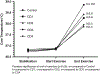
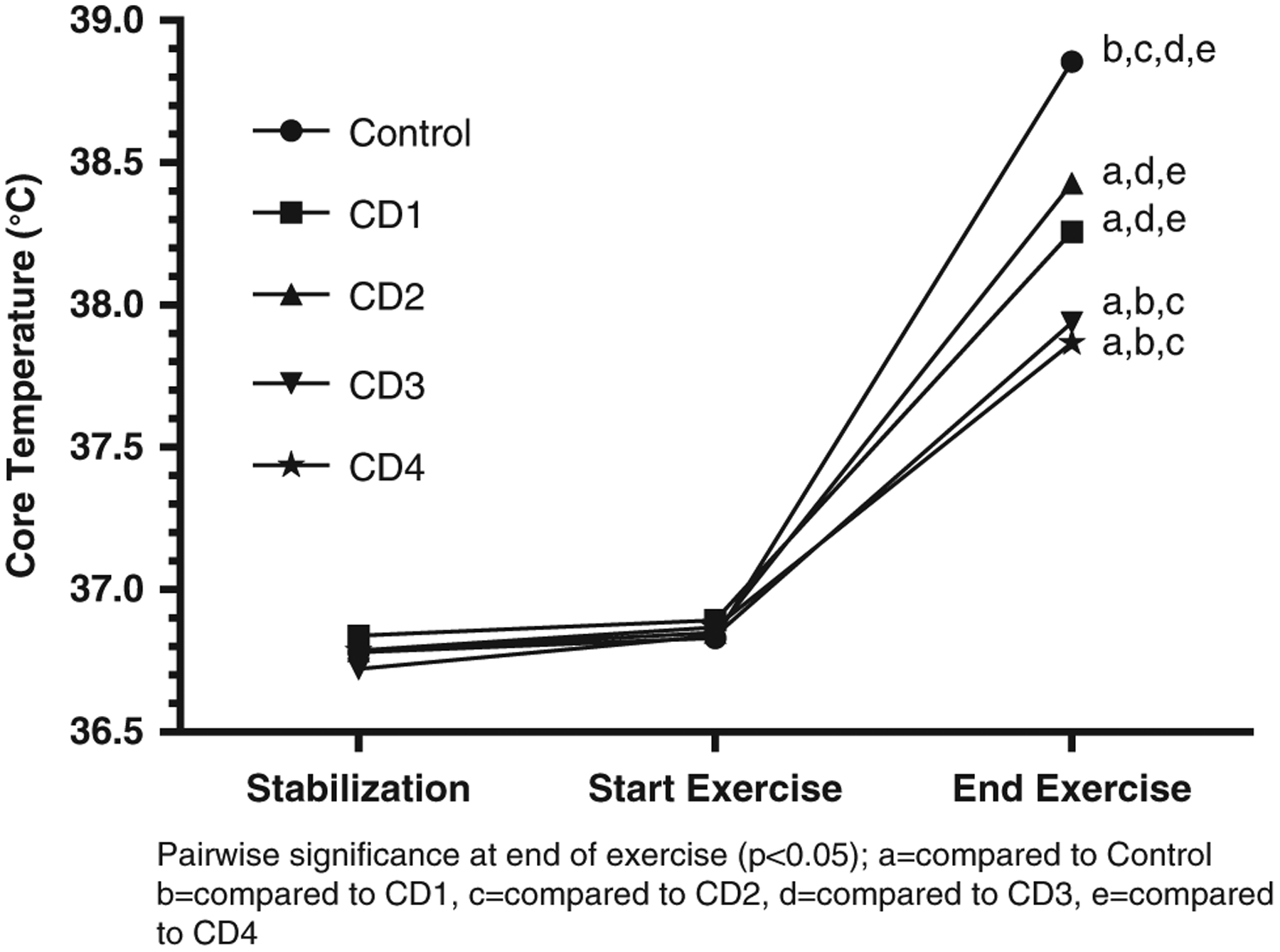
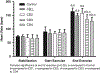
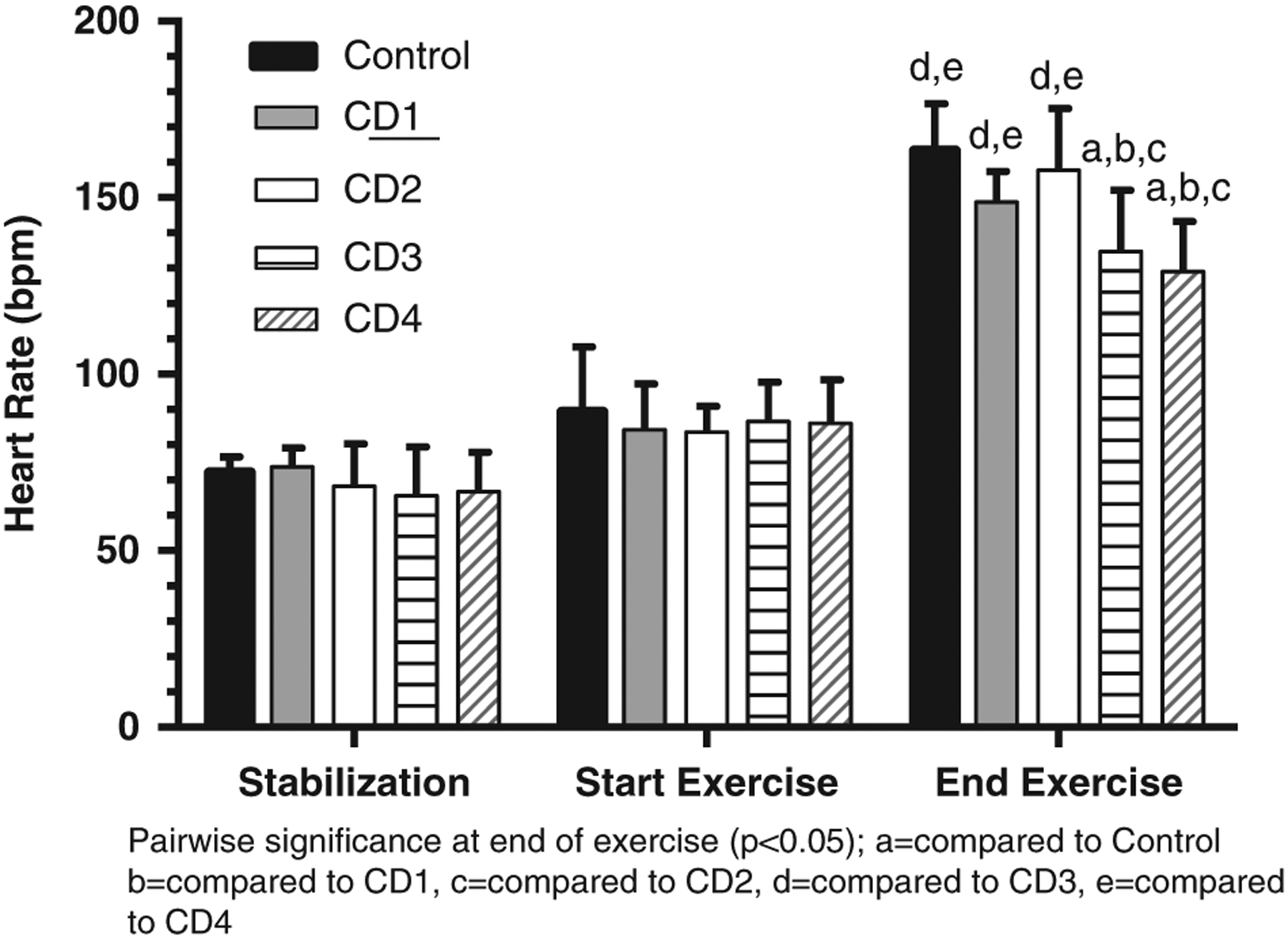
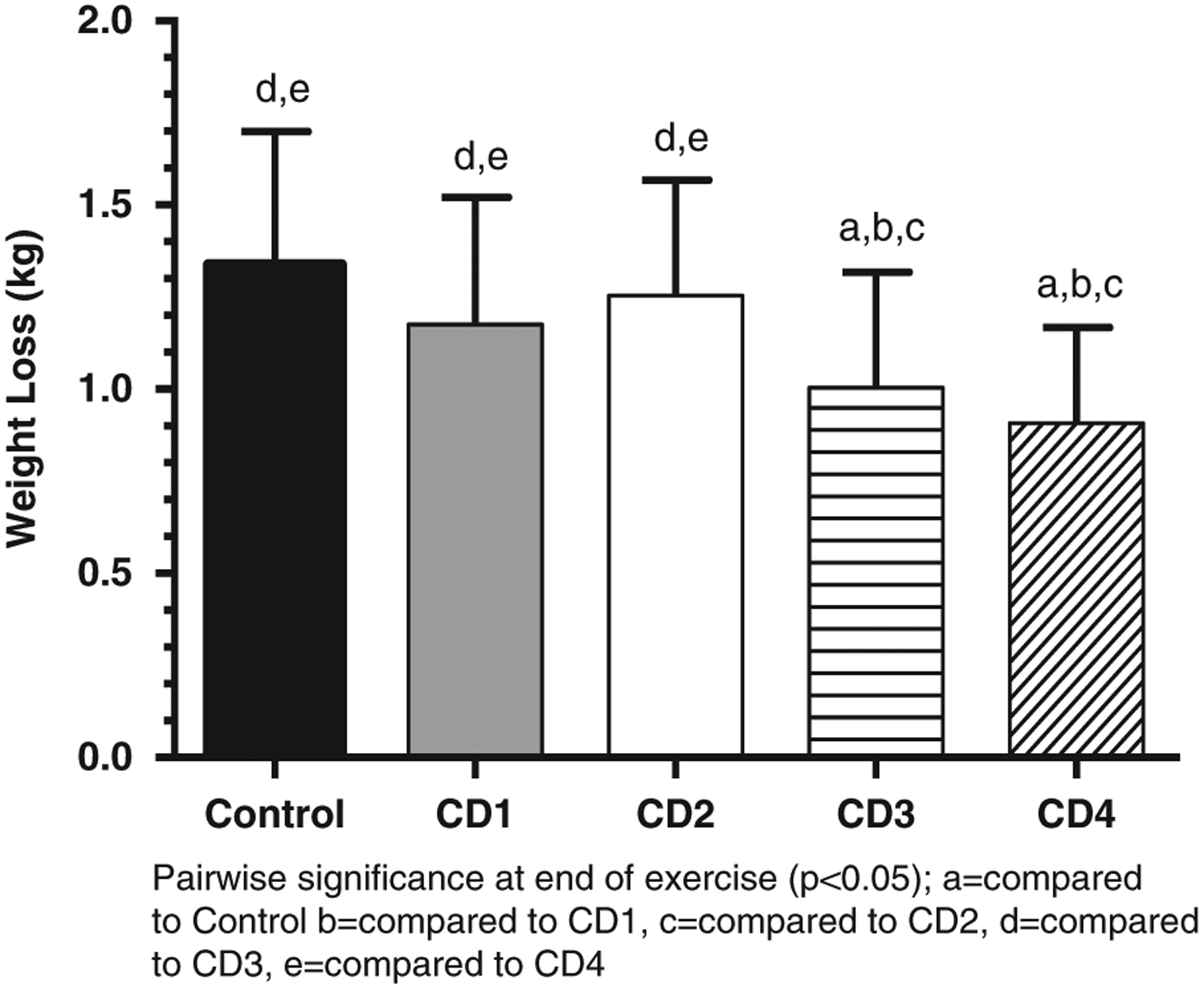
The control condition resulted in a significantly higher rectal temperature (Tre) at the end of the exercise than did all CD conditions (CD1, P = 0.004; CD2, P = 0.01; CD3, P = 0.000; CD4, P = 0.000) with CD1 and CD2 resulting in a higher Tre than CD3 and CD4 (P < 0.05). The control condition resulted in a higher heart rate (HR) at the end of exercise than did the CD3 (P = 0.01) and CD4 (P = 0.009) conditions, whereas the HR of the CD1 and CD2 conditions was higher than that of the CD3 and CD4 conditions (P < 0.05). Weight loss in the control condition was higher than in the CD3 (P = 0.003) and CD4 (P = 0.01) conditions. Significant differences in subjective measurements of thermal stress were found across conditions and time.
Conclusions:
Use of CDs can be advantageous in decreasing the negative physiological and subjective responses to the heat stress encountered by health care workers wearing PPE in hot and humid environments.
-
Subjects:
-
Source:Disaster Med Public Health Prep. 11(5):573-579
-
Pubmed ID:28303772
-
Pubmed Central ID:PMC9903158
-
Document Type:
-
Funding:
-
Place as Subject:
-
Volume:11
-
Issue:5
-
Collection(s):
-
Main Document Checksum:urn:sha256:7c6e09b22e51cb4b88dd9d521d98bd0616adaf5c2453529fb6c816b5e2de1f66
-
Download URL:
-
File Type:
 [PDF
- 584.62 KB
]
[PDF
- 584.62 KB
]
Supporting Files


File Language:
English
ON THIS PAGE

CDC STACKS serves as an archival repository of CDC-published products including
scientific findings,
journal articles, guidelines, recommendations, or other public health information authored or
co-authored by CDC or funded partners.
As a repository, CDC STACKS retains documents in their original published format to ensure public access to scientific information.
As a repository, CDC STACKS retains documents in their original published format to ensure public access to scientific information.
You May Also Like
COLLECTION
CDC Public Access