



An observational cohort study of evolving viral and serological stages of RNA positive blood donors and estimation of incidence of infection during the 2016 Puerto Rican Zika epidemic
Supporting Files

-
12 2020
-
File Language:
English
Details
-
Alternative Title:Lancet Infect Dis
-
Personal Author:
-
Description:Background:
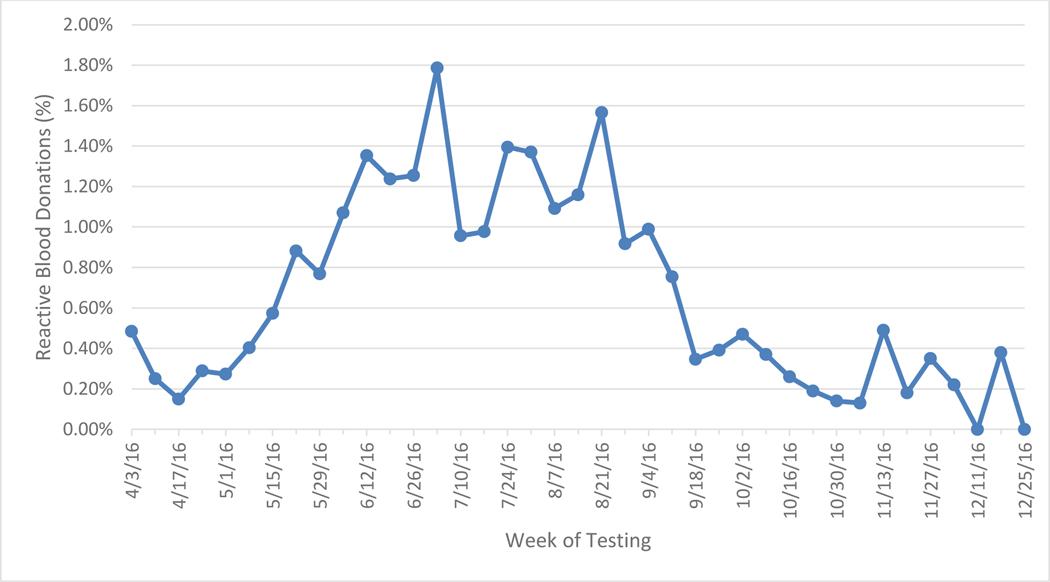
Puerto Rico began screening blood donations for Zika virus (ZIKV) RNA using nucleic acid amplification technology (NAT) on April 3, 2016. Follow-up of positive donors was used to assess viral and serologic marker dynamics through the early stages of ZIKV infection and estimate incidence in the Puerto Rico population.
Methods:
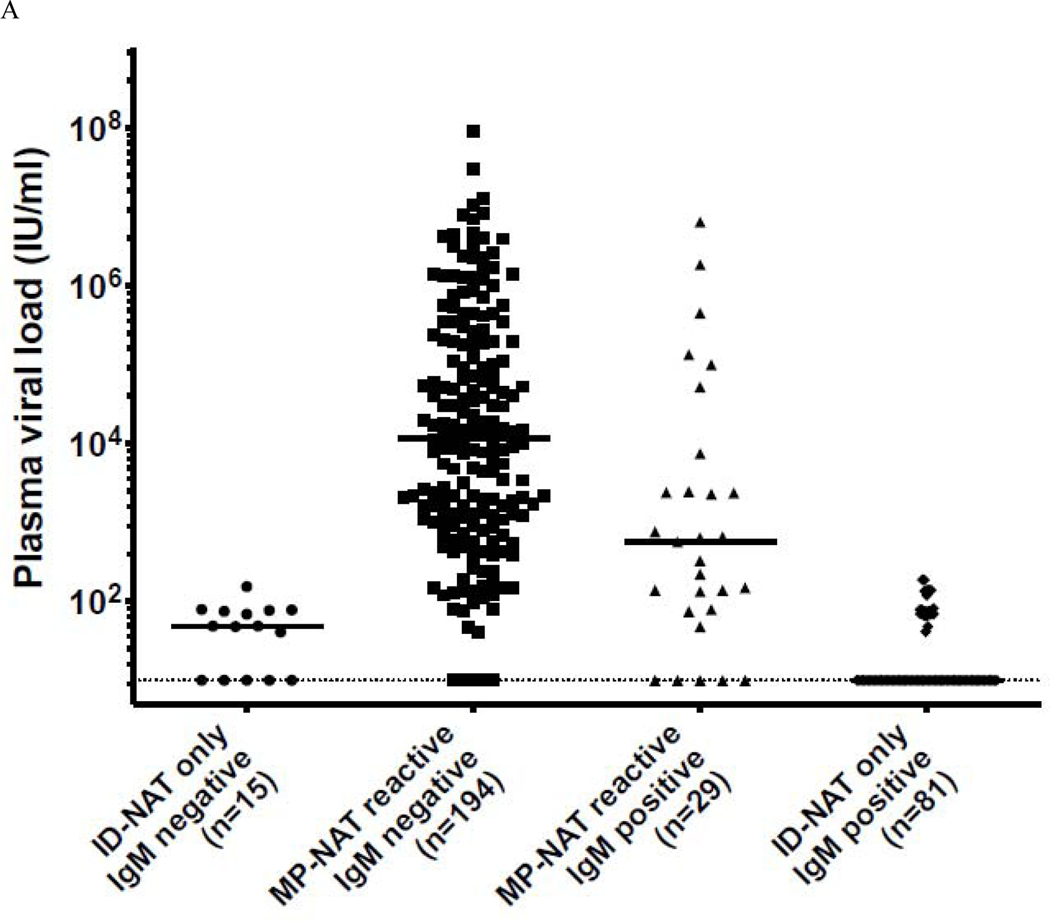
Individual donations from volunteer blood donors were screened for the presence of ZIKV using cobas® Zika nucleic acid testing (NAT). Positive samples were further tested to confirm infection, estimate viral load, and identify ZIKV-specific antibodies by IgM antibody capture ZIKV ELISA. Donations positive in simulated minipools were compared to those detectable only by individual donation NAT with respect to viral load and ZIKV IgM status to evaluate the infection stage. A three step analysis process was used to estimate the mean duration of NAT-reactivity of ZIKV in human plasma and to update the 2016 annual incidence estimate of ZIKV infections.
Findings:
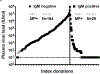
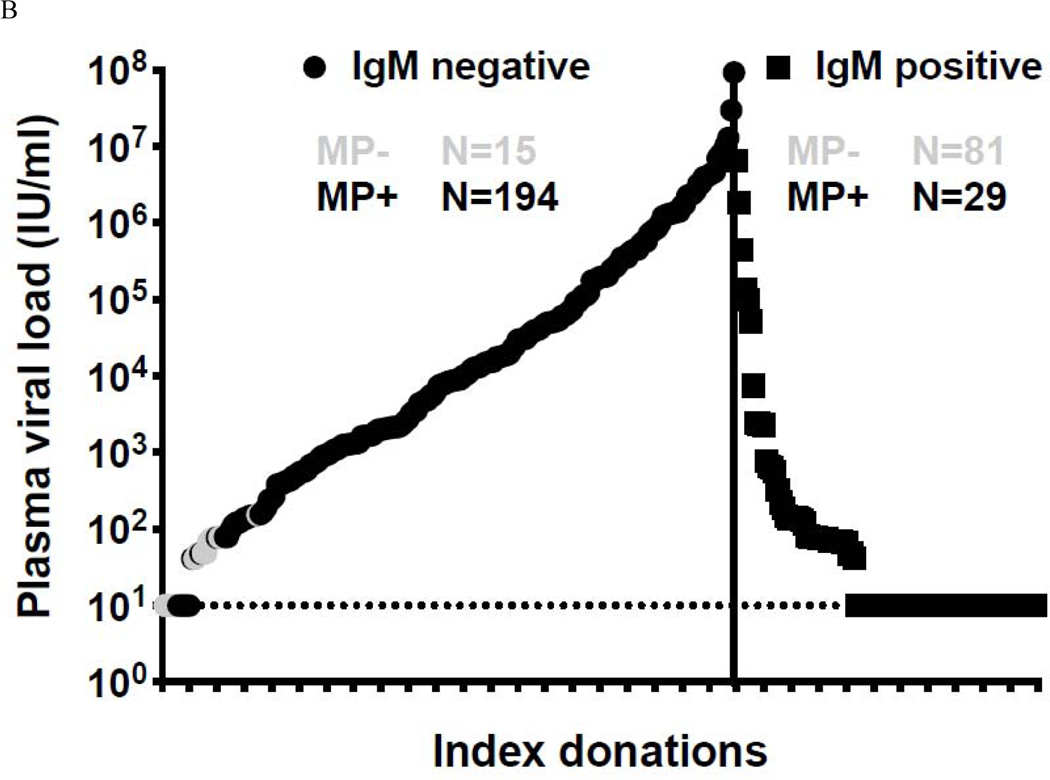
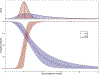
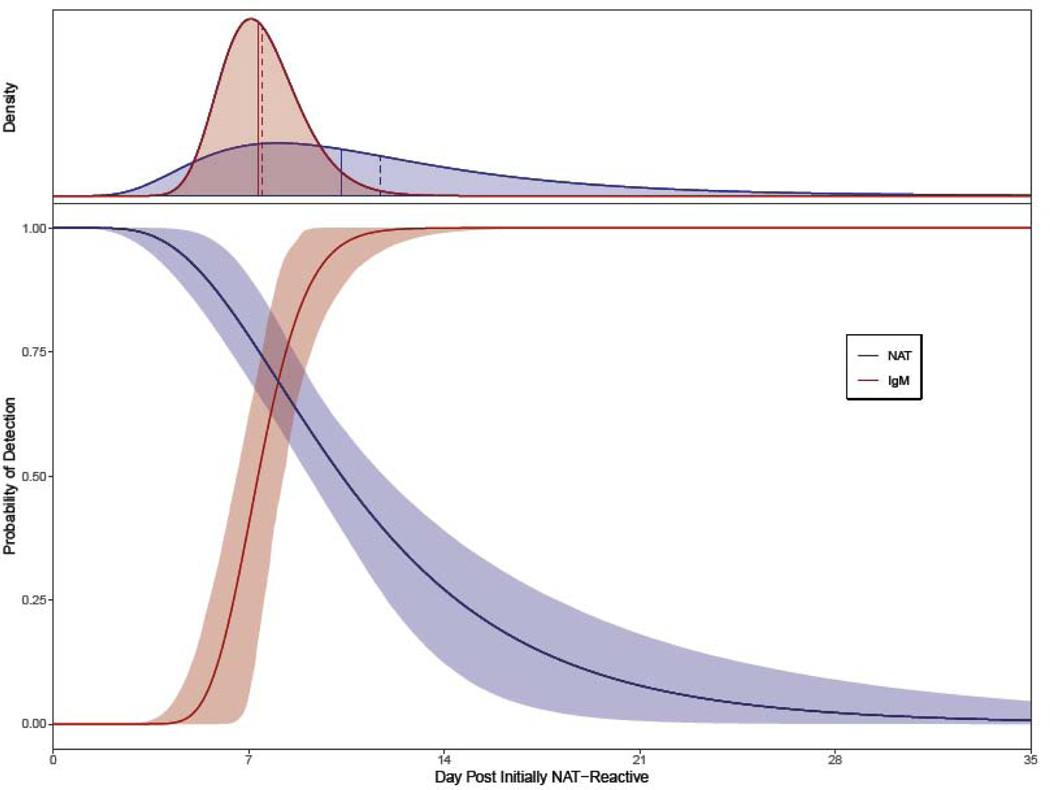
52,942 blood donations in Puerto Rico were screened for ZIKV and 339 confirmed NAT positive (NAT+) donations were detected. IgM negative index donations had markedly higher mean viral loads (1·1 × 106 vs 8·3 × 104 IU/ml) and higher proportions (194 of 209 [93%] IgM negative/Minipool positive versus 29 of 110 [26%] IgM positive/minipool positive) of simulated minipool positive results. The rate of donations detectible only by individual donation NAT and that were IgM+ increased as the epidemic evolved. The mean duration of NAT-detectability was estimated at 11.70 (95% CI 10.06 – 14.36) days. Applying this detection period to the observed rate of NAT+ donations yielded a ZIKV seasonal incidence estimate of 768,101 infections in a population of 3,638,773 in 2016 [21.1% (95% CI 18.1% – 24.1%)].
Interpretation:
Characterization of early ZIKV infection is important for blood safety, since infectivity and utility of screening method likely correlate with viral load and serological stages of infection. Our findings also have important implications for diagnostic testing, public health surveillance and epidemiology, including estimating that ~21% of the PR population was infected during the 2016 outbreak.
Funding:
This project has been funded with Federal funds from the Biomedical Advanced Research and Development Authority, Office of the Assistant Secretary for Preparedness and Response, under Contract #HHSO100201600010C, and by NHLBI REDS-III Central Lab Contract #HHSN268201100001I.
-
Subjects:
-
Source:Lancet Infect Dis. 20(12):1437-1445
-
Pubmed ID:32673594
-
Pubmed Central ID:PMC9817017
-
Document Type:
-
Funding:
-
Volume:20
-
Issue:12
-
Collection(s):
-
Main Document Checksum:urn:sha256:a31d0b39c9e0f43e3a97c64b5d9d18510385daf234560231e7308c34b9436133
-
Download URL:
-
File Type:
 [PDF
- 980.82 KB
]
[PDF
- 980.82 KB
]
Supporting Files


File Language:
English
 Was this page helpful?
 Found an issue?
CDC STACKS serves as an archival repository of CDC-published products including
scientific findings,
journal articles, guidelines, recommendations, or other public health information authored or
co-authored by CDC or funded partners.
As a repository, CDC STACKS retains documents in their original published format to ensure public access to scientific information.
As a repository, CDC STACKS retains documents in their original published format to ensure public access to scientific information.
You May Also Like
COLLECTION
CDC Public Access