



Invasive Infections Caused by Lancefield Groups C/G and A Streptococcus, Western Australia, Australia, 2000–2018
Supporting Files
Public Domain

-
11 2022
File Language:
English
Details
-
Alternative Title:Emerg Infect Dis
-
Personal Author:
-
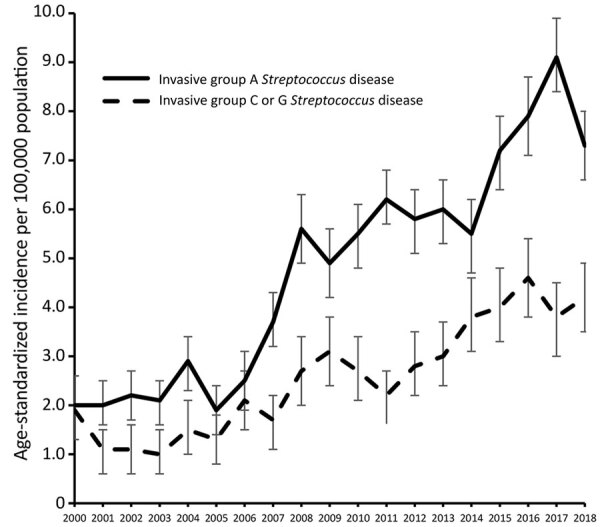
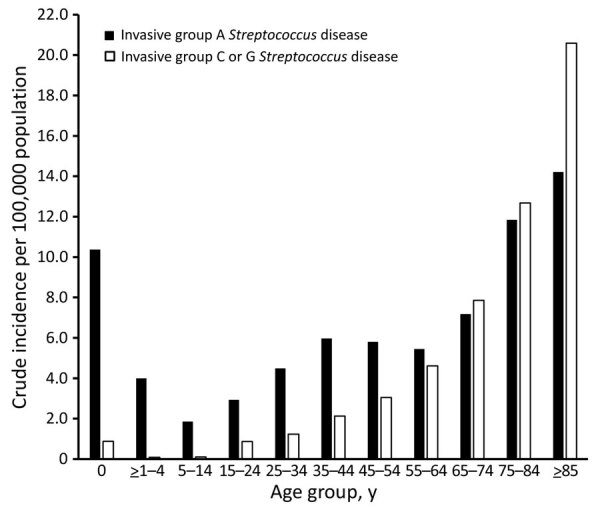
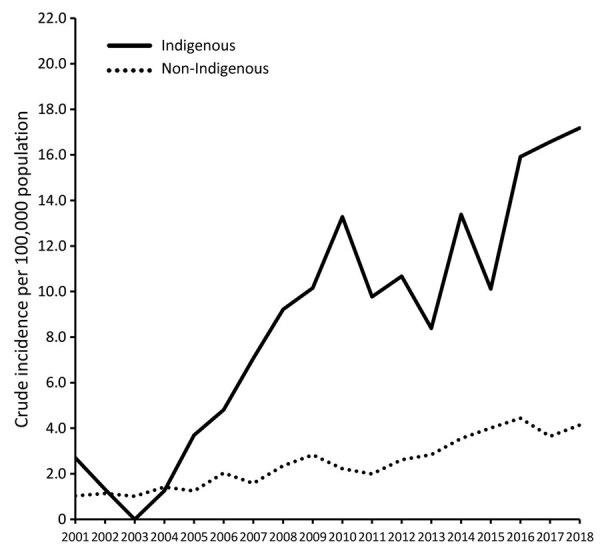
Description:Epidemiologic data on invasive group C/G Streptococcus (iGCGS) infections are sparse internationally. Linked population-level hospital, pathology, and death data were used to describe the disease burden in Western Australia, Australia, during 2000-2018 compared with that of invasive group A Streptococcus (GAS, Streptococcus pyogenes) infections. Of 1,270 cases, 866 (68%) occurred in men. Patients with iGCGS infection were older (median age 62 years) than those with invasive GAS (median age 44 years; p<0.0001). The age and sex-adjusted incidence rate ratio by year was 1.08 (95% CI 1.07-1.09). The incidence rate ratio for Indigenous compared with non-Indigenous Australians was 3.6 (95% CI 3.0-4.3). The all-cause 90-day death rate was 9% for iGCGS infection compared with 7% for invasive GAS (p = 0.03). iGCGS infection was more common in men and older persons and had a higher death rate, perhaps reflecting the effect of age and comorbidities on incidence and death.
-
Subjects:
-
Source:Emerg Infect Dis. 2022; 28(11):2190-2197
-
Pubmed ID:36285885
-
Pubmed Central ID:PMC9622247
-
Document Type:
-
Place as Subject:
-
Volume:28
-
Issue:11
-
Download URL:
-
File Type:
 [PDF - 667.41 KB]
 -
Collection(s):
-
Main Document Checksum:urn:sha256:6e76fe7a651cbbfa8d0490db33d9ded868f4bff8d2accb9541b2abe2160684a6
Supporting Files


File Language:
English
 Was this page helpful?
 Found an issue?


CDC STACKS serves as an archival repository of CDC-published products including
scientific findings, journal articles, guidelines, recommendations, or other public health information authored or
co-authored by CDC or funded partners.
As a repository, CDC STACKS retains documents in their original published format to ensure public access to scientific information.
As a repository, CDC STACKS retains documents in their original published format to ensure public access to scientific information.
You May Also Like
COLLECTION
Emerging Infectious Diseases