



Chemical Contaminant Exposures Assessed Using Silicone Wristbands Among Occupants in Office Buildings in the USA, UK, China, and India
Supporting Files

-
11 2021
-
Available in CDC Stacks on November 01, 2022, 12:00 AM
File Language:
English
Details
-
Alternative Title:Environ Int
-
Personal Author:
-
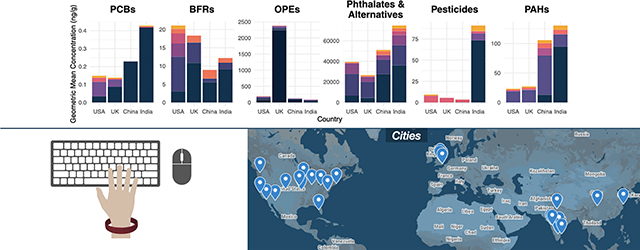
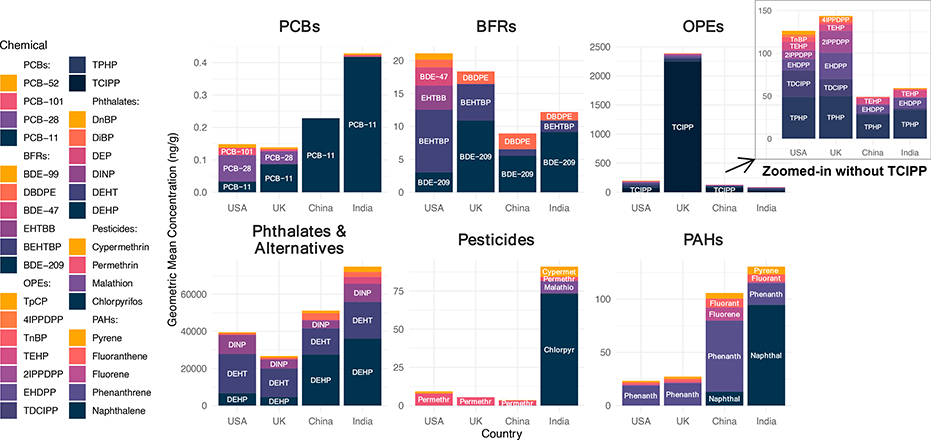
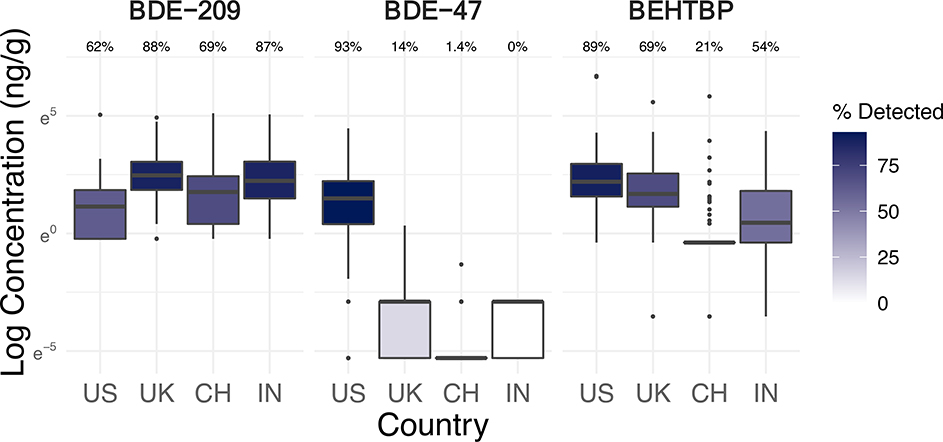
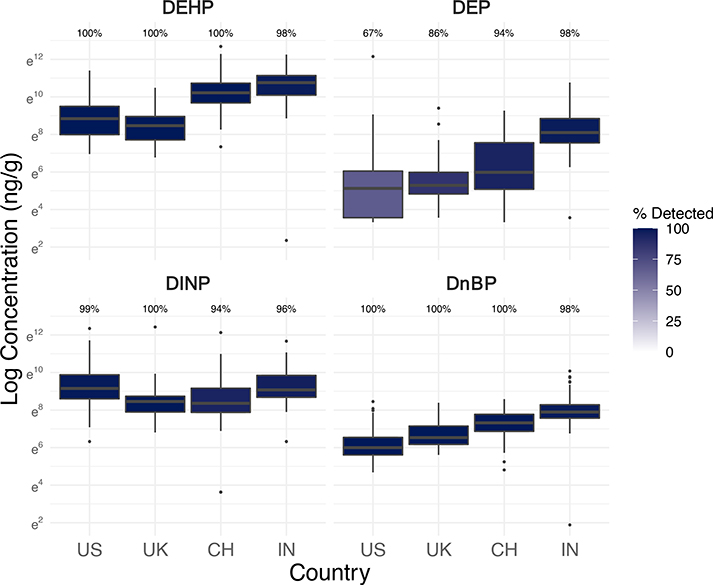
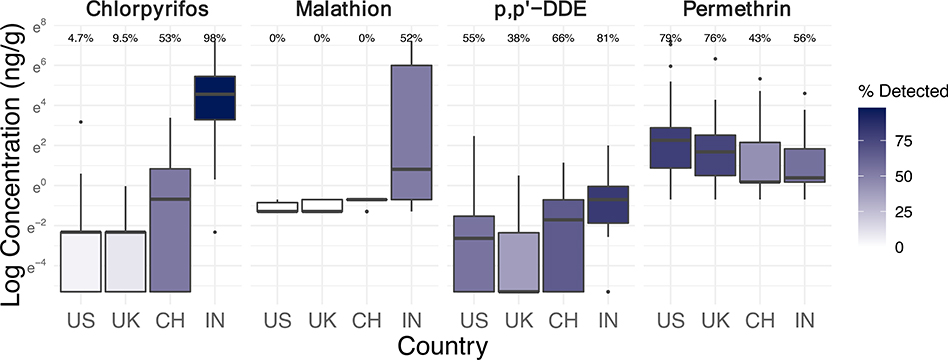
Description:Little is known about chemical contaminant exposures of office workers in buildings globally. Complex mixtures of harmful chemicals accumulate indoors from building materials, building maintenance, personal products, and outdoor pollution. We evaluated exposures to 99 chemicals in urban office buildings in the USA, UK, China, and India using silicone wristbands worn by 251 participants while they were at work. Here, we report concentrations of polychlorinated biphenyls (PCBs), polybrominated diphenyl ethers (PBDEs) and other brominated flame retardants (BFRs), organophosphate esters (OPEs), phthalates and phthalate alternatives, pesticides, and polycyclic aromatic hydrocarbons (PAHs). First, we found major differences in office worker chemical exposures by country, some of which can be explained by regulations and use patterns. For example, exposures to several pesticides were substantially higher in India where there were fewer restrictions and unique malaria challenges, and exposures to flame retardants tended to be higher in the USA and UK where there were historic, stringent furniture flammability standards. Higher exposures to PAHs in China and India could be due to high levels of outdoor air pollution that penetrates indoors. Second, some office workers were still exposed to legacy PCBs, PBDEs, and pesticides, even decades after bans or phase-outs. Third, we identified exposure to a contemporary PCB that is not covered under legacy PCB bans due to its presence as an unintentional byproduct in materials. Fourth, exposures to novel BFRs, OPEs, and other chemicals commonly used as substitutes to previously phased-out chemicals were ubiquitous. Fifth, some exposures were influenced by individual factors, not just countries and buildings. Phthalate exposures, for example, were related to personal care product use, country restrictions, and building materials. Overall, we found substantial country differences in chemical exposures and continued exposures to legacy phased-out chemicals and their substitutes in buildings. These findings warrant further research on the role of chemicals in office buildings on worker health.
-
Keywords:
-
Source:Environ Int. 156:106727
-
Pubmed ID:34425641
-
Pubmed Central ID:PMC8409466
-
Document Type:
-
Funding:
-
Volume:156
-
Download URL:
-
File Type:
 [PDF - 1.13 MB]
 -
Collection(s):
-
Main Document Checksum:urn:sha-512:c0fdf07ae7d7367010e44efc3382ae6e6e2763a75d640ddf17cee0b5b92fef24d72cdbc4f03b59913d0b3141404678ceda6ce15406f03c83227c46bc4e8338a2
Supporting Files


File Language:
English
 Was this page helpful?
 Found an issue?


CDC STACKS serves as an archival repository of CDC-published products including
scientific findings, journal articles, guidelines, recommendations, or other public health information authored or
co-authored by CDC or funded partners.
As a repository, CDC STACKS retains documents in their original published format to ensure public access to scientific information.
As a repository, CDC STACKS retains documents in their original published format to ensure public access to scientific information.
You May Also Like
COLLECTION
CDC Public Access