


Risk Factors and Characteristics of Low Pathogenic Avian Influenza Virus Isolated from Commercial Poultry in Tunisia
Supporting Files
Public Domain

-
Jan 11 2013
-
File Language:
English
Details
-
Alternative Title:PLoS One
-
Personal Author:
-
Description:Objective
Estimate the seroprevalence of influenza A virus in various commercial poultry farms and evaluate specific risk factors as well as analyze their genetic nature using molecular assays.
Materials and Methods
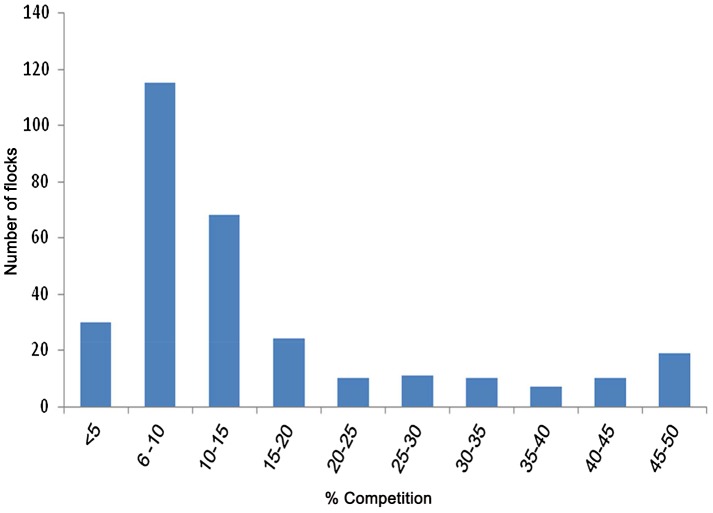
This report summarizes the findings of a national survey realized from October 2010 to May 2011 on 800 flocks in 20 governorates. Serum samples were screened for the presence of specific influenza virus antibodies using cELISA test. Additionally, swab samples were tested by real time and conventional RT-PCR and compared with results obtained by others assays. Phylogenetic and genetic analyses of the glycoproteins were established for some strains.
Results
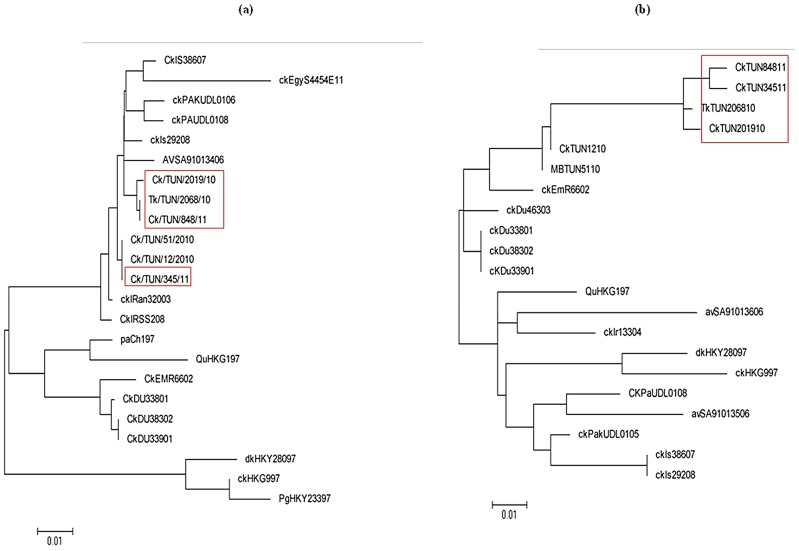
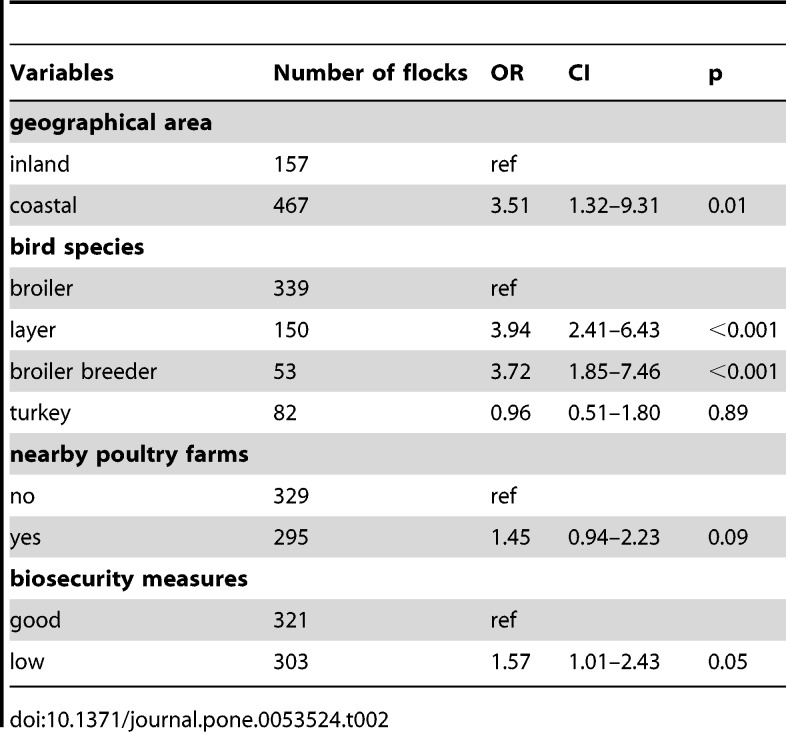
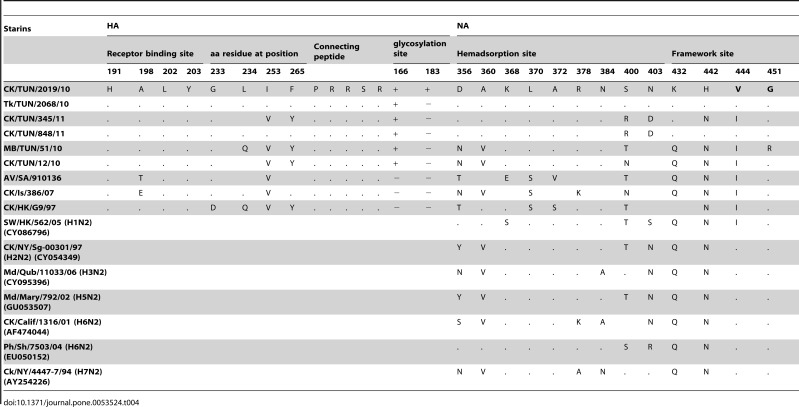
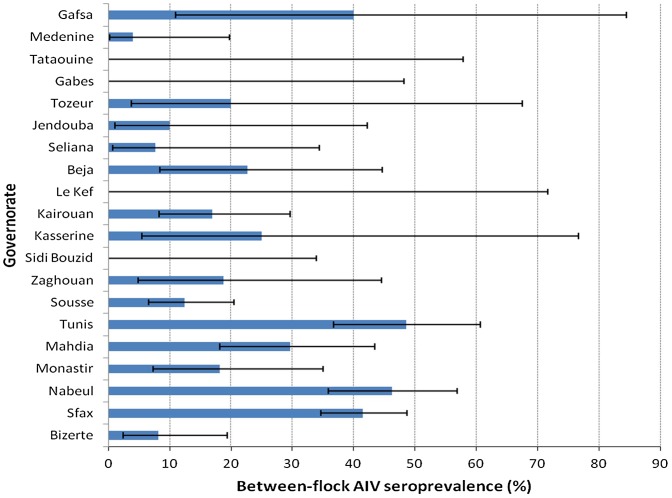
Out of the 800 chicken and turkey flocks tested by cELISA, 223 showed positive anti-NP antibodies (28.7%, 95% CI: 25.6–32.1). Significantly higher seroprevalence was found among the coastal areas compared to inland and during the autumn and winter. Broiler flocks showed significantly lower seroprevalence than layers and broiler breeders. The influenza virus infection prevalence increased after the laying phase among layer flocks. In addition, AIV seropositivity was significantly associated with low biosecurity measures. The Ag EIA and rRT-PCR tests revealed significantly higher numbers of AI positive samples as compared to cell cultures or egg inoculation. All new strains were subtyped as H9N2 by real time and conventional RT-PCR. Drift mutations, addition or deletion of glycosylation sites were likely to have occurred in the HA and NA glycoproteins of Tunisian strains resulting in multiple new amino acid substitutions. This fact may reflect different evolutionary pressures affecting these glycoproteins. The role of these newly detected substitutions should be tested.
Conclusion
Our findings highlight the potential risk of AIV to avian health. Strict enforcement of biosecurity measures and possible vaccination of all poultry flocks with continuous monitoring of poultry stations may ensure reduction of AIV prevalence and avoid emergence of more pathogenic strains.
-
Subjects:
-
Source:PLoS One. 2013; 8(1).
-
Document Type:
-
Place as Subject:
-
Volume:8
-
Issue:1
-
Collection(s):
-
Main Document Checksum:urn:sha256:d2bdb810eedc2d88deb857aa6492aff977e421080754298aec972c6da29abf3f
-
Download URL:
-
File Type:
 [PDF
- 769.36 KB
]
[PDF
- 769.36 KB
]
Supporting Files


File Language:
English
ON THIS PAGE












CDC STACKS serves as an archival repository of CDC-published products including
scientific findings,
journal articles, guidelines, recommendations, or other public health information authored or
co-authored by CDC or funded partners.
As a repository, CDC STACKS retains documents in their original published format to ensure public access to scientific information.
As a repository, CDC STACKS retains documents in their original published format to ensure public access to scientific information.
You May Also Like
COLLECTION
CDC Public Access