



Multivariate GWAS of Structural Dental Anomalies and Dental Caries in a Multi-Ethnic Cohort
Supporting Files

-
2021 ; 2021
-
Available in CDC Stacks on 2022-10-19T00:00:00Z
File Language:
English
Details
-
Alternative Title:Front Dent Med
-
Personal Author:Alotaibi, Rasha N. ; Howe, Brian J. ; Moreno Uribe, Lina M. ; Ramirez, Consuelo Valencia ; Restrepo, Claudia ; Deleyiannis, Frederic W.B. ; Padilla, Carmencita ; Orioli, Ieda M. ; Buxó, Carmen J. ; Hecht, Jacqueline T. ; Wehby, George L. ; Neiswanger, Katherine ; Murray, Jeffery C. ; Shaffer, John R. ; Weinberg, Seth M. ; Marazita, Mary L.
-
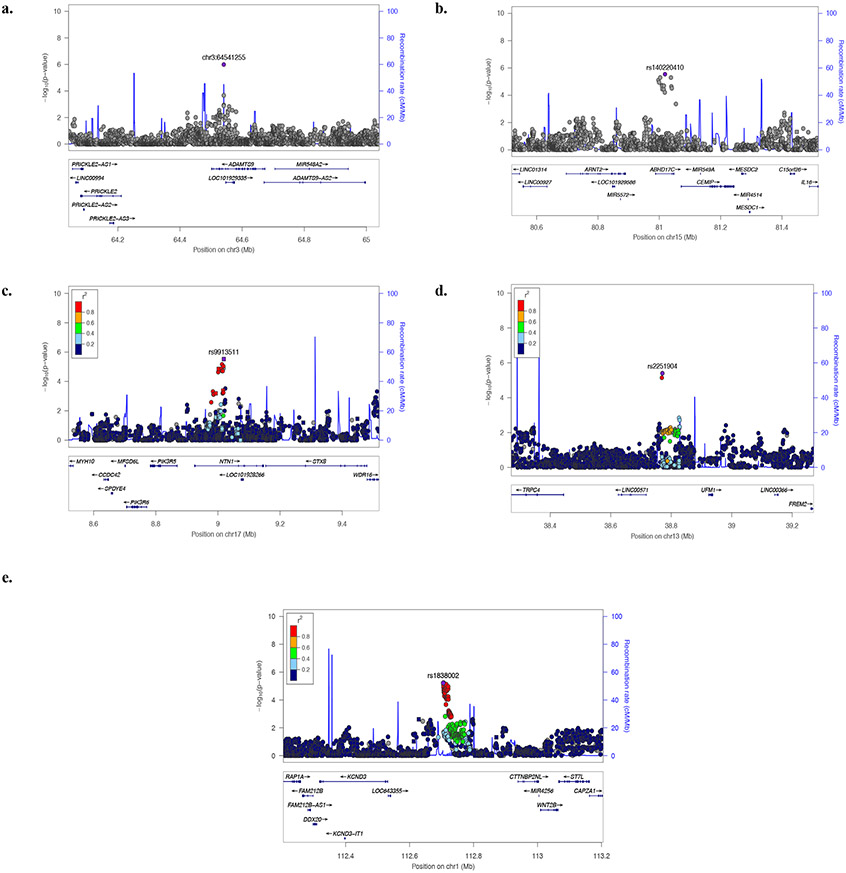
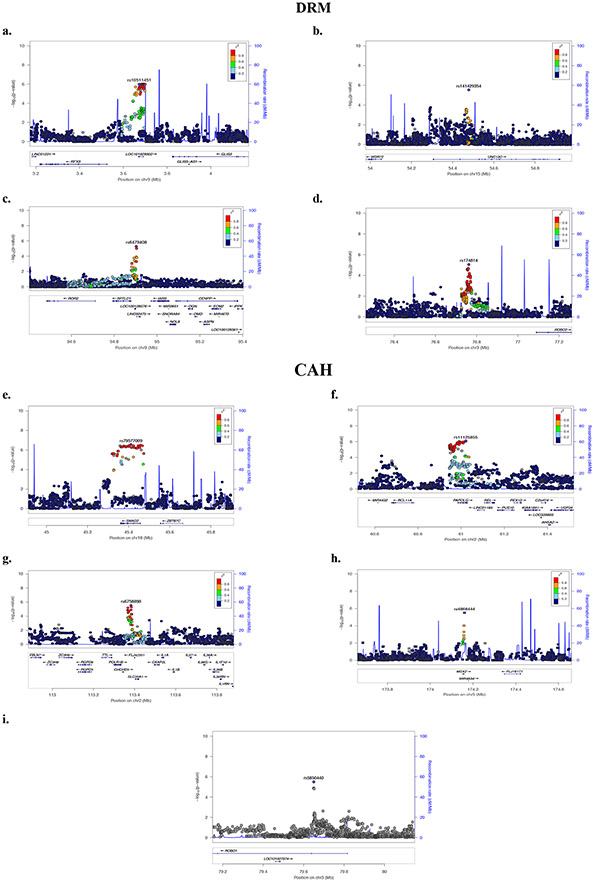
Description:Odontogenesis is a complex process, where disruption can result in dental anomalies and/or increase the risk of developing dental caries. Based on previous studies, certain dental anomalies tend to co-occur in patients, suggesting that these traits may share common genetic and etiological components. The main goal of this study was to implement a multivariate genome-wide association study approach to identify genetic variants shared between correlated structural dental anomalies and dental caries. Our cohort (| = 3,579) was derived from the Pittsburgh Orofacial Clefts Study, where multiple dental traits were assessed in both the unaffected relatives of orofacial cleft (OFC) cases (| = 2,187) and unaffected controls (| = 1,392). We identified four multivariate patterns of correlated traits in this data: tooth agenesis, impaction, and rotation (AIR); enamel hypoplasia, displacement, and rotation (HDR); displacement, rotation, and mamelon (DRM); and dental caries, tooth agenesis and enamel hypoplasia (CAH). We analyzed each of these four models using genome-wide multivariate tests of association. No genome-wide statistically significant results were found, but we identified multiple suggestive association signals (| < 10|) near genes with known biological roles during tooth development, including | and | associated with AIR; |, |, and | associated with HDR and DRM; | associated with DRM; | associated with HDR; and |, and | associated with CAH. This is the first study to investigate genetic associations for multivariate patterns of correlated dental anomalies and dental caries. Further studies are needed to replicate these results in independent cohorts.
-
Keywords:
-
Source:Front Dent Med. 2
-
Pubmed ID:36267138
-
Pubmed Central ID:PMC9581442
-
Document Type:
-
Funding:U54 GM133807/GM/NIGMS NIH HHSUnited States/ ; HHSN268201200008C/HL/NHLBI NIH HHSUnited States/ ; U01 DE024425/DE/NIDCR NIH HHSUnited States/ ; R21 DE016930/DE/NIDCR NIH HHSUnited States/ ; HHSN268201200008I/HL/NHLBI NIH HHSUnited States/ ; K99 DE024571/DE/NIDCR NIH HHSUnited States/ ; R01 DD000295/DD/NCBDD CDC HHSUnited States/ ; R37 DE008559/DE/NIDCR NIH HHSUnited States/ ; R01 DE011931/DE/NIDCR NIH HHSUnited States/ ; R00 DE024571/DE/NIDCR NIH HHSUnited States/ ; R01 DE016148/DE/NIDCR NIH HHSUnited States/
-
Volume:2
-
Download URL:
-
File Type:
 [PDF - 1.38 MB]
 -
Collection(s):
-
Main Document Checksum:urn:sha-512:89c9349ea87a6b46517da5de56b991075fd6fce94e18a5ad07ae6a7c95e8a574fa18ec13dfa8a2a5c0f5f43f71ef2b4c271be7fa9084df4eeacb569ec4aa4e9f
Supporting Files


File Language:
English
 Was this page helpful?
 Found an issue?



CDC STACKS serves as an archival repository of CDC-published products including
scientific findings, journal articles, guidelines, recommendations, or other public health information authored or
co-authored by CDC or funded partners.
As a repository, CDC STACKS retains documents in their original published format to ensure public access to scientific information.
As a repository, CDC STACKS retains documents in their original published format to ensure public access to scientific information.
You May Also Like
COLLECTION
CDC Public Access