



Coverage of maternal viral load monitoring during pregnancy in South Africa: Results from the 2019 national Antenatal HIV Sentinel Survey
Supporting Files

-
10 2021
-
Available in CDC Stacks on October 04, 2022, 12:00 AM

File Language:
English
Details
-
Alternative Title:HIV Med
-
Personal Author:
-
Description:Objectives:
South Africa has made remarkable progress in increasing the coverage of antiretroviral therapy (ART) among pregnant women; however, viral suppression among pregnant women receiving ART is reported to be low. Access to routine viral load testing is crucial to identify women with unsuppressed viral load early in pregnancy and to provide timely intervention to improve viral suppression. This study aimed to determine the coverage of maternal viral load monitoring nationally, focusing on viral load testing, documentation of viral load test results, and viral suppression (viral load < 50 copies/mL). At the time of this study, the first-line regimen for women initiating ART during pregnancy was non-nucleoside reverse transcriptase (NNRTI)-based regimen.
Methods:
Between 1 October and 15 November 2019, a cross-sectional survey was conducted among 15- to 49-year-old pregnant women attending antenatal care in 1589 nationally representative public health facilities. Data on ART status, viral load testing and viral load test results were extracted from medical records. Logistic regression was used to examine factors associated with coverage of viral load testing.
Results:
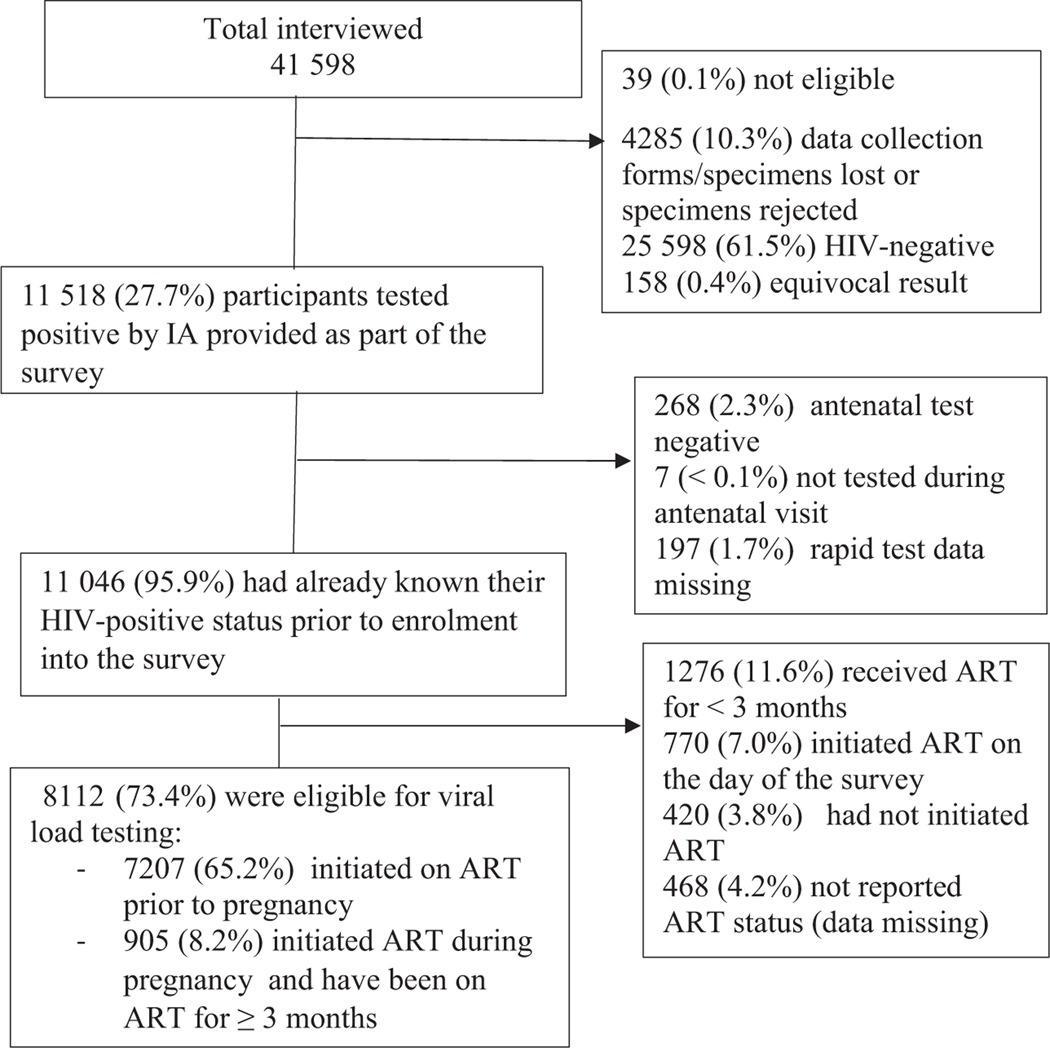
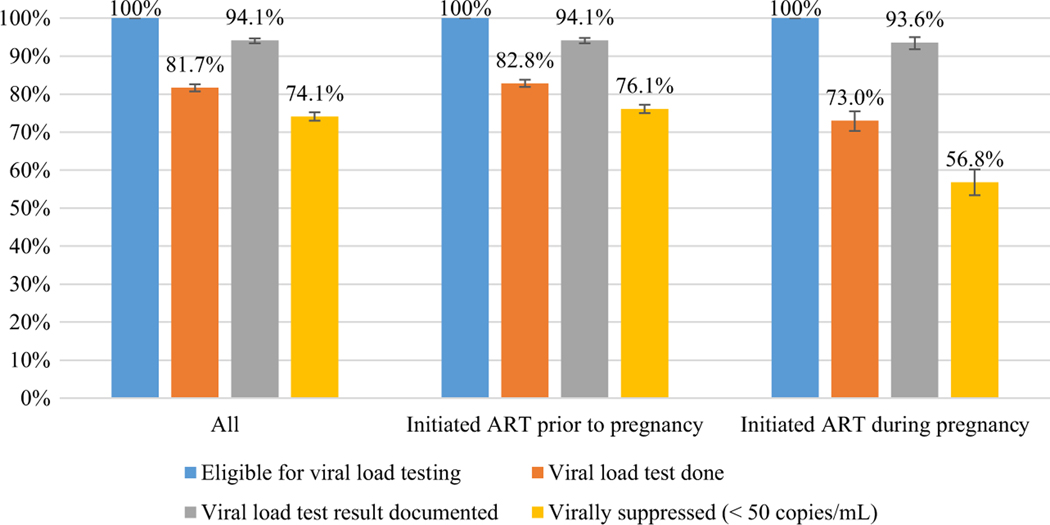
Of 8112 participants eligible for viral load testing, 81.7% received viral load testing, and 94.1% of the viral load test results were documented in the medical records. Of those who had viral load test results documented, 74.1% were virally suppressed. Women initiated on ART during pregnancy and who received ART for three months had lower coverage of viral load testing (73%) and viral suppression (56.8%) compared with women initiated on ART before pregnancy (82.8% and 76.1%, respectively). Initiating ART during pregnancy rather than before pregnancy was associated with a lower likelihood of receiving a viral load test during pregnancy (adjusted odds ratio = 1.6, 95% confidence interval: 1.4–1.8).
Conclusions:
Viral load result documentation was high; viral load testing could be improved especially among women initiating ART during pregnancy. The low viral suppression among women who initiated ART during pregnancy despite receiving ART for three months highlights the importance of enhanced adherence counselling during pregnancy. Our finding supports the WHO recommendation that a Dolutegravir-containing regimen be the preferred regimen for women who are newly initiating ART during pregnancy for more rapid viral suppression. -
Subjects:
-
Keywords:
-
Source:HIV Med. 22(9):805-815
-
Pubmed ID:34213065
-
Pubmed Central ID:PMC9292699
-
Document Type:
-
Funding:
-
Place as Subject:
-
Volume:22
-
Issue:9
-
Download URL:
-
File Type:
 [PDF - 914.86 KB]
 -
Collection(s):
-
Main Document Checksum:urn:sha256:3e7719cf723e462d32b7406d5e4a9349ce1fd8ee00e0b2543ceb135a96b13c50
Supporting Files


File Language:
English
 Was this page helpful?
 Found an issue?

CDC STACKS serves as an archival repository of CDC-published products including
scientific findings, journal articles, guidelines, recommendations, or other public health information authored or
co-authored by CDC or funded partners.
As a repository, CDC STACKS retains documents in their original published format to ensure public access to scientific information.
As a repository, CDC STACKS retains documents in their original published format to ensure public access to scientific information.
You May Also Like
COLLECTION
CDC Public Access