



Outbreak of Multidrug-Resistant Salmonella Heidelberg Infections Linked to Dairy Calf Exposure, United States, 2015–2018
Supporting Files

-
3 2022
-
Available in CDC Stacks on 2023-03-01T00:00:00Z
File Language:
English
Details
-
Alternative Title:Foodborne Pathog Dis
-
Personal Author:Nichols, Megin ; Gollarza, Lauren ; Sockett, Donald ; Aulik, Nicole ; Patton, Elisabeth ; Watkins, Louise K. Francois ; Gambino-Shirley, Kelly J. ; Folster, Jason P. ; Chen, Jessica C. ; Tagg, Kaitlin A. ; Stapleton, Gregory Sean ; Trees, Eija ; Ellison, Zachary ; Lombard, Jason ; Morningstar-Shaw, Brenda ; Schlater, Linda ; Elbadawi, Lina ; Klos, Rachel
-
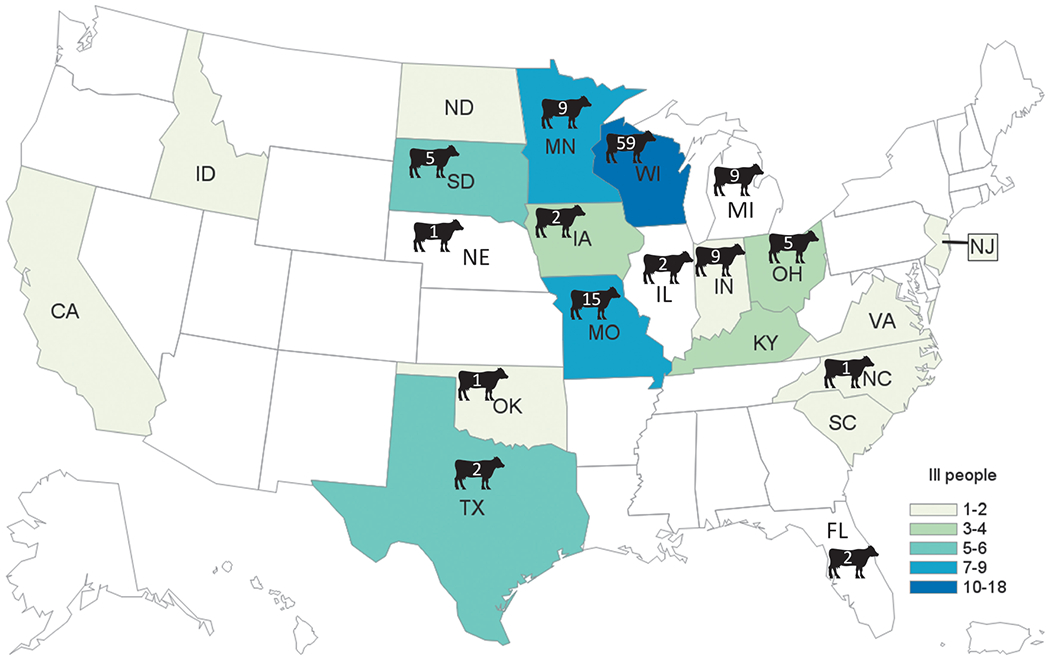
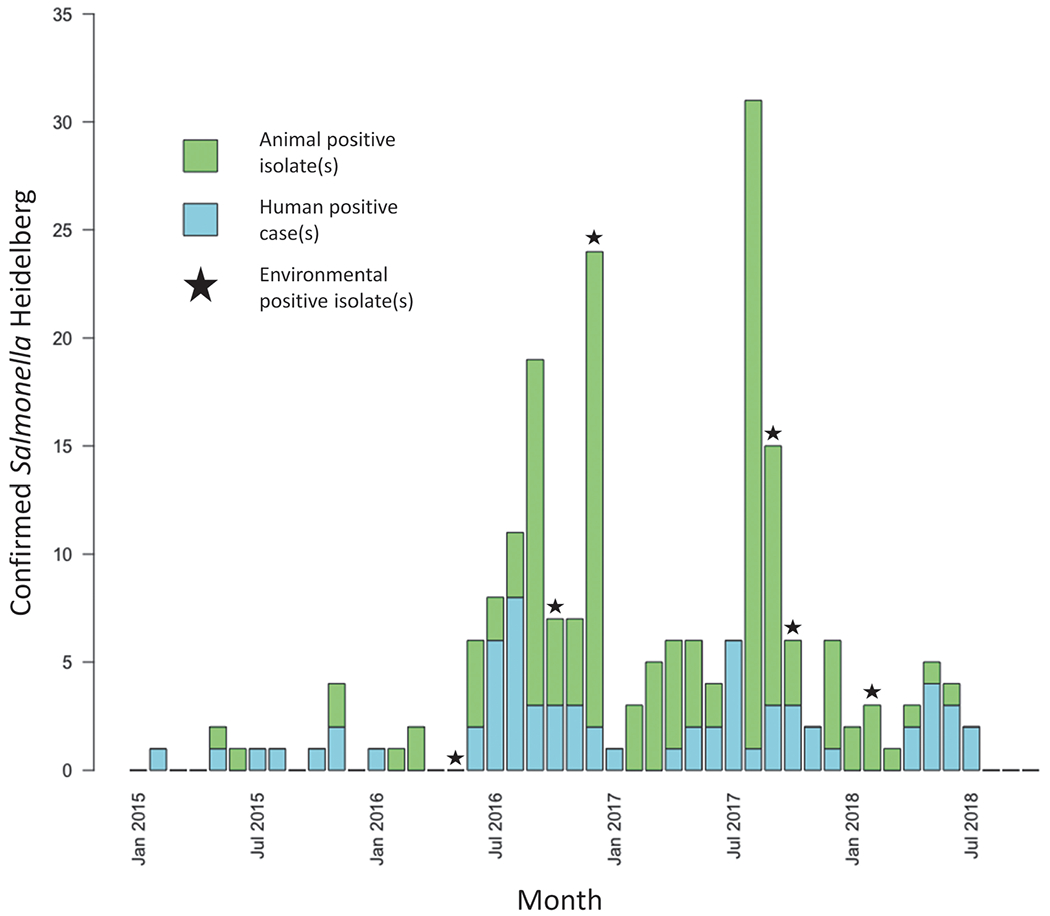
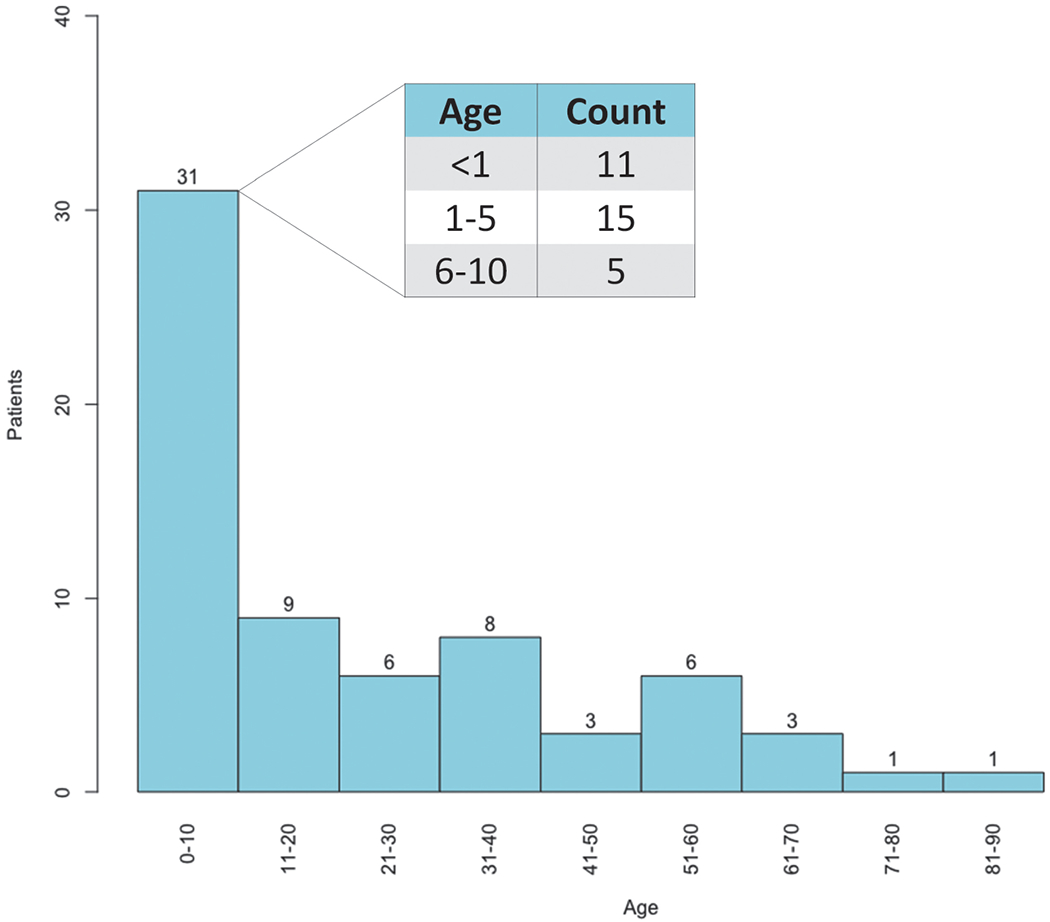
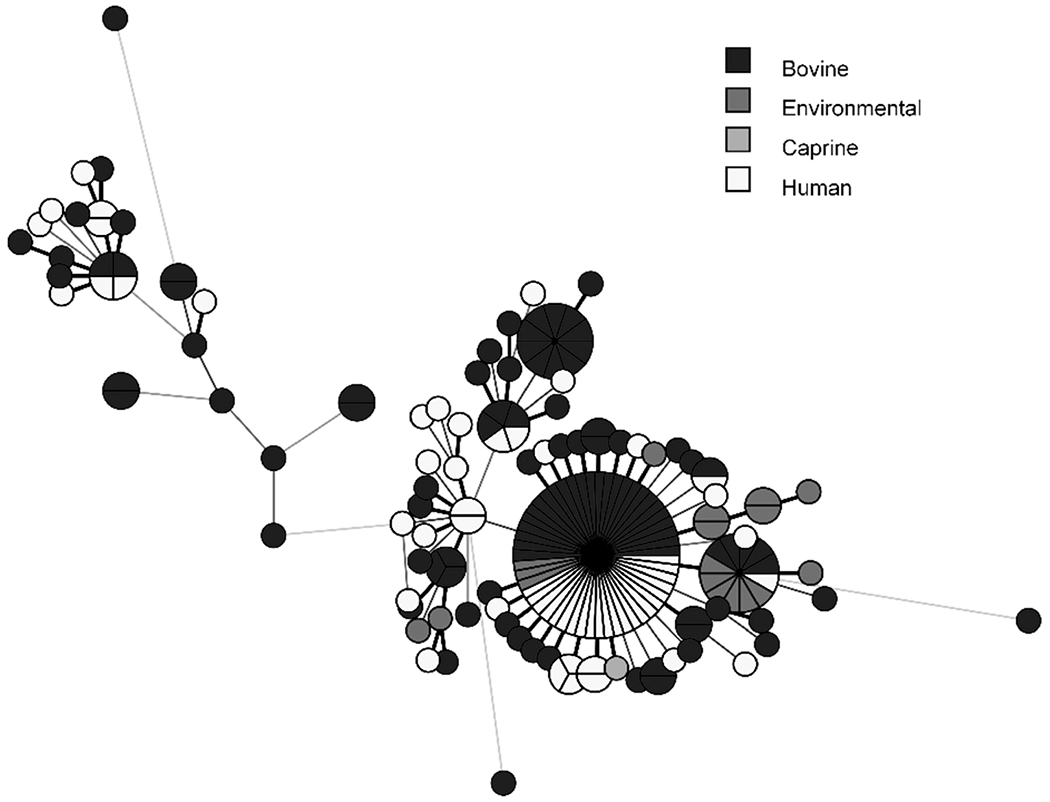
Description:In August 2016, the Wisconsin Department of Health Services notified the U.S. Centers for Disease Control and Prevention of multidrug-resistant (MDR) | serovar Heidelberg infections in people who reported contact with dairy calves. Federal and state partners investigated this to identify the source and scope of the outbreak and to prevent further illnesses. Cases were defined as human | Heidelberg infection caused by a strain that had one of seven pulsed-field gel electrophoresis (PFGE) patterns or was related by whole genome sequencing (WGS), with illness onset from January 1, 2015, through July 2, 2018. Patient exposure and calf purchase information was collected and analyzed; calves were traced back from the point of purchase. Isolates obtained from animal and environmental samples collected on-farm were supplied by veterinary diagnostic laboratories and compared with patient isolates using PFGE and WGS. Antimicrobial susceptibility testing by standardized broth microdilution was performed. Sixty-eight patients from 17 states were identified. Forty (63%) of 64 patients noted cattle contact before illness. Thirteen (33%) of 40 patients with exposure to calves reported that calves were sick or had died. Seven individuals purchased calves from a single Wisconsin livestock market. One hundred forty cattle from 14 states were infected with the outbreak strain. WGS indicated that human, cattle, and environmental isolates from the livestock market were genetically closely related. Most isolates (88%) had resistance or reduced susceptibility to antibiotics of ≥5 antibiotic classes. This resistance profile included first-line antibiotic treatments for patients with severe salmonellosis, including ampicillin, ceftriaxone, and ciprofloxacin. In this outbreak, MDR | Heidelberg likely spread from sick calves to humans, emphasizing the importance of illness surveillance in animal populations to prevent future spillover of this zoonotic disease.
-
Subjects:
-
Source:Foodborne Pathog Dis. 19(3):199-208
-
Pubmed ID:34989634
-
Pubmed Central ID:PMC9524362
-
Document Type:
-
Funding:
-
Place as Subject:
-
Volume:19
-
Issue:3
-
Download URL:
-
File Type:
 [PDF - 621.57 KB]
 -
Collection(s):
-
Main Document Checksum:urn:sha256:8bf6612e3ace55969cd0fd645882e790affa549258592608f794ceb1e1617cb0
Supporting Files


File Language:
English
 Was this page helpful?
 Found an issue?


CDC STACKS serves as an archival repository of CDC-published products including
scientific findings, journal articles, guidelines, recommendations, or other public health information authored or
co-authored by CDC or funded partners.
As a repository, CDC STACKS retains documents in their original published format to ensure public access to scientific information.
As a repository, CDC STACKS retains documents in their original published format to ensure public access to scientific information.
You May Also Like
COLLECTION
CDC Public Access