



Associations between Escherichia coli O157 shedding and the faecal microbiota of dairy cows
Supporting Files

-
3 2018 ; 3-2018
-
Available in CDC Stacks on 2022-09-21T00:00:00Z
File Language:
English
Details
-
Alternative Title:J Appl Microbiol
-
Personal Author:
-
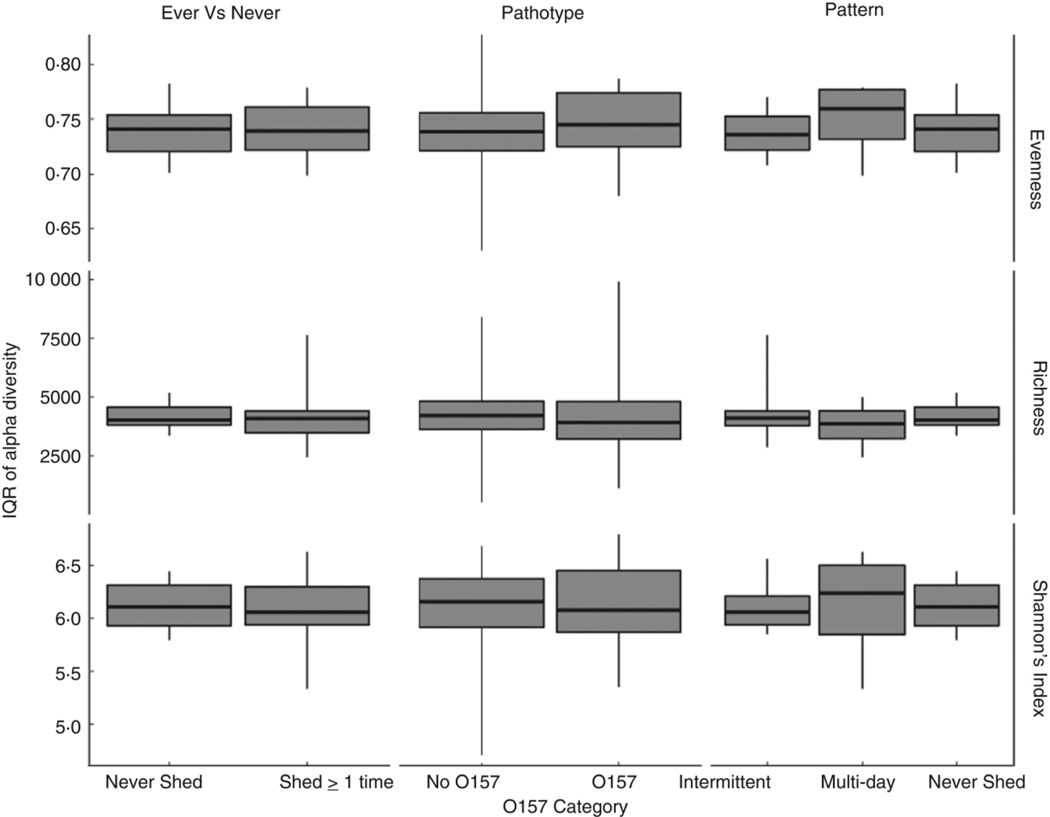
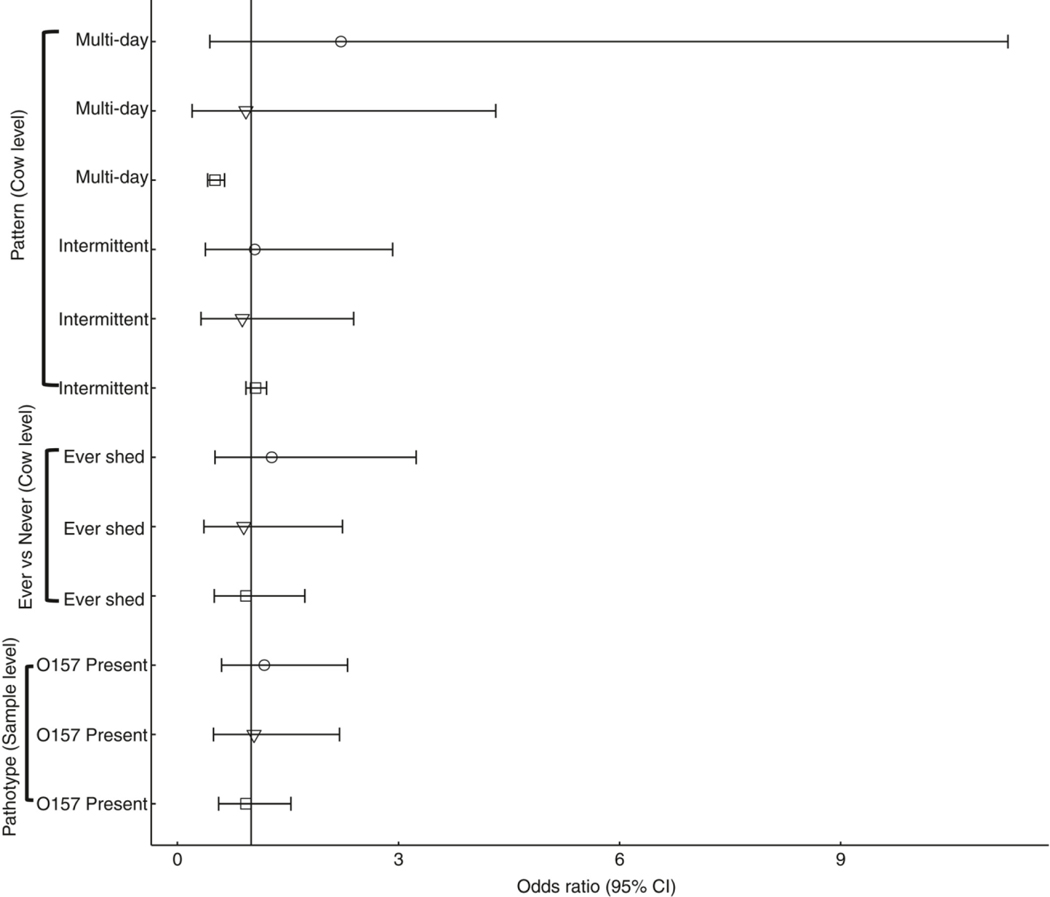
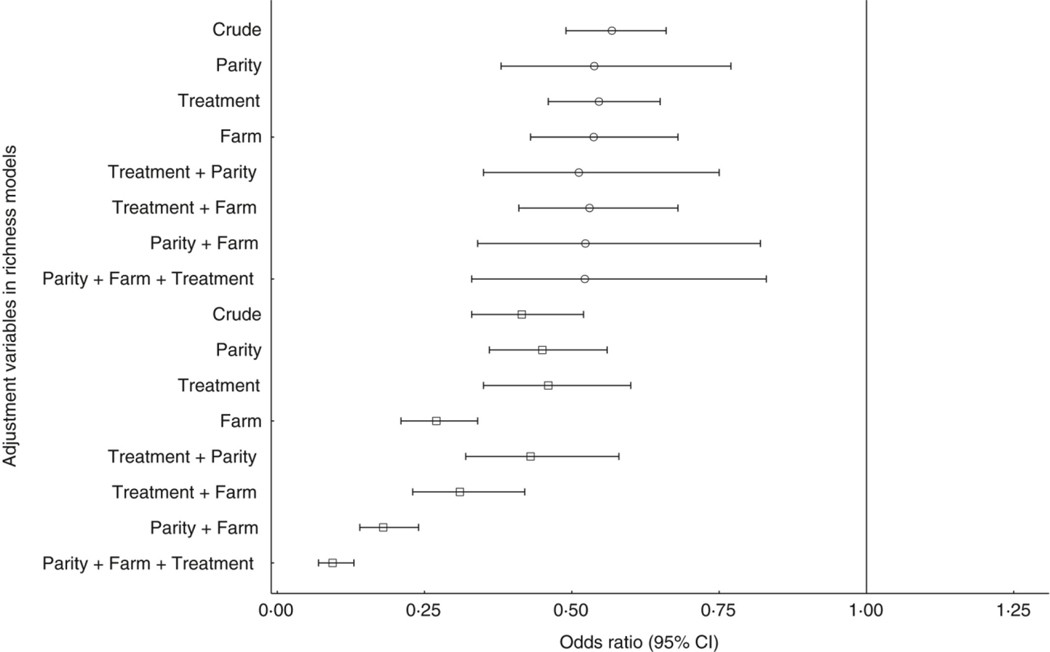
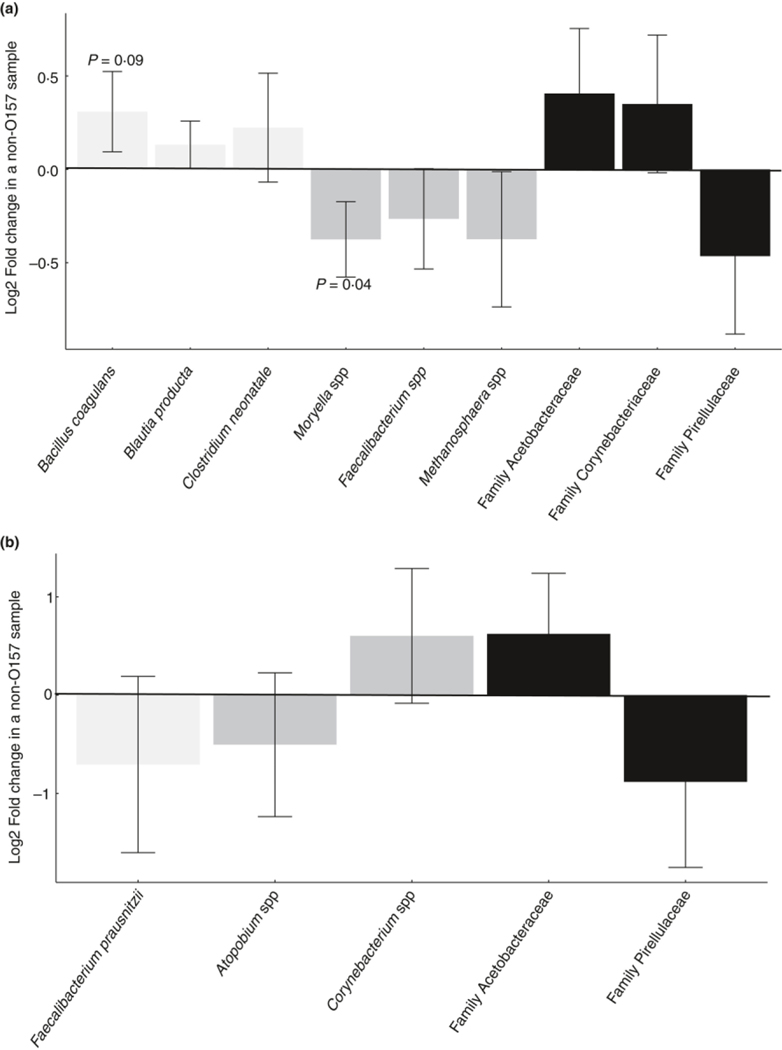
Description:Aims ; Dairy cattle shed pathogenic Escherichia coli O157 (O157) in faeces, playing a role in human exposure. We aimed to measure faecal microbial communities in early lactation dairy cattle, and model outcomes with O157 shedding metrics. ; Methods and Results ; Daily faecal samples were collected from 40 cattle on two Colorado dairies for five consecutive days, and characterized for O157. 16S rRNA gene sequencing was used to measure sample-level microbial communities. Alpha-diversity metrics were associated with O157 outcomes via regression modelling, adjusting for confounders. Differential abundance of taxa were identified between O157(+) and O157(−) samples and between shedding days of individuals, using matched Wilcoxon rank-sum tests, zero-inflated Gaussian (ZIG) regression and negative binomial regression. After removing an outlier, multi-day and intermittently shedding cows had lower average richness compared to those that never shed. ZIG modelling revealed Bacillus coagulans to be more abundant in O157(−) samples, while Moryella were more abundant in O157(+) samples. Negative binomial models and Wilcoxon tests revealed no differentially abundant taxa between O157(+) vs O157(−) samples, or between shedding days of individuals. ; Conclusions ; Microbial diversity and some taxa may be influenced by or affect O157 shedding by dairy cattle. ; Significance and Impact of the Study ; If future work corroborates these findings, dairy cow microbial community changes may be used to guide on-farm strategies that mitigate O157 dissemination, protecting the human food chain.
-
Subjects:
-
Source:J Appl Microbiol. 124(3):881-898
-
Pubmed ID:29280543
-
Pubmed Central ID:PMC9491513
-
Document Type:
-
Funding:
-
Volume:124
-
Issue:3
-
Download URL:
-
File Type:
 [PDF - 1.36 MB]
 -
Collection(s):
-
Main Document Checksum:urn:sha256:392735956ffc2fdf16c2882a3129c461b68910b436a1e6d364af5ff573ea12d9
Supporting Files


File Language:
English
 Was this page helpful?
 Found an issue?



CDC STACKS serves as an archival repository of CDC-published products including
scientific findings, journal articles, guidelines, recommendations, or other public health information authored or
co-authored by CDC or funded partners.
As a repository, CDC STACKS retains documents in their original published format to ensure public access to scientific information.
As a repository, CDC STACKS retains documents in their original published format to ensure public access to scientific information.
You May Also Like
COLLECTION
CDC Public Access