



Aedes aegypti mosquitoes detect acidic volatiles found in human odor using the IR8a pathway
Supporting Files

-
4 22 2019
-
Available in CDC Stacks on 2020-04-22T00:00:00Z
File Language:
English
Details
-
Alternative Title:Curr Biol
-
Personal Author:
-
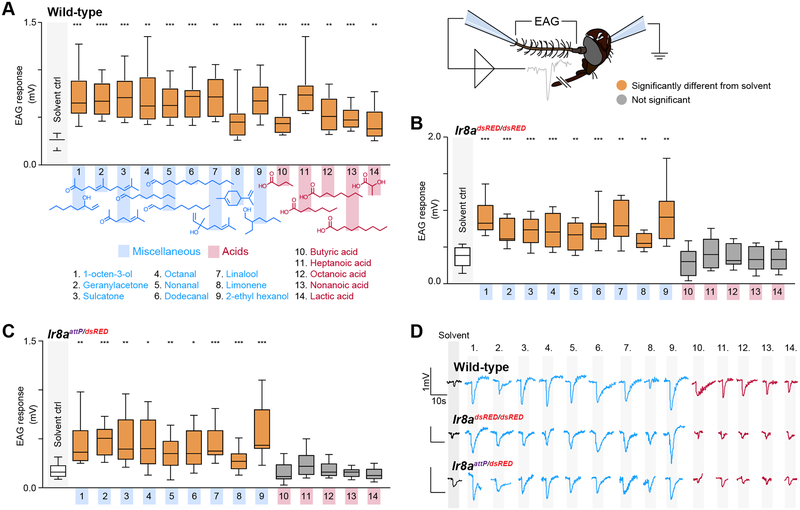
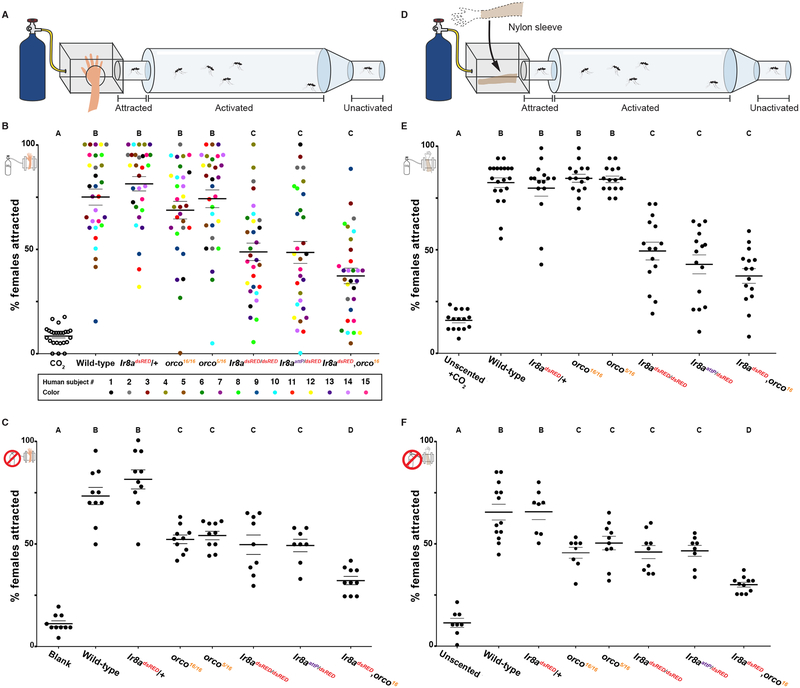
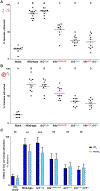
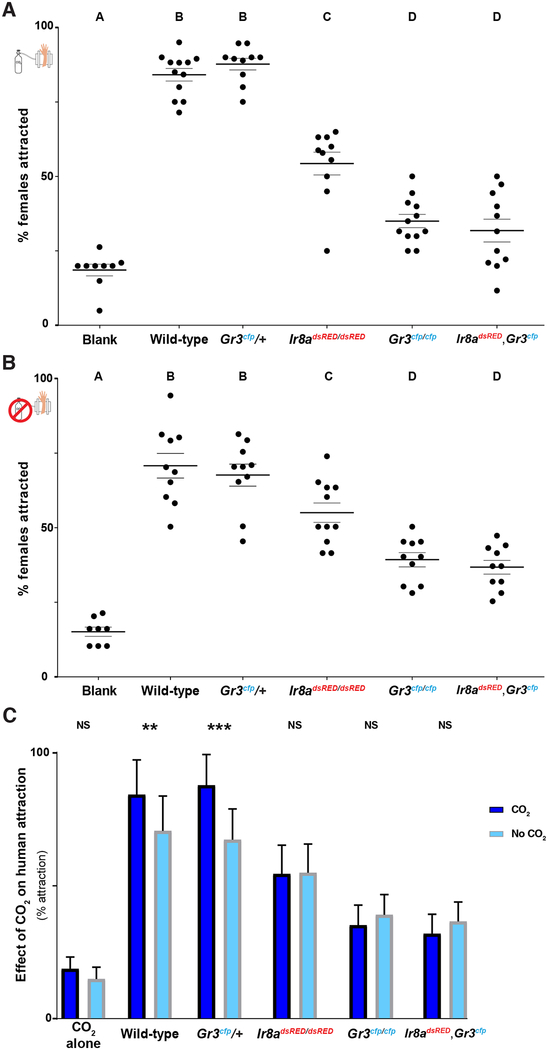
Description:Mosquitoes use olfaction as a primary means of detecting their hosts. Previously, the functional ablation of a family of Aedes aegypti olfactory receptors, the odorant receptors (ORs), was not sufficient to reduce host seeking in the presence of carbon dioxide (CO|). This suggests the olfactory receptors that remain, such as the ionotropic receptors (IRs), could play a significant role in host detection. To test this, we disrupted the Ir8a co-receptor in Ae. aegypti using CRISPR/Cas9. We found that Ir8a mutant female mosquitoes are not attracted to lactic acid, a behaviorally active component of human sweat, and they lack odor-evoked responses to acidic volatiles. The loss of Ir8a reduces mosquito attraction to humans and their odor. We show that the CO|-detection pathway is necessary but not sufficient for IR8a to detect human odor. Our study reveals that the IR8a pathway is crucial for an anthropophilic vector mosquito to effectively seek hosts. VIDEO ABSTRACT.
-
Subjects:
-
Source:Curr Biol. 29(8):1253-1262.e7
-
Pubmed ID:30930038
-
Pubmed Central ID:PMC6482070
-
Document Type:
-
Funding:
-
Volume:29
-
Issue:8
-
Download URL:
-
File Type:
 [PDF - 1.41 MB]
 -
Collection(s):
-
Main Document Checksum:urn:sha256:34f73c9504f16be9e897d291147f711d45d4a2e93ff0b0f47b5d421e88e416bc
Supporting Files


File Language:
English
 Was this page helpful?
 Found an issue?



CDC STACKS serves as an archival repository of CDC-published products including
scientific findings, journal articles, guidelines, recommendations, or other public health information authored or
co-authored by CDC or funded partners.
As a repository, CDC STACKS retains documents in their original published format to ensure public access to scientific information.
As a repository, CDC STACKS retains documents in their original published format to ensure public access to scientific information.
You May Also Like
COLLECTION
CDC Public Access