


Second primary malignancy risk after Hodgkin lymphoma treatment among HIV-uninfected and HIV-infected survivors
Supporting Files

-
5 2022
-
File Language:
English
Details
-
Alternative Title:Leuk Lymphoma
-
Personal Author:
-
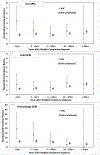
Description:We compared secondary primary malignancy risk (SPM) in HIV-uninfected and HIV-infected Hodgkin lymphoma (HL) survivors. We used data from the California Cancer Registry on patients diagnosed with HL from 1990 to 2015 (all ages included), and standardized incidence ratios (SIRs) and multivariable competing risk models for analyses. Of 19,667 survivors, 735 were HIV-infected. Compared with the general population, the risk of SPM was increased by 2.66-fold in HIV-infected and 1.92-fold in HIV-uninfected survivors. Among HIV-infected survivors, median time to development of SPM was shorter (5.4 years) than in HIV-uninfected patients (8.1 years). Additionally, the highest risk of SPM was observed <2 years after diagnosis in HIV-infected survivors (SIR = 4.47), whereas risk was highest ≥20 years after diagnosis (SIR = 2.39) in HIV-uninfected survivors. The risk of SPMs persisted for decades and was higher among HIV-infected survivors, suggesting that these patients should benefit from long-term surveillance and cancer prevention practices.
-
Subjects:
-
Source:Leuk Lymphoma. 63(5):1091-1101
-
Pubmed ID:34989283
-
Pubmed Central ID:PMC9423937
-
Document Type:
-
Funding:
-
Volume:63
-
Issue:5
-
Collection(s):
-
Main Document Checksum:urn:sha256:6e5bae236086e71d75f65a0c00ff7b86992b70b025fc734d175c8603f7dfedaf
-
Download URL:
-
File Type:
 [PDF
- 532.55 KB
]
[PDF
- 532.55 KB
]
Supporting Files


File Language:
English
ON THIS PAGE


CDC STACKS serves as an archival repository of CDC-published products including
scientific findings,
journal articles, guidelines, recommendations, or other public health information authored or
co-authored by CDC or funded partners.
As a repository, CDC STACKS retains documents in their original published format to ensure public access to scientific information.
As a repository, CDC STACKS retains documents in their original published format to ensure public access to scientific information.
You May Also Like
COLLECTION
CDC Public Access