



Fulminant Transfusion-Associated Hepatitis E Virus Infection Despite Screening, England, 2016–2020
Supporting Files
Public Domain

-
9 2022
File Language:
English
Details
-
Alternative Title:Emerg Infect Dis
-
Personal Author:
-
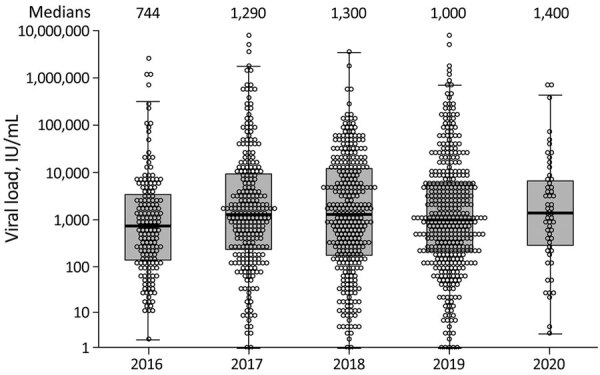
Description:In England, all blood donations are screened in pools of 24 by nucleic acid test (NAT) for hepatitis E virus (HEV) RNA. During 2016-2020, this screening successfully identified and intercepted 1,727 RNA-positive donations. However, review of previous donations from infected platelet donors identified 9 donations in which HEV RNA detection was missed, of which 2 resulted in confirmed transmission: 1 infection resolved with ribavirin treatment, and 1 proceeded to fatal multiorgan failure within a month from infection. Residual risk calculations predict that over the 5-year study period, HEV RNA detection was missed by minipool NAT in 12-23 platelet and 177-354 whole-blood donations, but transmission risk remains undetermined. Although screening has been able to largely eliminate infectious HEV from the blood supply in England, missed detection of low levels of HEV RNA in donated blood can lead to a severe, even fulminant, infection in recipients and could be prevented by more sensitive screening.
-
Subjects:
-
Source:Emerg Infect Dis. 2022; 28(9):1805-1813
-
Pubmed ID:35997399
-
Pubmed Central ID:PMC9423923
-
Document Type:
-
Place as Subject:
-
Volume:28
-
Issue:9
-
Download URL:
-
File Type:
 [PDF - 2.01 MB]
 -
Collection(s):
-
Main Document Checksum:urn:sha256:4bd114f1ec074c8060d85be03b2e778ae24c58011fefbad38bb2c46c91bcf578
Supporting Files


File Language:
English
 Was this page helpful?
 Found an issue?


CDC STACKS serves as an archival repository of CDC-published products including
scientific findings, journal articles, guidelines, recommendations, or other public health information authored or
co-authored by CDC or funded partners.
As a repository, CDC STACKS retains documents in their original published format to ensure public access to scientific information.
As a repository, CDC STACKS retains documents in their original published format to ensure public access to scientific information.
You May Also Like
COLLECTION
Emerging Infectious Diseases