



Association between cognitive impairment and oral anticancer agent use in older patients with metastatic renal cell carcinoma
Supporting Files

-
8 2022 ; 8-2022
-
Available in CDC Stacks on August 01, 2023, 12:00 AM
File Language:
English
Details
-
Alternative Title:J Am Geriatr Soc
-
Personal Author:
-
Description:Background
Kidney cancer is the fastest-growing cancer diagnosis in the developed world. About 16% of new cases are stage IV, which has a low five-year survival rate. Many patients with metastatic renal cell carcinoma (mRCC) are older and may have mild cognitive impairment or dementia (MCI/D). Given prior reports of patients with dementia initiating less cancer therapy and the importance of oral anticancer agents (OAAs) in mRCC treatment, we investigated the prevalence of preexisting MCI/D in patients with mRCC and their OAA use.
Methods
SEER-Medicare patients were analyzed who were ≥65 years, diagnosed with mRCC between 2007 and 2015, and had Medicare part D coverage. Patterns and predictors of a) OAA utilization within the 12 months following mRCC diagnosis and b) adherence (percent of days covered PDC ≥ 80%) during the first 90 days following treatment initiation were assessed.
Results
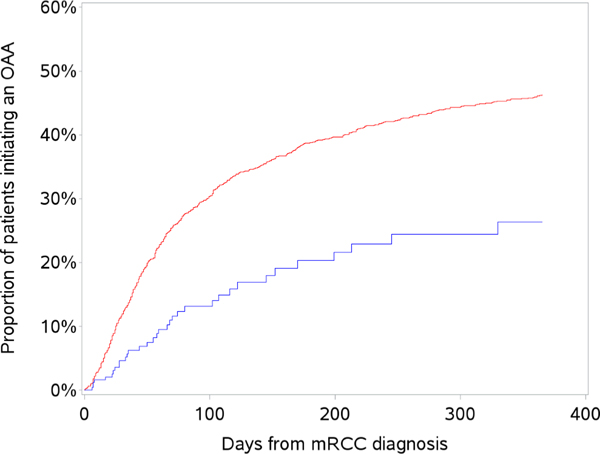
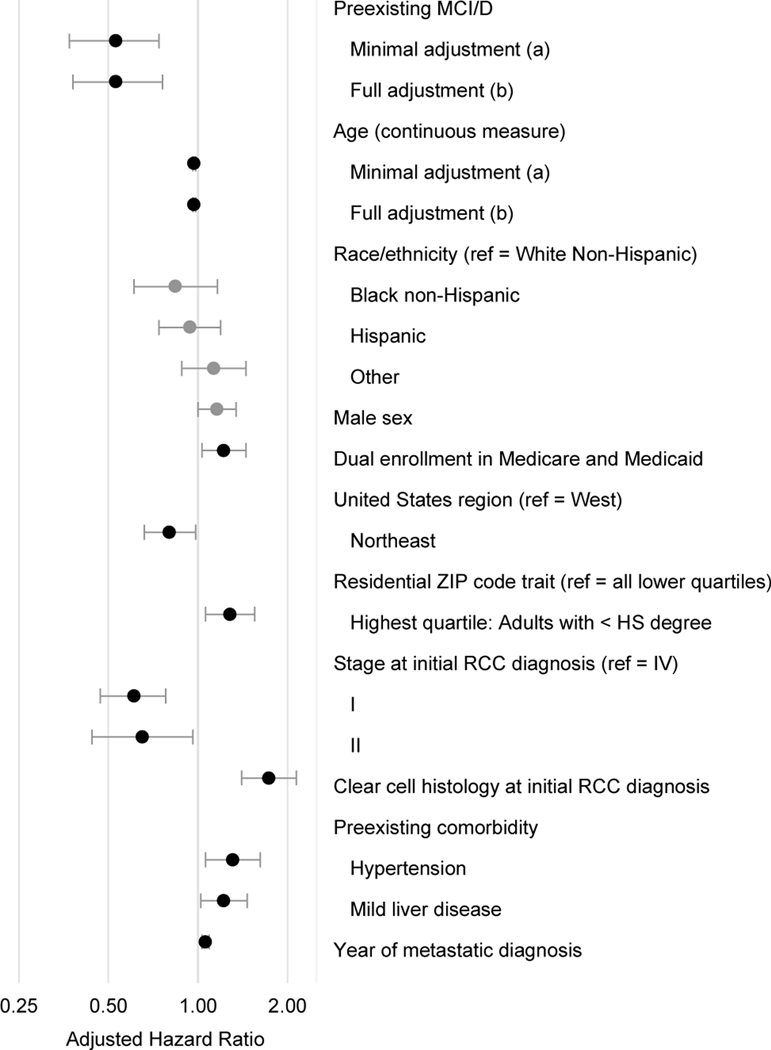
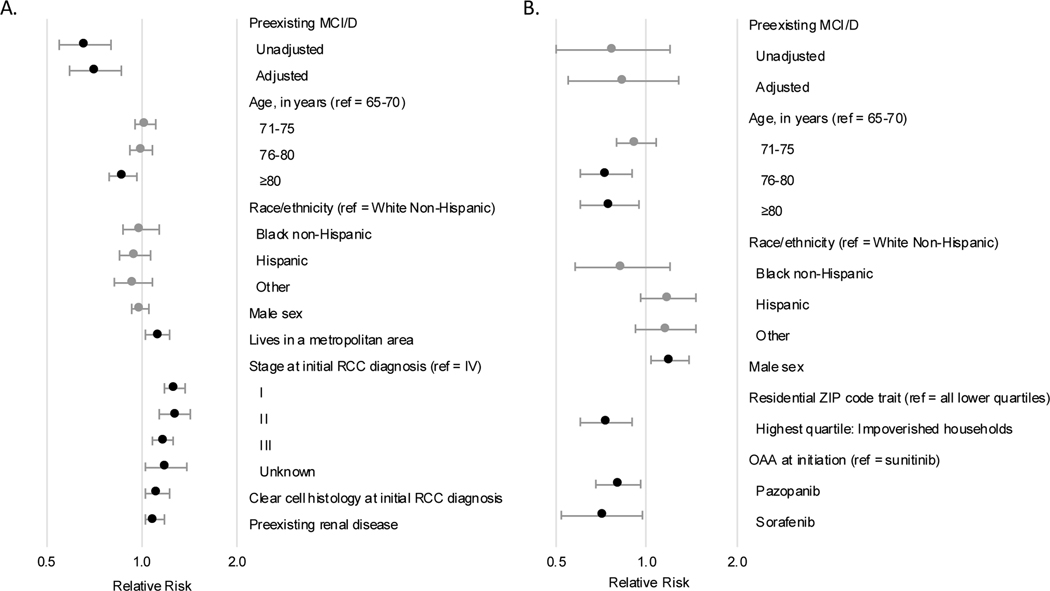
Of the 2,792 eligible patients, 268 had preexisting MCI/D and 907 initiated OAA treatment within 12 months of mRCC diagnosis. Patients with preexisting MCI/D were less likely to begin an OAA than those without MCI/D (fully-adjusted HR 0.53, 95% CI 0.38 – 0.76). Among OAA initiators, a preexisting MCI/D diagnosis did not alter the likelihood that a person would be adherent (adjusted RR 0.84, 95% CI 0.55 – 1.28).
Conclusions
Patients with preexisting MCI/D were half as likely to start an OAA during the year following mRCC diagnosis than patients without comorbid MCI/D. The 90-day adherence of OAA initiators was not significantly different between those with and without preexisting MCI/D. In light of this, clinicians should assess mRCC patients for cognitive impairment and take steps to optimize OAA utilization by those with MCI/D. -
Subjects:
-
Keywords:
-
Source:J Am Geriatr Soc. 70(8):2330-2343
-
Pubmed ID:35499667
-
Pubmed Central ID:PMC9378524
-
Document Type:
-
Funding:HHSN261201000140C/CA/NCI NIH HHSUnited States/ ; HHSN261201000035C/CA/NCI NIH HHSUnited States/ ; UL1 TR001863/TR/NCATS NIH HHSUnited States/ ; R01 CA226842/CA/NCI NIH HHSUnited States/ ; 3R01CA226842-02S1/CA/NCI NIH HHSUnited States/ ; HHSN261201000034C/CA/NCI NIH HHSUnited States/ ; U58 DP003862/DP/NCCDPHP CDC HHSUnited States/ ; TL1 TR001864/TR/NCATS NIH HHSUnited States/ ; HHSN261201000035I/CA/NCI NIH HHSUnited States/
-
Volume:70
-
Issue:8
-
Download URL:
-
File Type:
 [PDF - 1.16 MB]
 -
Collection(s):
-
Main Document Checksum:urn:sha-512:5dc1831ad92a6673292407765081946fd1f6c16af72c2be24117e4c9321db355d7235381990be5336393f75096e60a79250e01a3a80307f7834193718d97d3f1
Supporting Files


File Language:
English
 Was this page helpful?
 Found an issue?

CDC STACKS serves as an archival repository of CDC-published products including
scientific findings, journal articles, guidelines, recommendations, or other public health information authored or
co-authored by CDC or funded partners.
As a repository, CDC STACKS retains documents in their original published format to ensure public access to scientific information.
As a repository, CDC STACKS retains documents in their original published format to ensure public access to scientific information.
You May Also Like
COLLECTION
CDC Public Access