



Genetic Analyses of Enamel Hypoplasia in Multiethnic Cohorts
Supporting Files

-
2 16 2022
-
File Language:
English
Details
-
Alternative Title:Hum Hered
-
Personal Author:Alotaibi, Rasha N. ; Howe, Brian J. ; Moreno Uribe, Lina M. ; Sanchez, Carla ; Deleyiannis, Frederic W.B. ; Padilla, Carmencita ; Poletta, Fernando A. ; Orioli, Ieda M. ; Buxó, Carmen J. ; Wehby, George L. ; Vieira, Alexandre R. ; Murray, Jeffrey ; Valencia-Ramírez, Consuelo ; Restrepo Muñeton, Claudia P. ; Long, Ross E. ; Shaffer, John R. ; Reis, Steven E. ; Weinberg, Seth M. ; Neiswanger, Katherine ; McNeil, Daniel W. ; Marazita, Mary L.
-
Description:Introduction:
Enamel hypoplasia causes a reduction in the thickness of affected enamel and is one of the most common dental anomalies. This defect is caused by environmental and/or genetic factors that interfere with tooth formation, emphasizing the importance of investigating enamel hypoplasia on an epidemiological and genetic level.
Methods:
A genome-wide association of enamel hypoplasia was performed in multiple cohorts, overall comprising 7,159 individuals ranging in age from 7–82 years. Mixed-models were used to test for genetic association while simultaneously accounting for relatedness and genetic population structure. Meta-analysis was then performed. More than 5 million single-nucleotide polymorphisms were tested in individual cohorts.
Results:
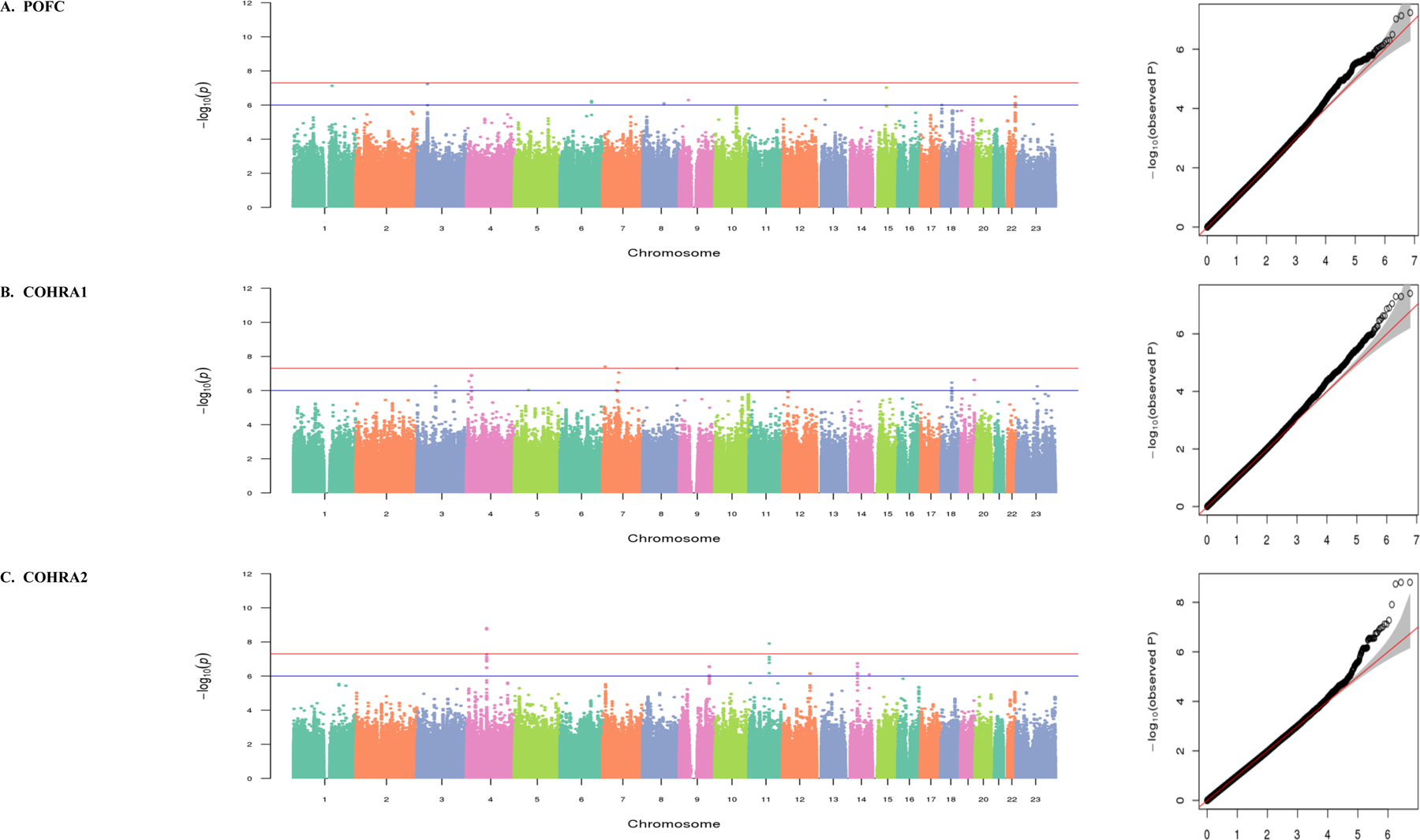
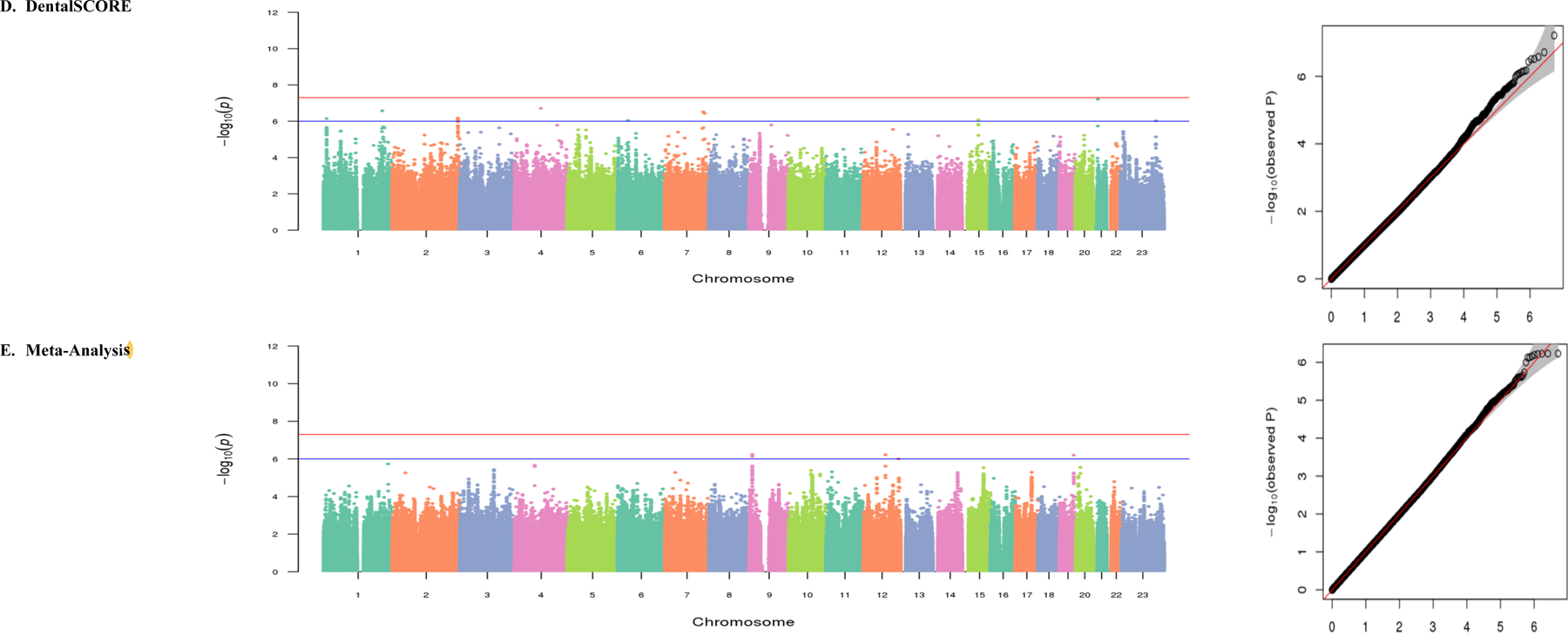
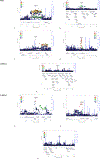
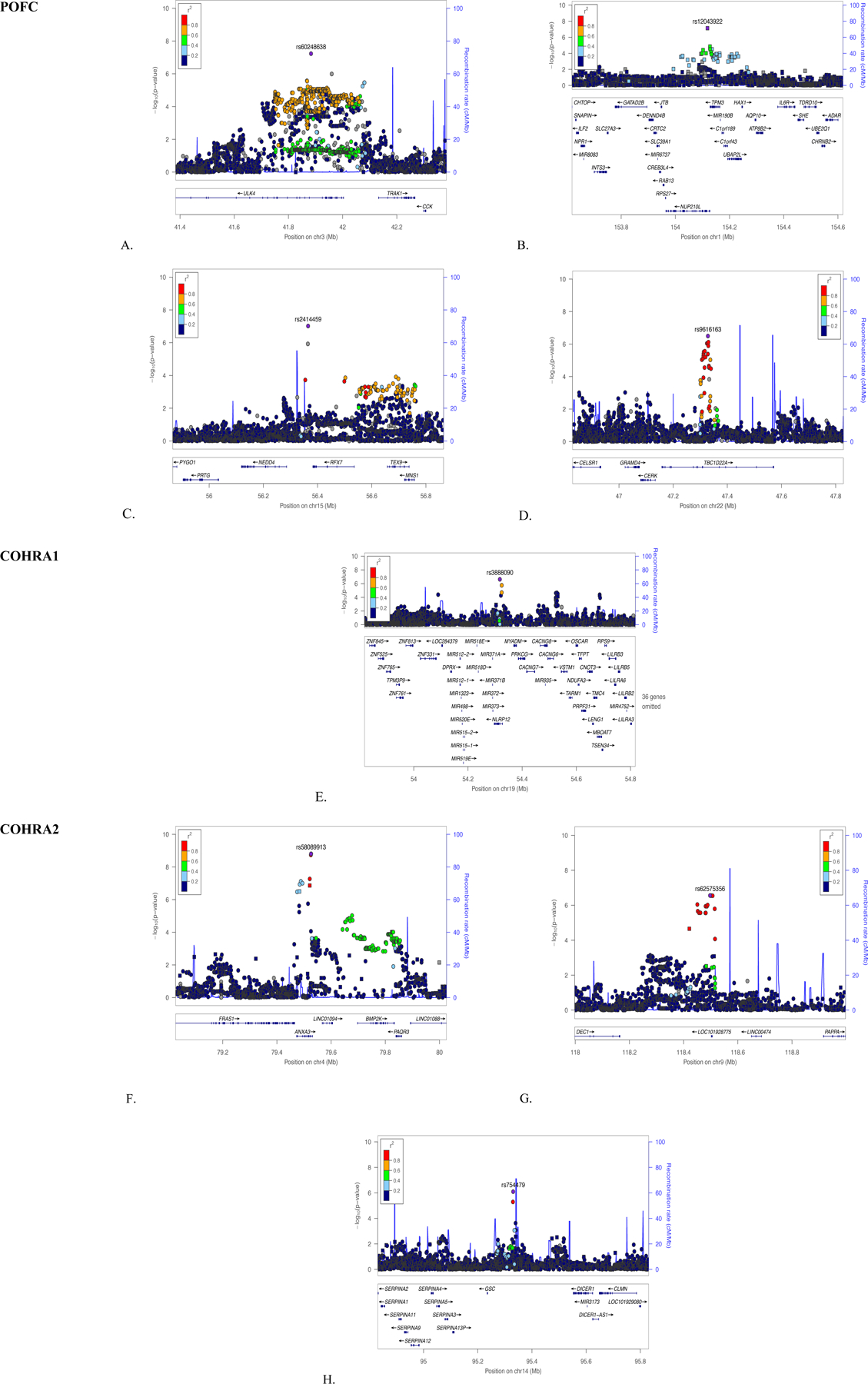
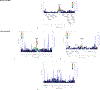
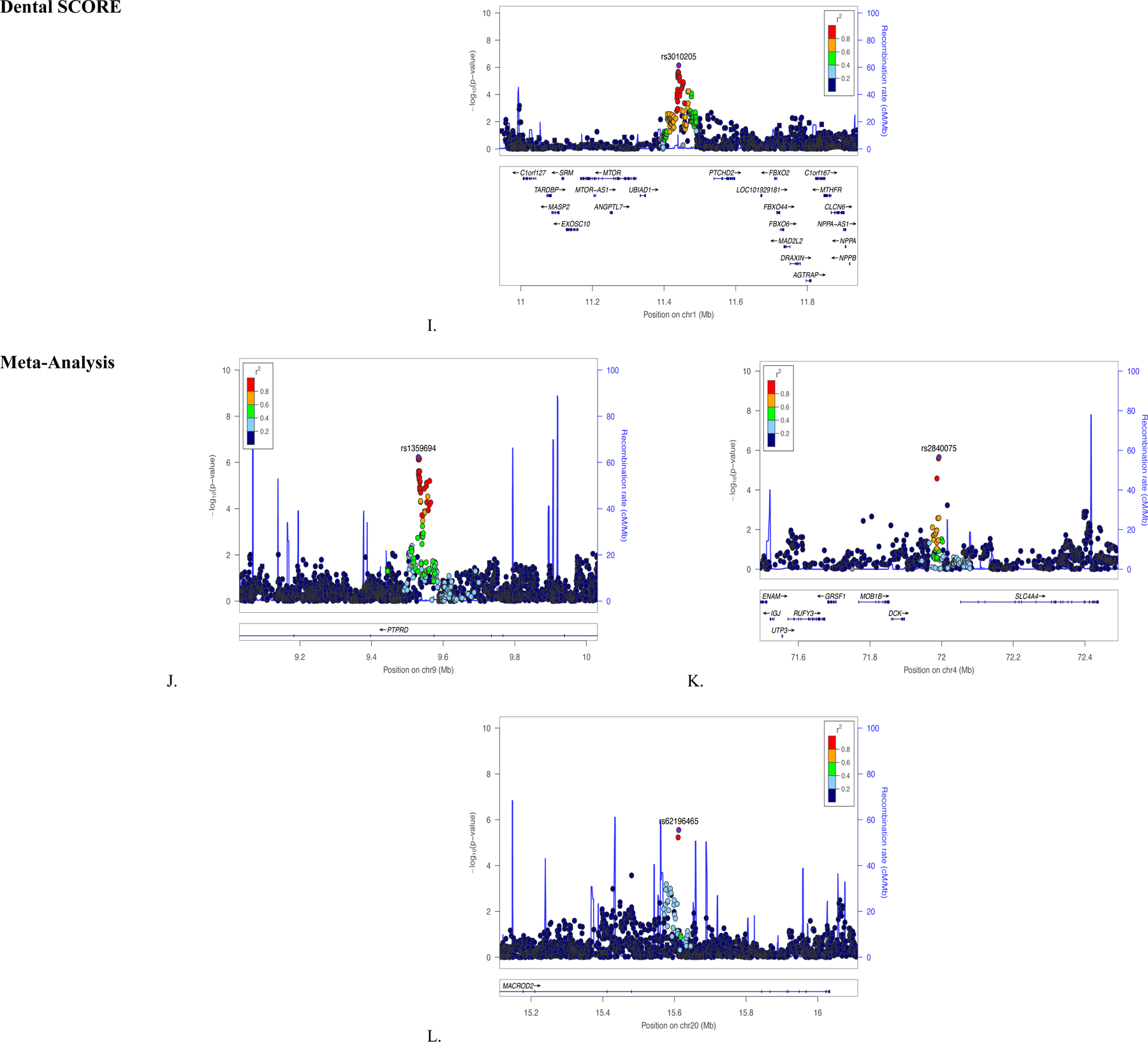
Analyses of the individual cohorts and meta-analysis identified association signals close to genome-wide significance (P < 5×10⁻⁸), and many suggestive association signals (5×10⁻⁸ < P < 5×10⁻⁶) near genes with plausible roles in tooth/enamel development.
Discussion/Conclusion:
The strongest association signal (P = 1.57×10⁻⁹) was observed near BMP2K in one of the individual cohorts. Additional suggestive signals were observed near genes with plausible roles in tooth development in the meta-analysis, such as SLC4A4 which can influence enamel hypoplasia. Additional human genetic studies are needed to replicate these results and functional studies in model systems are needed to validate our findings.
-
Subjects:
-
Source:Hum Hered.
-
Pubmed ID:35172313
-
Pubmed Central ID:PMC9378791
-
Document Type:
-
Funding:R00 DE024571/DE/NIDCR NIH HHSUnited States/ ; R03 DE024264/DE/NIDCR NIH HHSUnited States/ ; U01 DE024425/DE/NIDCR NIH HHSUnited States/ ; U01 DE018903/DE/NIDCR NIH HHSUnited States/ ; R21 DE016930/DE/NIDCR NIH HHSUnited States/ ; K99 DE024571/DE/NIDCR NIH HHSUnited States/ ; R01 DD000295/DD/NCBDD CDC HHSUnited States/ ; R01 DE014899/DE/NIDCR NIH HHSUnited States/ ; U54 MD007587/MD/NIMHD NIH HHSUnited States/
-
Collection(s):
-
Main Document Checksum:urn:sha256:7047534f0b7522c06b1ff39176c7c1b70a7f37b4ea2dddcb0c765151a83b61b7
-
Download URL:
-
File Type:
 [PDF
- 1.21 MB
]
[PDF
- 1.21 MB
]
Supporting Files


File Language:
English
 Was this page helpful?
 Found an issue?
CDC STACKS serves as an archival repository of CDC-published products including
scientific findings,
journal articles, guidelines, recommendations, or other public health information authored or
co-authored by CDC or funded partners.
As a repository, CDC STACKS retains documents in their original published format to ensure public access to scientific information.
As a repository, CDC STACKS retains documents in their original published format to ensure public access to scientific information.
You May Also Like
COLLECTION
CDC Public Access