


Considerations for Observational Study Design: Comparing the Evidence of Opioid Use between Electronic Health Records and Insurance Claims
Supporting Files

-
8 2022
-

File Language:
English
Details
-
Alternative Title:Pharmacoepidemiol Drug Saf
-
Personal Author:
-
Description:Purpose:
Pharmacoepidemiology studies often use insurance claims and/or electronic health records (EHR) to capture information about medication exposure. The choice between these data sources has important implications.
Methods:
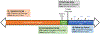
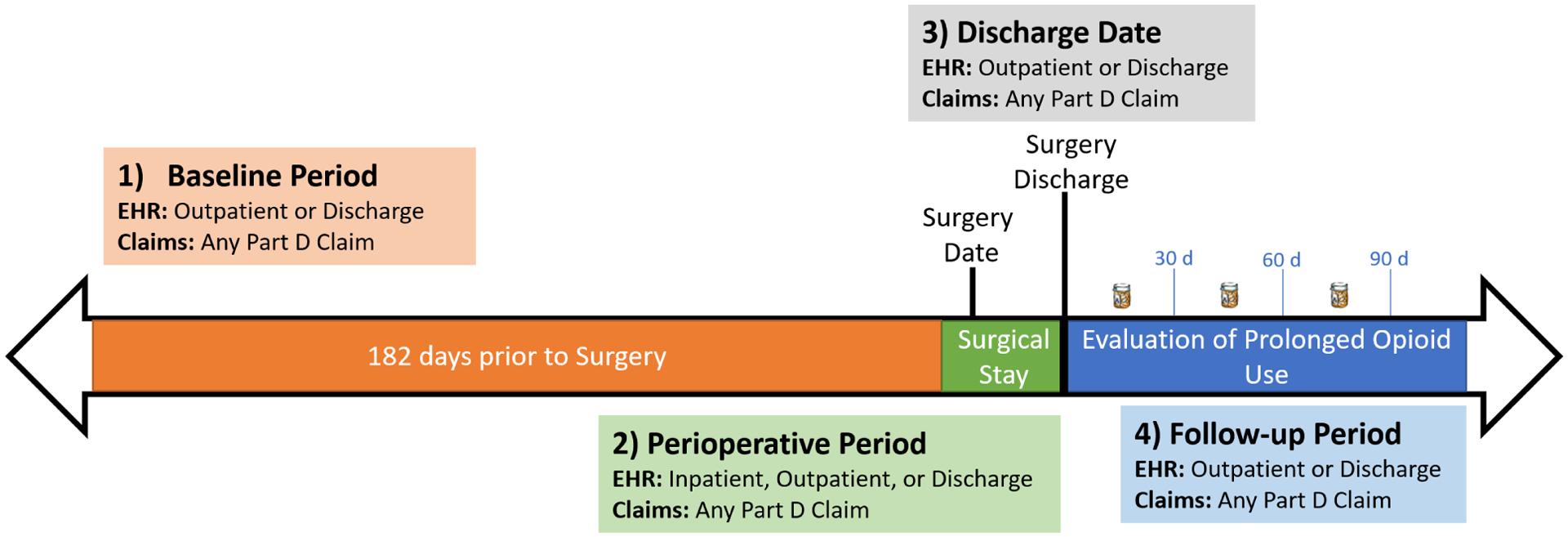
We linked EHR from a large academic health system (2015–2017) to Medicare insurance claims for patients undergoing surgery. Drug utilization was characterized based on medication order dates in the EHR, and prescription fill dates in Medicare claims. We compared opioid use measured in EHR orders to prescription claims in 4 time periods: 1) Baseline (182-d before surgery); 2) Perioperative period; 3) Discharge date; 4) Follow-up (90-d after surgery).
Results:
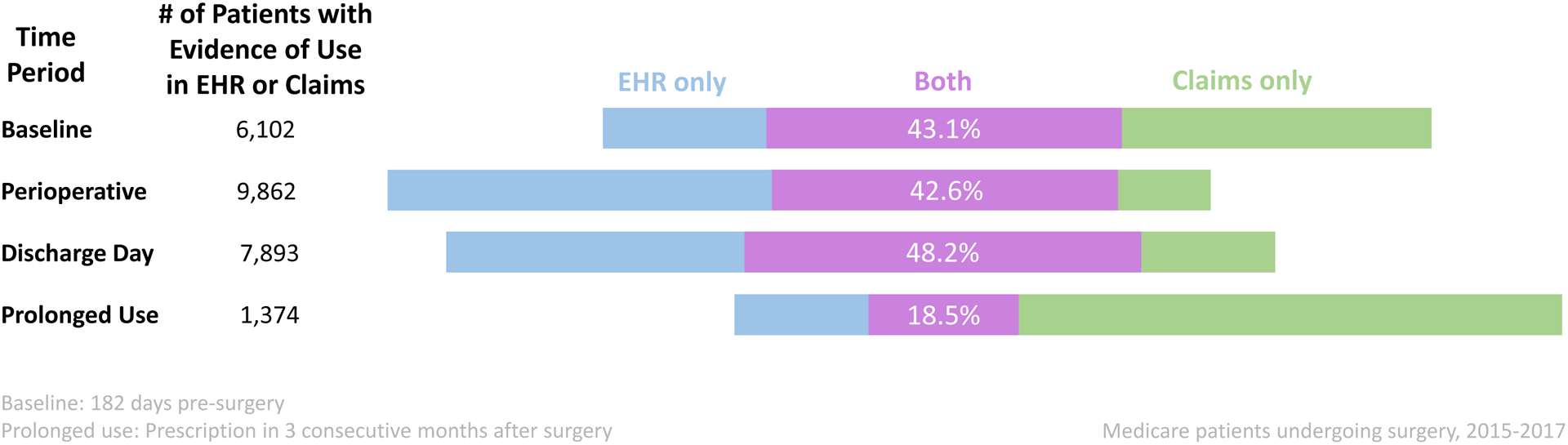
We identified 11,128 patients undergoing surgery. During baseline, 34.4% (EHR) vs 44.1% (claims) had evidence of opioid use, and 56.9% of all baseline use was reflected only in one data source. During the perioperative period, 78.8% (EHR) vs 47.6% (claims) had evidence of use. On the day of discharge, 59.6% (EHR) vs 45.5% (claims) had evidence of use, and 51.8% of all discharge use was reflected only in one data source. During follow-up, 4.3% (EHR) vs 10.4% (claims) were identified with prolonged opioid use following surgery with 81.4% of all prolonged use reflected only in one data source.
Conclusions:
When characterizing opioid exposure, we found substantial discrepancies between EHR medication orders and prescription claims data. In all time periods assessed, most patients’ use was reflected only in the EHR, or only in the claims, not both. The potential for misclassification of drug utilization must be evaluated carefully, and choice of data source may have large impacts on key study design elements.
-
Subjects:
-
Source:Pharmacoepidemiol Drug Saf. 31(8):913-920
-
Pubmed ID:35560685
-
Pubmed Central ID:PMC9271595
-
Document Type:
-
Funding:R01 HL118255/HL/NHLBI NIH HHSUnited States/ ; UL1 TR002489/TR/NCATS NIH HHSUnited States/ ; R36 DA045885/DA/NIDA NIH HHSUnited States/ ; U01 DP006369/DP/NCCDPHP CDC HHSUnited States/ ; T32 HS000032/HS/AHRQ HHSUnited States/ ; R01 AG056479/AG/NIA NIH HHSUnited States/ ; U01DP006369/ACL/ACL HHSUnited States/ ; R01 MD011680/MD/NIMHD NIH HHSUnited States/
-
Volume:31
-
Issue:8
-
Collection(s):
-
Main Document Checksum:urn:sha256:c97f60ceee59a1504f0ed22dfeaaa7e49f58477b7e3f1fb9ce44e057299a8aeb
-
Download URL:
-
File Type:
 [PDF
- 550.76 KB
]
[PDF
- 550.76 KB
]

Supporting Files


File Language:
English
ON THIS PAGE


CDC STACKS serves as an archival repository of CDC-published products including
scientific findings,
journal articles, guidelines, recommendations, or other public health information authored or
co-authored by CDC or funded partners.
As a repository, CDC STACKS retains documents in their original published format to ensure public access to scientific information.
As a repository, CDC STACKS retains documents in their original published format to ensure public access to scientific information.
You May Also Like
COLLECTION
CDC Public Access