



Etymologia: Anopheles culicifacies
Supporting Files

-
8 2022
File Language:
English
Details
-
Alternative Title:Emerg Infect Dis
-
Personal Author:
-
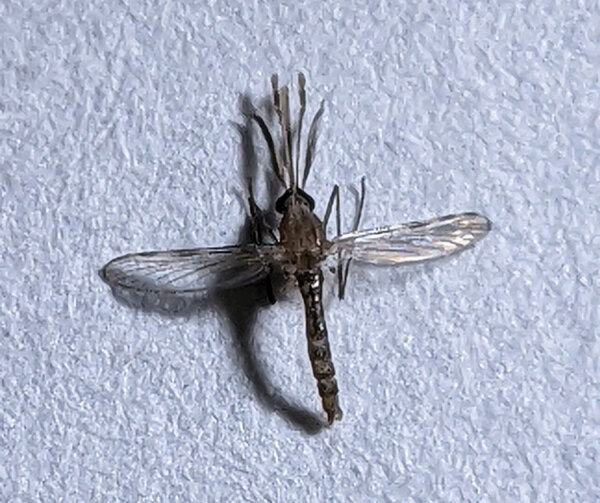
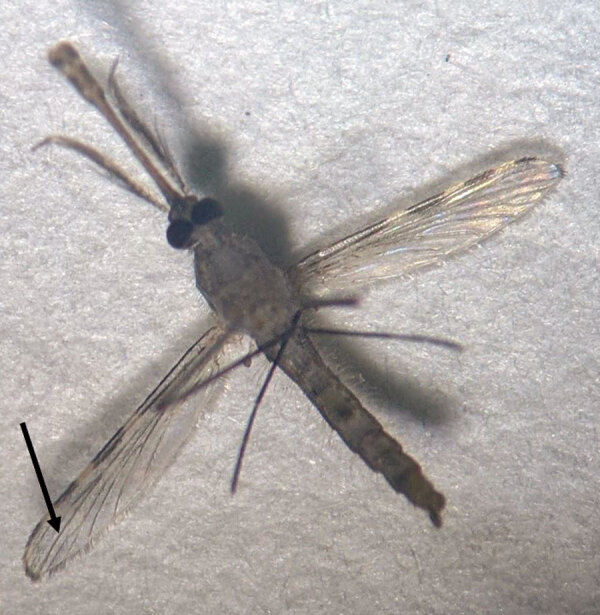
Description:In 1901, George Michael James Giles, a lieutenant-colonel and physician in the Indian Medical Service, described Anopheles culicifacies, which he collected from his guest house in Hoshangabad, India (Figure 1). This mosquito mimicked Culex spp. in facial appearance and resting posture (body angled to the surface they are resting on), prompting Giles to name it Anopheles culicifacies because of its culex (culici)‒like appearance (facies) (Figure 2). ; An. culicifacies is the principle vector of malaria in India, contributing to >60% of malaria cases in this country annually. Therefore, ≈80% of the budget for malaria control in India is spent on control of this mosquito. Adults can be identified based on characteristic wing morphology (dark third vein) and palpi ornamentation (apical pale band is nearly equal to the pre-apical dark band).
-
Subjects:
-
Source:Emerg Infect Dis. 2022; 28(8):1728
-
Pubmed Central ID:PMC9328892
-
Document Type:
-
Funding:
-
Corporate as Subject:
-
Genre:
-
Place as Subject:
-
Volume:28
-
Issue:8
-
Download URL:
-
File Type:
 [PDF - 728.28 KB]
 -
Collection(s):
-
Main Document Checksum:urn:sha256:ca5fb753ab44d3cafba7692306dea3fb8d9ddefc9e429dd83d50867032f2a60d
Supporting Files


File Language:
English
 Was this page helpful?
 Found an issue?

CDC STACKS serves as an archival repository of CDC-published products including
scientific findings, journal articles, guidelines, recommendations, or other public health information authored or
co-authored by CDC or funded partners.
As a repository, CDC STACKS retains documents in their original published format to ensure public access to scientific information.
As a repository, CDC STACKS retains documents in their original published format to ensure public access to scientific information.
You May Also Like
COLLECTION
Emerging Infectious Diseases