



Barriers to the Adoption of Wearable Sensors in the Workplace: A Survey of Occupational Safety and Health Professionals
Supporting Files

-
2018/05/01
-
Available in CDC Stacks on July 22, 2022, 12:00 AM
File Language:
English
Details
-
Alternative Title:Hum Factors
-
Personal Author:
-
Description:Objective:
To gather information on the (a) types of wearable sensors, particularly personal activity monitors, currently used by occupational safety and health (OSH) professionals, (b) potential benefits of using such technologies in the workplace, and (c) perceived barriers preventing the widespread adoption of wearable sensors in industry.
Background:
Wearable sensors are increasingly being promoted as a means to improve employee health and well-being and there is mounting evidence supporting their use as exposure assessment and personal health tools. Despite this, many workplaces have been hesitant to adopt these technologies.
Methods:
An electronic survey was emailed to 28,428 registered members of the American Society of Safety Engineers (ASSE) and 1,302 professionals certified by the Board of Certification in Professional Ergonomics (BCPE).
Results:
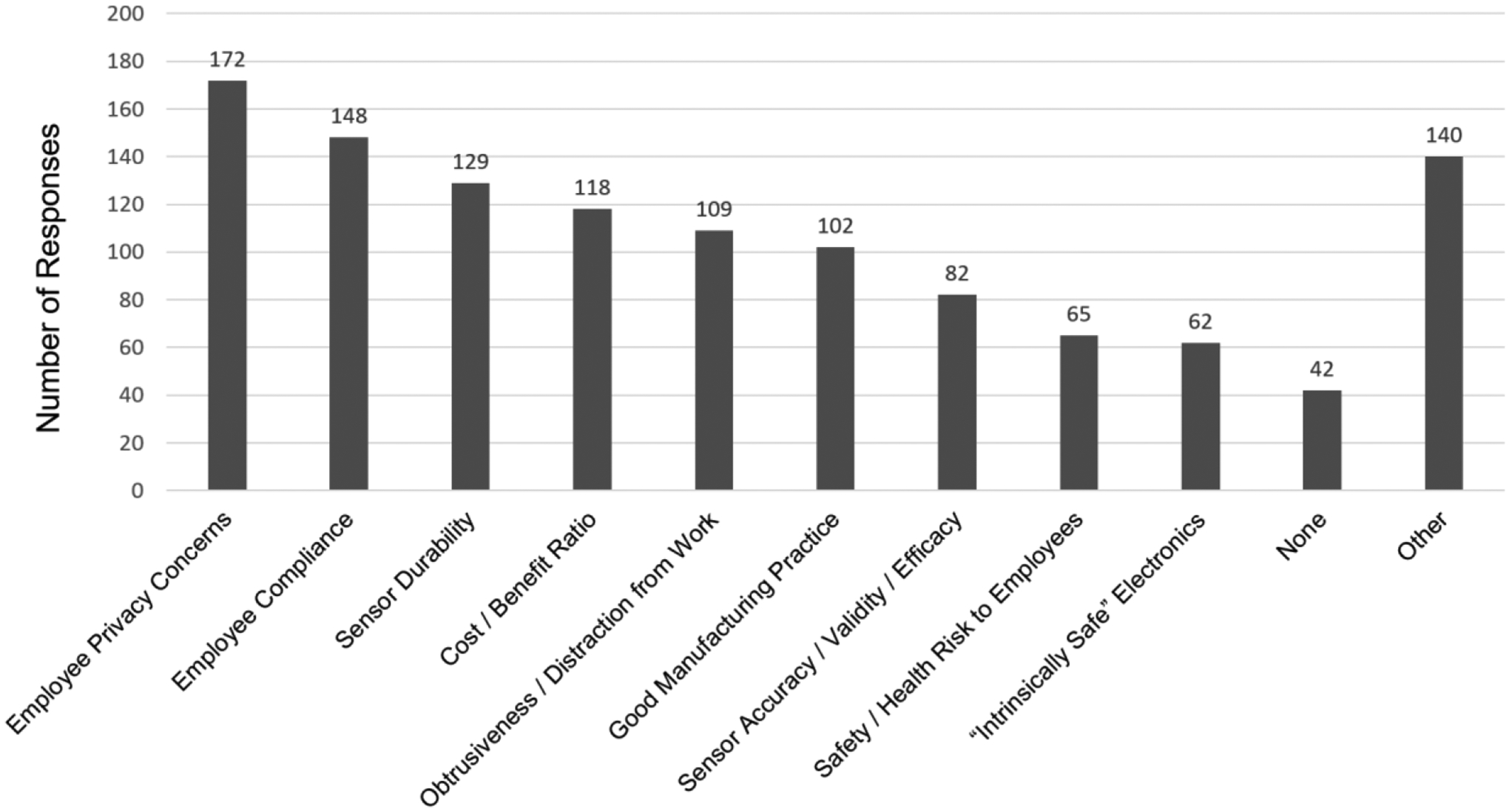
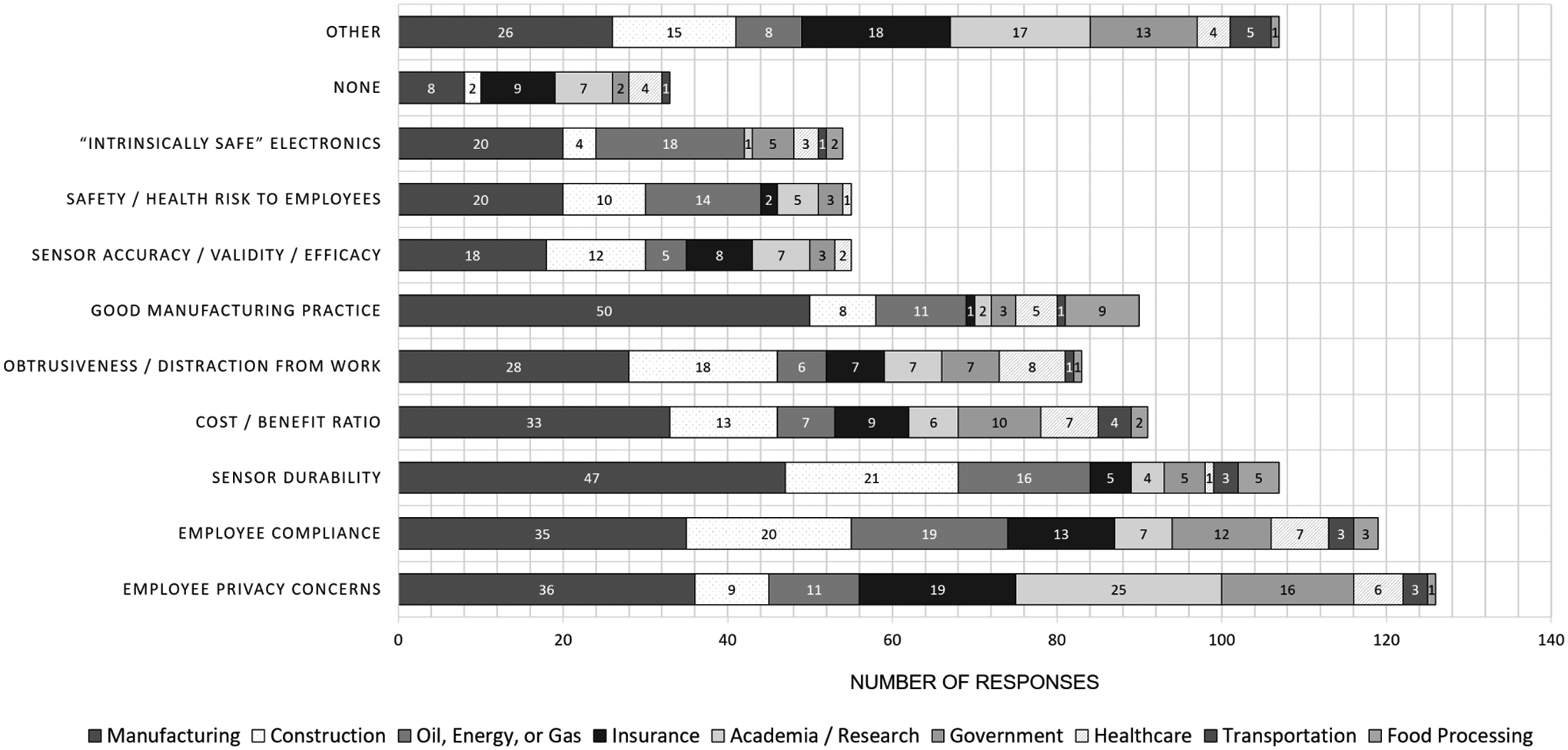
A total of 952 valid responses were returned. Over half of respondents described being in favor of using wearable sensors to track OSH-related risk factors and relevant exposure metrics at their respective workplaces. However, barriers including concerns regarding employee privacy/confidentiality of collected data, employee compliance, sensor durability, the cost/benefit ratio of using wearables, and good manufacturing practice requirements were described as challenges precluding adoption.
Conclusion:
The broad adoption of wearable technologies appears to depend largely on the scientific community's ability to successfully address the identified barriers.
Application:
Investigators may use the information provided to develop research studies that better address OSH practitioner concerns and that help technology developers operationalize wearable sensors to improve employee health and well-being. -
Subjects:
-
Source:Hum Factors. 60(3):351-362
-
Pubmed ID:29320232
-
Pubmed Central ID:PMC9307130
-
Document Type:
-
Funding:
-
Genre:
-
Volume:60
-
Issue:3
-
Download URL:
-
File Type:
 [PDF - 657.01 KB]
 -
Collection(s):
-
Main Document Checksum:urn:sha-512:9c0ded95cb334cc0c0df8753796508f53ccf2c281da83a81a40b5fe862f950d659083e4bcb00af9e9e93d4e228b37982b2c3c3dee16d2d539a9e158b324824af
Supporting Files


File Language:
English
 Was this page helpful?
 Found an issue?



CDC STACKS serves as an archival repository of CDC-published products including
scientific findings, journal articles, guidelines, recommendations, or other public health information authored or
co-authored by CDC or funded partners.
As a repository, CDC STACKS retains documents in their original published format to ensure public access to scientific information.
As a repository, CDC STACKS retains documents in their original published format to ensure public access to scientific information.
You May Also Like
COLLECTION
CDC Public Access