


of Obesity Prevention Standards (2010–2018)
Supporting Files

-
4 2021
-
File Language:
English
Details
-
Alternative Title:Child Obes
-
Personal Author:
-
Description:Background:
Obesity remains a significant public health issue in the U.S. Each week, millions of infants and children are cared for in Early Care & Education (ECE) programs, making it an important setting for building healthy habits. Since 2010, thirty-nine states promulgated licensing regulations impacting infant feeding, nutrition, physical activity, or screen time practices. We assessed trends in ECE regulations across all 50 states and the District of Columbia (D.C.) and hypothesized that states included more obesity prevention standards over time.
Methods:
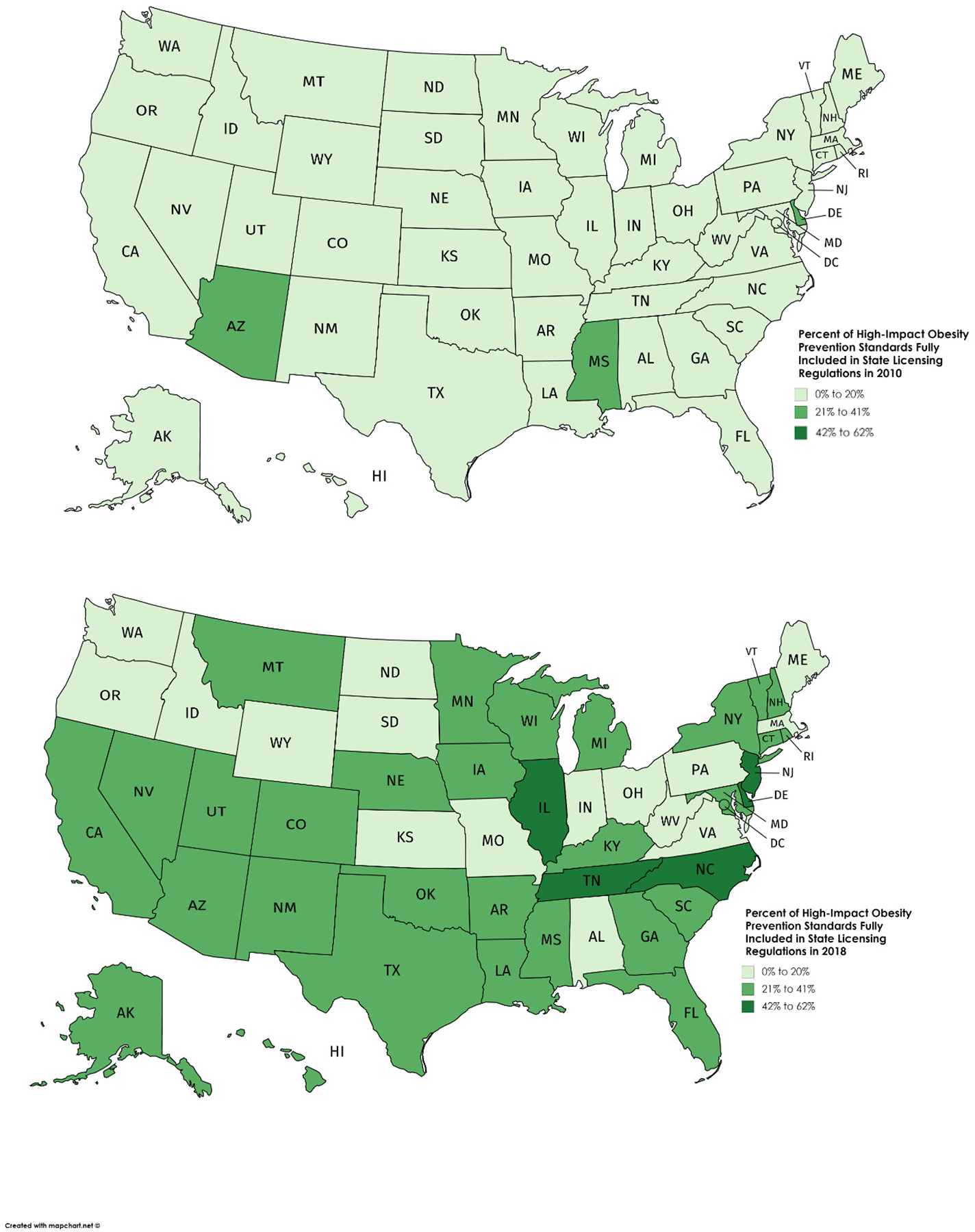
We analyzed published ratings of state licensing regulations (2010–2018) and describe trends in uptake of 47 high-impact standards derived from Caring for Our Children’s, Preventing Childhood Obesity special collection. National trends are described by 1) care type (Centers, Large Care Homes, and Small Care Homes); 2) state and U.S. region; and 3) most and least supported standards.
Results:
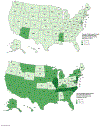
Center regulations included the most obesity prevention standards (~13% in 2010 vs. ~29% in 2018) compared to other care types, and infant feeding and nutrition standards were most often included, while physical activity and screen time were least supported. Some states saw significant improvements in uptake, with six states and D.C. having a 30%-point increase 2010–2018.
Conclusions:
Nationally, there were consistent increases in the percentage of obesity prevention standards included in ECE licensing regulations. Future studies may examine facilitators and barriers to the uptake of obesity prevention standards and identify pathways by which public health and healthcare professionals can act as a resource and promote obesity prevention in ECE.
-
Subjects:
-
Source:Child Obes. 17(3):176-184
-
Pubmed ID:33691470
-
Pubmed Central ID:PMC9285879
-
Document Type:
-
Funding:
-
Place as Subject:
-
Volume:17
-
Issue:3
-
Collection(s):
-
Main Document Checksum:urn:sha256:b587792d6cd1070a56ffc3714d0a17791febc1afe6616b2ec8bf9441aa539875
-
Download URL:
-
File Type:
 [PDF
- 612.68 KB
]
[PDF
- 612.68 KB
]
Supporting Files


File Language:
English
ON THIS PAGE

CDC STACKS serves as an archival repository of CDC-published products including
scientific findings,
journal articles, guidelines, recommendations, or other public health information authored or
co-authored by CDC or funded partners.
As a repository, CDC STACKS retains documents in their original published format to ensure public access to scientific information.
As a repository, CDC STACKS retains documents in their original published format to ensure public access to scientific information.
You May Also Like
COLLECTION
CDC Public Access