



Epidemiologic, Clinical, and Genetic Characteristics of Human Infections with Influenza A(H5N6) Viruses, China
Supporting Files
Public Domain

-
2022/07/01
File Language:
English
Details
-
Alternative Title:Emerg Infect Dis
-
Personal Author:Zhu, Wenfei ; Li, Xiyan ; Dong, Jie ; Bo, Hong ; Liu, Jia ; Yang, Jiaying ; Zhang, Ye ; Wei, Hejiang ; Huang, Weijuan ; Zhao, Xiang ; Chen, Tao ; Yang, Jing ; Li, Zi ; Zeng, Xiaoxu ; Li, Chao ; Tang, Jing ; Xin, Li ; Gao, Rongbao ; Liu, Liqi ; Tan, Min ; Shu, Yuelong ; Yang, Lei ; Wang, Dayan
-
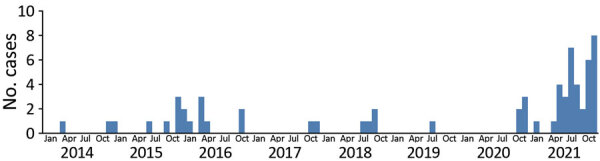
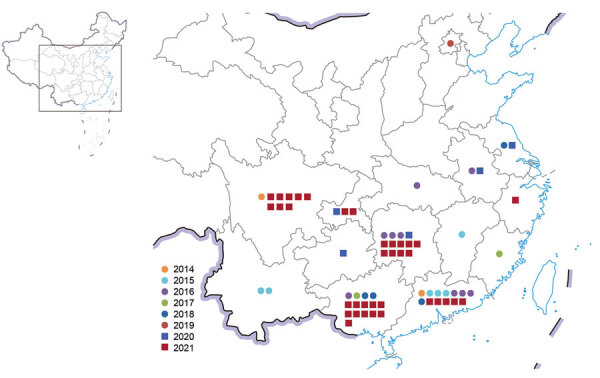
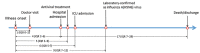
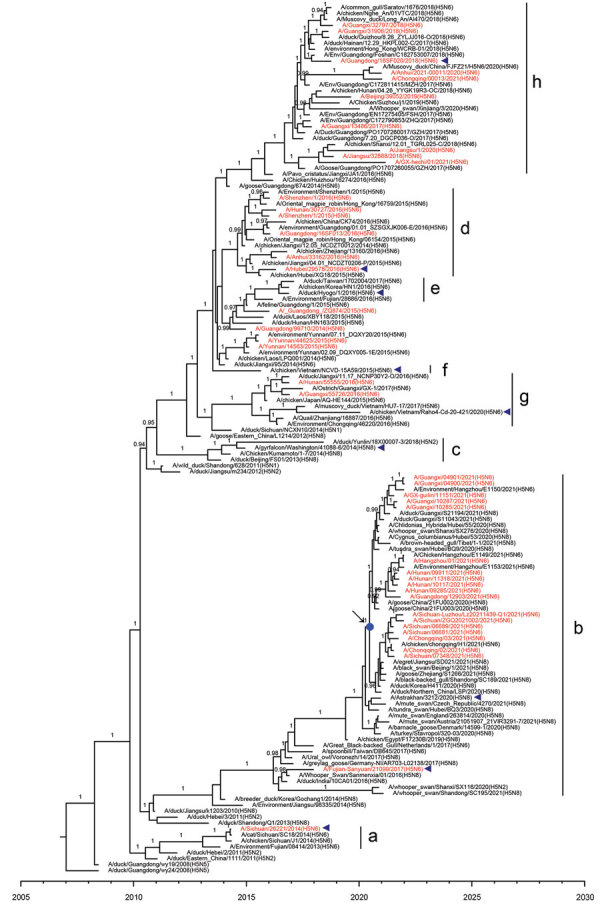
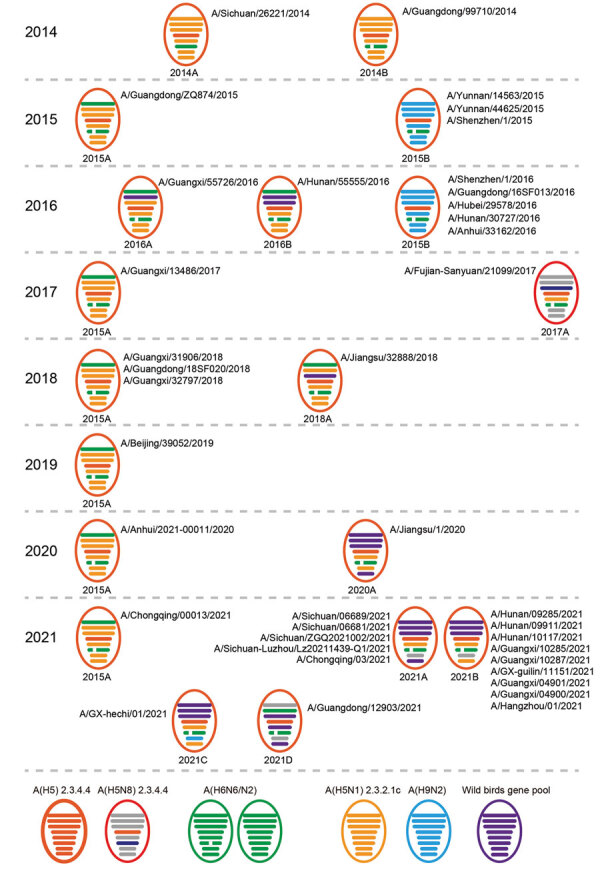
Description:The recent rise in the frequency of influenza A(H5N6) infections in China has raised serious concerns about whether the risk for human infection has increased. We surveyed epidemiologic, clinical, and genetic data of human infections with A(H5N6) viruses. Severe disease occurred in 93.8% of cases, and the fatality rate was 55.4%. Median patient age was 51 years. Most H5N6 hemagglutinin (HA) genes in human isolates in 2021 originated from subclade 2.3.4.4b; we estimated the time to most recent common ancestor as June 16, 2020. A total of 13 genotypes with HA genes from multiple subclades in clade 2.3.4.4 were identified in human isolates. Of note, 4 new genotypes detected in 2021 were the major causes of increased H5N6 virus infections. Mammalian-adapted mutations were found in HA and internal genes. Although we found no evidence of human-to-human transmission, continuous evolution of H5N6 viruses may increase the risk for human infections.
-
Subjects:
-
Source:Emerg Infect Dis. 2022; 28(7):1332-1344
-
Pubmed ID:35476714
-
Pubmed Central ID:PMC9239879
-
Document Type:
-
Genre:
-
Place as Subject:
-
Volume:28
-
Issue:7
-
Download URL:
-
File Type:
 [PDF - 4.10 MB]
 -
Collection(s):
-
Main Document Checksum:urn:sha-512:4c96db833d4c08ff2d9f58076cdf4daeef9ab3d47040aca455a12ff9a2d20155d72878ccbc9d33cace9019df5e0c980f2d7c1a31033f12ed2f6f84d76ee27718
Supporting Files


File Language:
English
 Was this page helpful?
 Found an issue?






CDC STACKS serves as an archival repository of CDC-published products including
scientific findings, journal articles, guidelines, recommendations, or other public health information authored or
co-authored by CDC or funded partners.
As a repository, CDC STACKS retains documents in their original published format to ensure public access to scientific information.
As a repository, CDC STACKS retains documents in their original published format to ensure public access to scientific information.
You May Also Like
COLLECTION
Emerging Infectious Diseases