



Targeted Screening for Chronic Q Fever, the Netherlands
Supporting Files
Public Domain

-
7 2022
File Language:
English
Details
-
Alternative Title:Emerg Infect Dis
-
Personal Author:
-
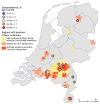
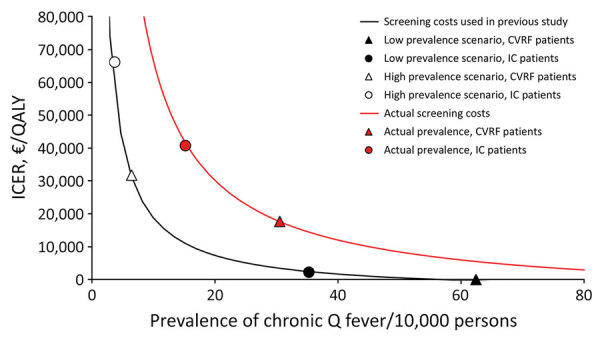
Description:Early detection of and treatment for chronic Q fever might prevent potentially life-threatening complications. We performed a chronic Q fever screening program in general practitioner practices in the Netherlands 10 years after a large Q fever outbreak. Thirteen general practitioner practices located in outbreak areas selected 3,419 patients who had specific underlying medical conditions, of whom 1,642 (48%) participated. Immunofluorescence assay of serum showed that 289 (18%) of 1,642 participants had a previous Coxiella burnetii infection (IgG II titer >1:64), and 9 patients were suspected of having chronic Q fever (IgG I y titer >1:512). After medical evaluation, 4 of those patients received a chronic Q fever diagnosis. The cost of screening was higher than estimated earlier, but the program was still cost-effective in certain high risk groups. Years after a large Q fever outbreak, targeted screening still detected patients with chronic Q fever and is estimated to be cost-effective.
-
Subjects:
-
Source:Emerg Infect Dis. 2022; 28(7):1403-1409
-
Pubmed ID:35731163
-
Pubmed Central ID:PMC9239892
-
Document Type:
-
Place as Subject:
-
Volume:28
-
Issue:7
-
Download URL:
-
File Type:
 [PDF - 1.10 MB]
 -
Collection(s):
-
Main Document Checksum:urn:sha256:299e52986e73769612bc441e3b18385435c306710b7466d79633f0220759a6be
Supporting Files


File Language:
English
 Was this page helpful?
 Found an issue?


CDC STACKS serves as an archival repository of CDC-published products including
scientific findings, journal articles, guidelines, recommendations, or other public health information authored or
co-authored by CDC or funded partners.
As a repository, CDC STACKS retains documents in their original published format to ensure public access to scientific information.
As a repository, CDC STACKS retains documents in their original published format to ensure public access to scientific information.
You May Also Like
COLLECTION
Emerging Infectious Diseases