



Impact of Anatomic Site, Specimen Collection Timing, and Patient Symptom Status on Neisseria gonorrhoeae Culture Recovery
Supporting Files

-
12 01 2021 ; 12-01-
-
Available in CDC Stacks on 2022-12-01T00:00:00Z
File Language:
English
Details
-
Alternative Title:Sex Transm Dis
-
Personal Author:Nash, Evelyn E. ; Pham, Cau D. ; Raphael, Brian ; Learner, Emily R. ; Mauk, Kerry ; Weiner, Josh ; Mettenbrink, Christie ; Thibault, Christina S. ; Fukuda, Acasia ; Dobre-Buonya, Oana ; Black, Jamie M. ; Johnson, Kimberly ; Sellers, Kevin ; Schlanger, Karen
-
Corporate Authors:
-
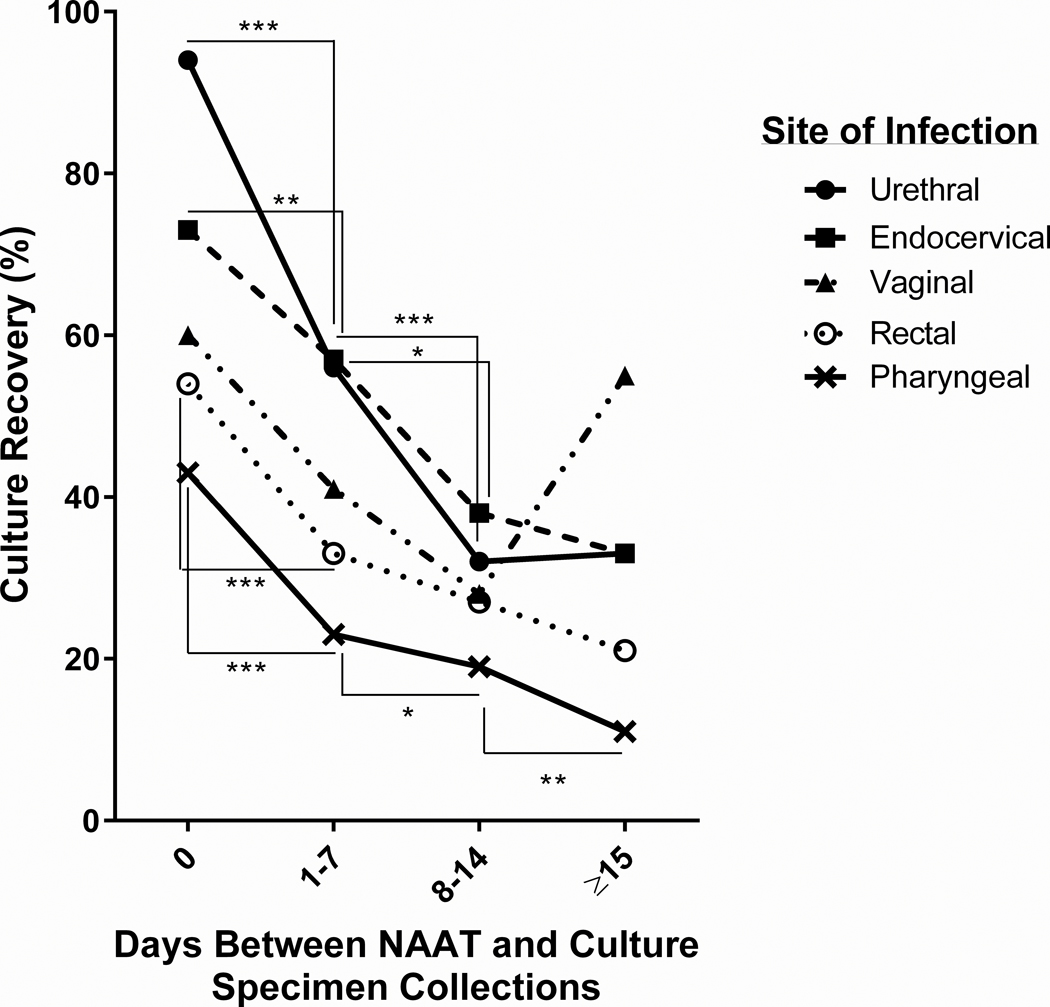
Description:Background: ; Neisseria gonorrhoeae culture is required for antimicrobial susceptibility testing, but recovering isolates from clinical specimens is challenging. Although many variables influence culture recovery, studies evaluating the impact of culture specimen collection timing and patient symptomstatus are limited. This study analyzed urogenital and extragenital culture recovery data from Centers for Disease Control and Prevention’s Strengthening the US Response to Resistant Gonorrhea (SURRG) program, a multisite project, which enhances local N. gonorrhoeae culture and antimicrobial susceptibility testing capacity. ; Methods: ; Eight SURRG jurisdictions collected gonococcal cultures from patients with N. gonorrhoeae–positive nucleic acid amplification test (NAAT) results attending sexually transmitted disease and community clinics. Matched NAAT and culture specimens from the same anatomic site were collected, and culture recovery was assessed. Time between NAAT and culture specimen collection was categorized as same day, 1 to 7 days, 8 to 14 days, or ≥15 days, and patient symptoms were matched to the anatomic site where culture specimens were collected. ; Results: ; From 2018 to 2019, among persons with N. gonorrhoeae–positive NAAT, urethral infections resulted in the highest culture recovery (5927 of 6515 91.0%), followed by endocervical (222 of 363 61.2%), vaginal (63 of 133 47.4%), rectal (1117 of 2805 39.8%), and pharyngeal (1019 of 3678 27.7%) infections. Culture recovery was highest when specimens were collected on the same day as NAAT specimens and significantly decreased after 7 days. Symptoms were significantly associated with culture recovery at urethral (P = <0.0001) and rectal (P = <0.0001) sites of infection but not endocervical, vaginal, or pharyngeal sites. ; Conclusions: ; Culture specimen collection timing and patient symptomatic status can impact culture recovery. These findings can guide decisions about culture collection protocols to maximize culture recovery and strengthen detection of antimicrobial-resistant infections.
-
Subjects:
-
Source:Sex Transm Dis. 48(12):S151-S156
-
Pubmed ID:34433797
-
Pubmed Central ID:PMC9125530
-
Document Type:
-
Funding:
-
Volume:48
-
Issue:12
-
Download URL:
-
File Type:
 [PDF - 611.19 KB]
 -
Collection(s):
-
Main Document Checksum:urn:sha256:918cce68346312c7ad0373f91f0d09b767094b8266961b86d9332947568fea8d
Supporting Files


File Language:
English
 Was this page helpful?
 Found an issue?


CDC STACKS serves as an archival repository of CDC-published products including
scientific findings, journal articles, guidelines, recommendations, or other public health information authored or
co-authored by CDC or funded partners.
As a repository, CDC STACKS retains documents in their original published format to ensure public access to scientific information.
As a repository, CDC STACKS retains documents in their original published format to ensure public access to scientific information.
You May Also Like
COLLECTION
CDC Public Access