


Malaria Chemoprevention in the Postdischarge Management of Severe Anemia
Supporting Files

-
12 03 2020
-
File Language:
English
Details
-
Alternative Title:N Engl J Med
-
Personal Author:
-
Description:BACKGROUND
Children who have been hospitalized with severe anemia in areas of Africa in which malaria is endemic have a high risk of readmission and death within 6 months after discharge. No prevention strategy specifically addresses this period.
METHODS
We conducted a multicenter, two-group, randomized, placebo-controlled trial in nine hospitals in Kenya and Uganda to determine whether 3 months of malaria chemoprevention could reduce morbidity and mortality after hospital discharge in children younger than 5 years of age who had been admitted with severe anemia. All children received standard in-hospital care for severe anemia and a 3-day course of artemether–lumefantrine at discharge. Two weeks after discharge, children were randomly assigned to receive dihydroartemisinin–piperaquine (chemoprevention group) or placebo, administered as 3-day courses at 2, 6, and 10 weeks after discharge. Children were followed for 26 weeks after discharge. The primary outcome was one or more hospital readmissions for any reason or death from the time of randomization to 6 months after discharge. Conditional risk-set modeling for recurrent events was used to calculate hazard ratios with the use of the Prentice–Williams–Peterson total-time approach.
RESULTS
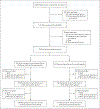
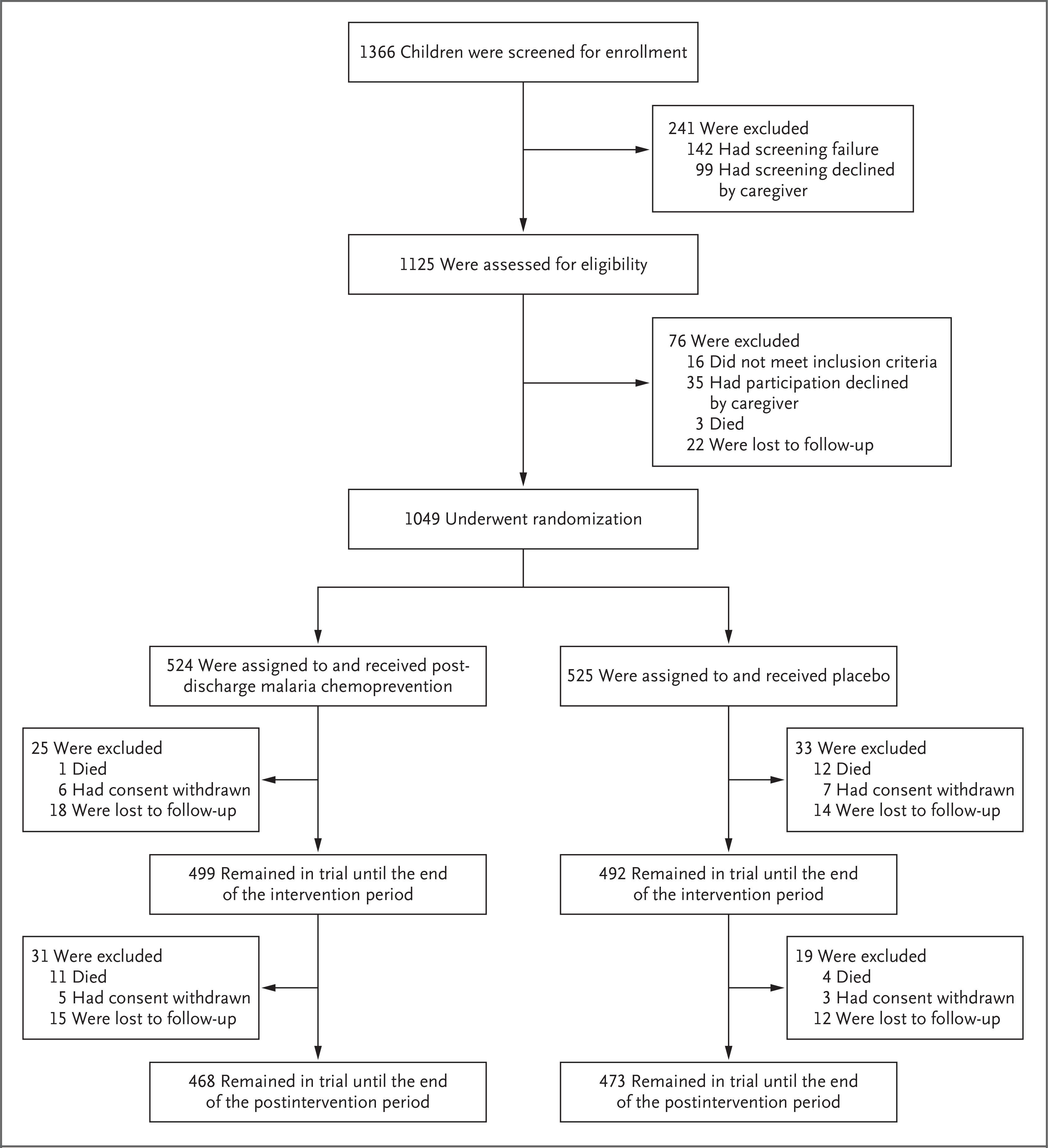
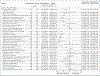
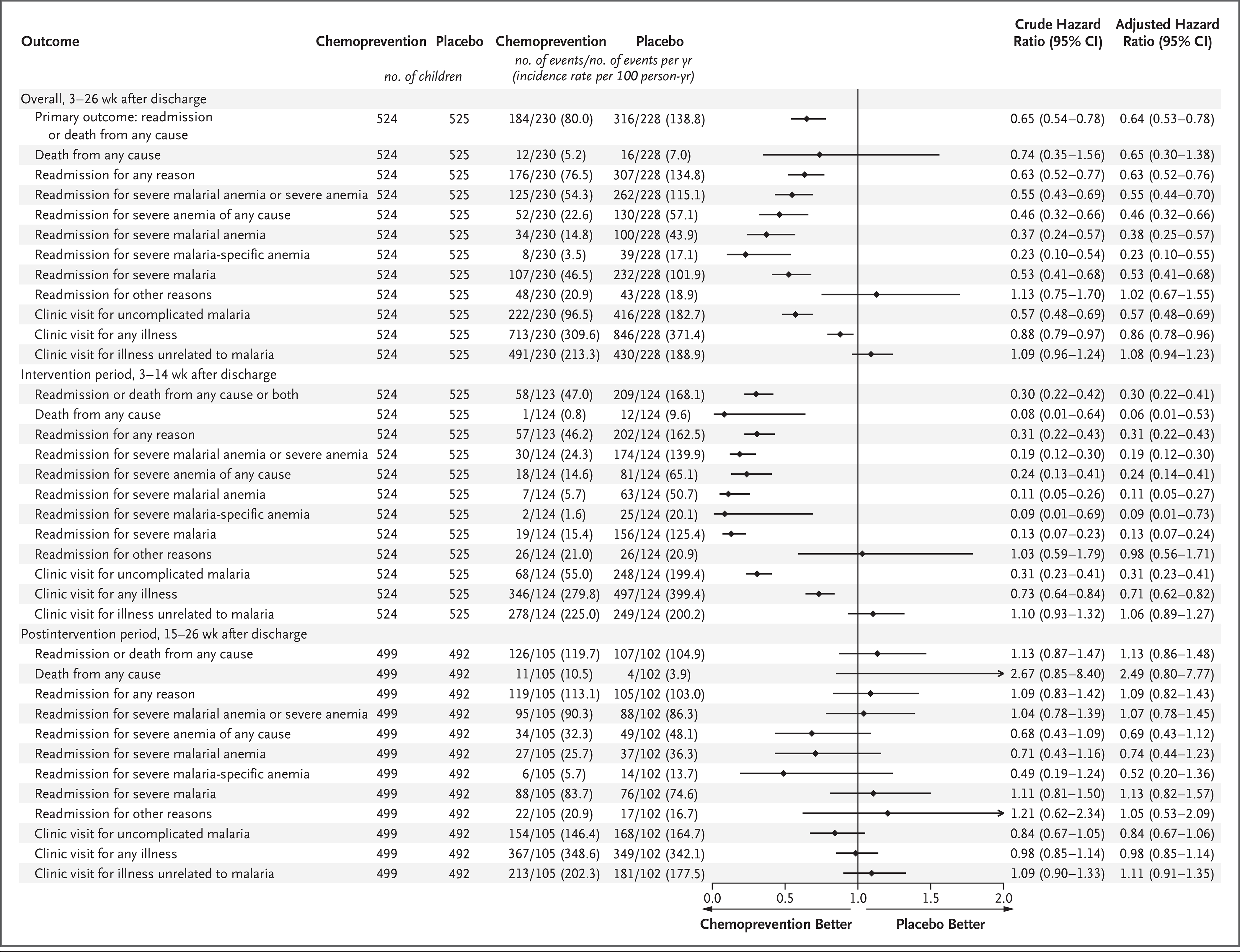
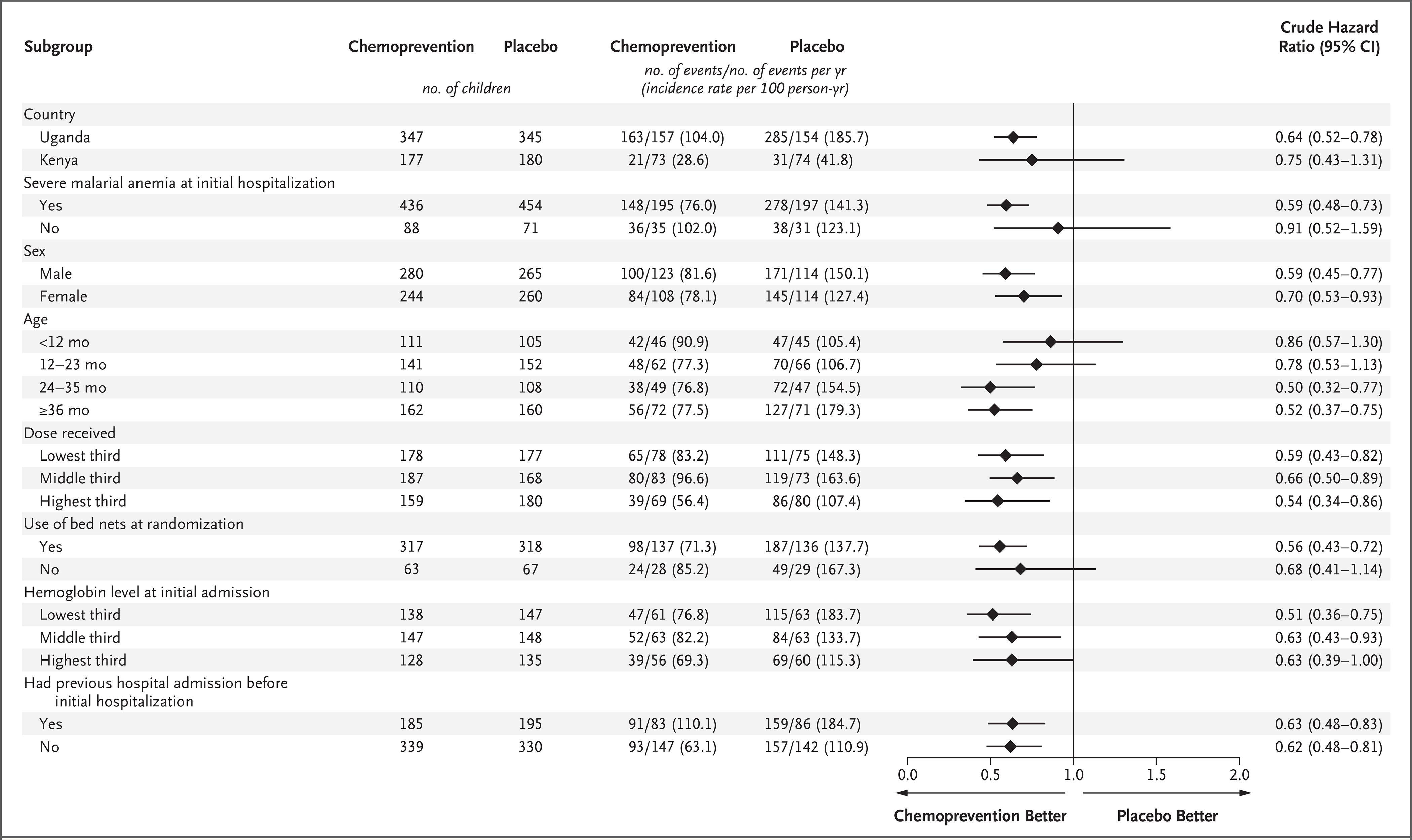
From May 2016 through May 2018, a total of 1049 children underwent randomization; 524 were assigned to the chemoprevention group and 525 to the placebo group. From week 3 through week 26, a total of 184 events of readmission or death occurred in the chemoprevention group and 316 occurred in the placebo group (hazard ratio, 0.65; 95% confidence interval [CI], 0.54 to 0.78; P<0.001). The lower incidence of readmission or death in the chemoprevention group than in the placebo group was restricted to the intervention period (week 3 through week 14) (hazard ratio, 0.30; 95% CI, 0.22 to 0.42) and was not sustained after that time (week 15 through week 26) (hazard ratio, 1.13; 95% CI, 0.87 to 1.47). No serious adverse events were attributed to dihydroartemisinin–piperaquine.
CONCLUSIONS
In areas with intense malaria transmission, 3 months of postdischarge malaria chemoprevention with monthly dihydroartemisinin–piperaquine in children who had recently received treatment for severe anemia prevented more deaths or readmissions for any reason after discharge than placebo. (Funded by the Research Council of Norway and the Centers for Disease Control and Prevention; ClinicalTrials.gov number, NCT02671175.)
-
Subjects:
-
Source:N Engl J Med. 383(23):2242-2254
-
Pubmed ID:33264546
-
Pubmed Central ID:PMC9115866
-
Document Type:
-
Funding:
-
Volume:383
-
Issue:23
-
Collection(s):
-
Main Document Checksum:urn:sha256:94b1627c81cc9b0773181028fc7301fd0035ef7ada98fd4ba43fa2af8c078333
-
Download URL:
-
File Type:
 [PDF
- 1.16 MB
]
[PDF
- 1.16 MB
]
Supporting Files


File Language:
English
ON THIS PAGE

CDC STACKS serves as an archival repository of CDC-published products including
scientific findings,
journal articles, guidelines, recommendations, or other public health information authored or
co-authored by CDC or funded partners.
As a repository, CDC STACKS retains documents in their original published format to ensure public access to scientific information.
As a repository, CDC STACKS retains documents in their original published format to ensure public access to scientific information.
You May Also Like
COLLECTION
CDC Public Access