


Cadmium-induced ototoxicity in rat cochlear organotypic cultures
Supporting Files

-
8 2014
-
File Language:
English
Details
-
Alternative Title:Neurotox Res
-
Personal Author:
-
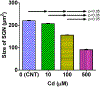
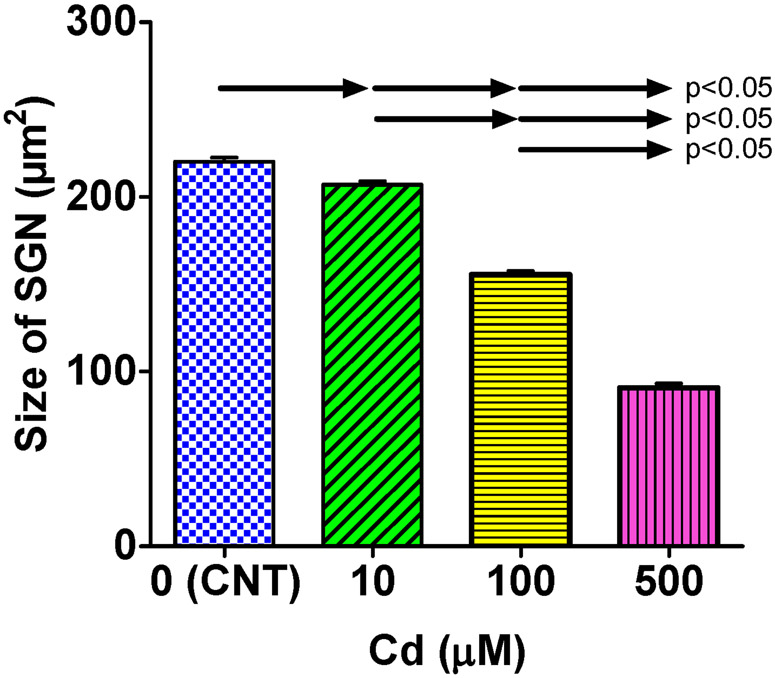
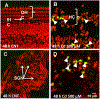
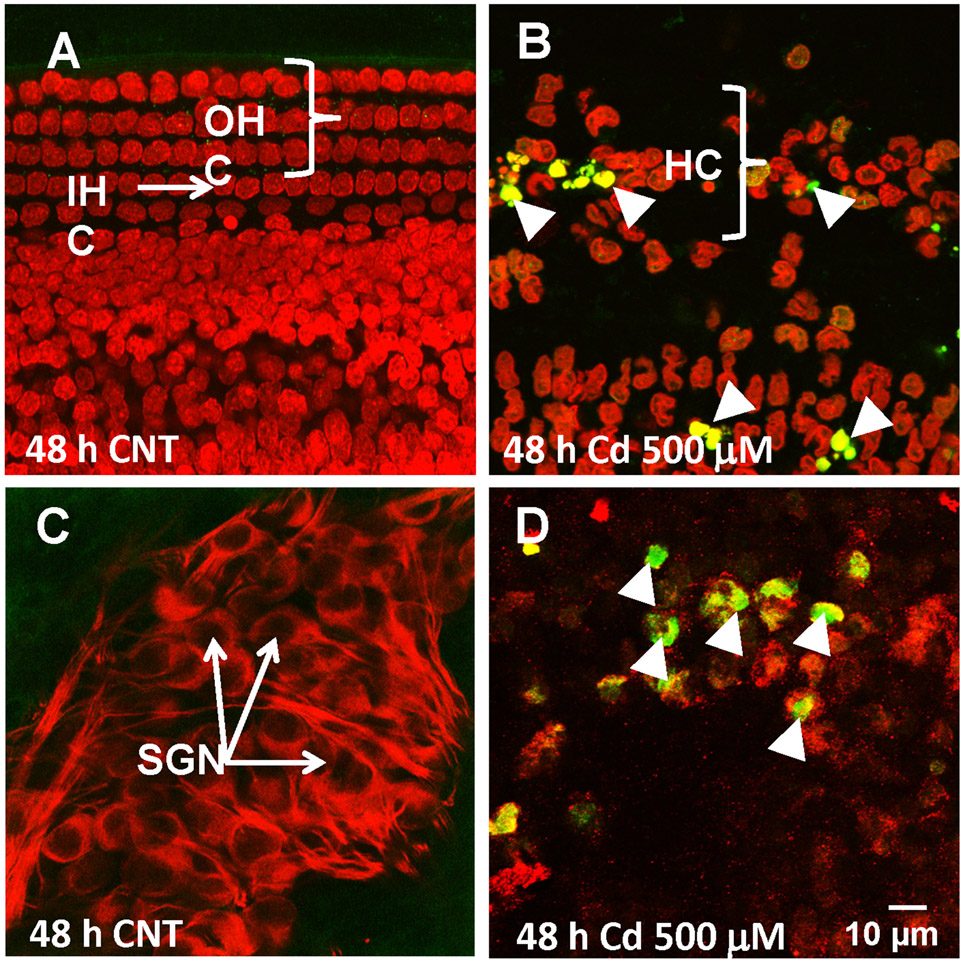
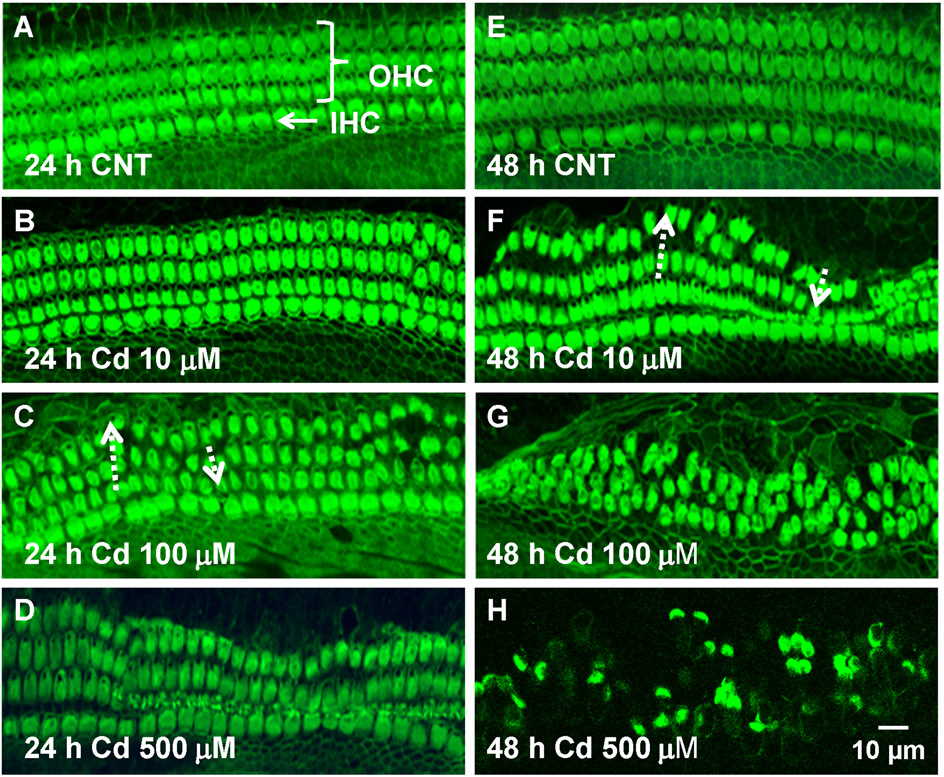
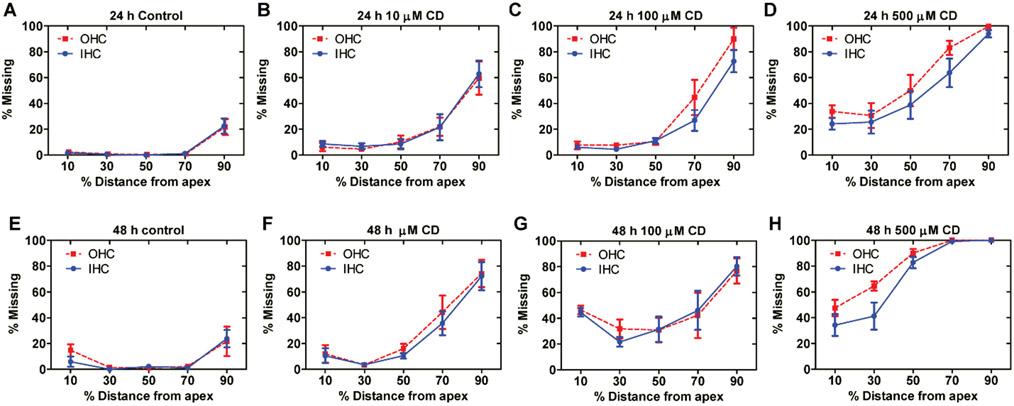
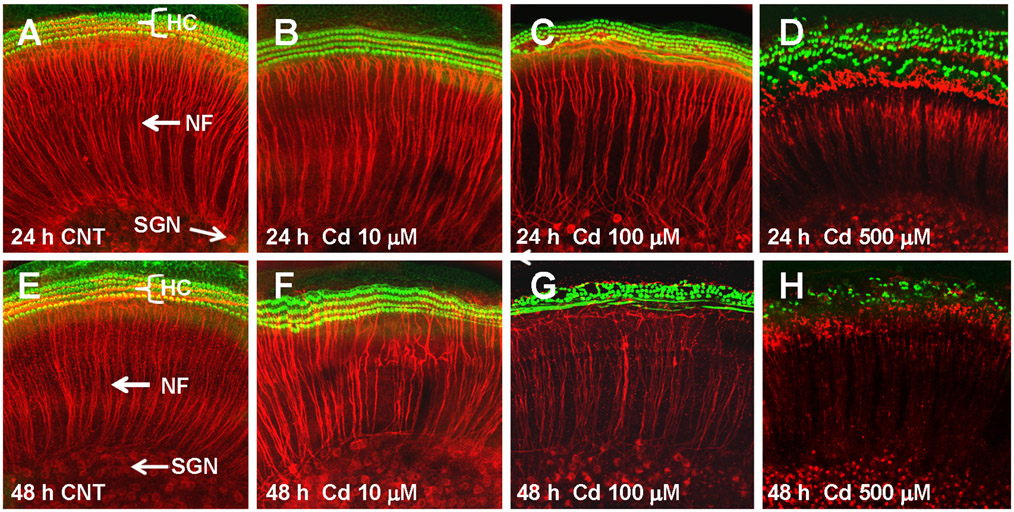
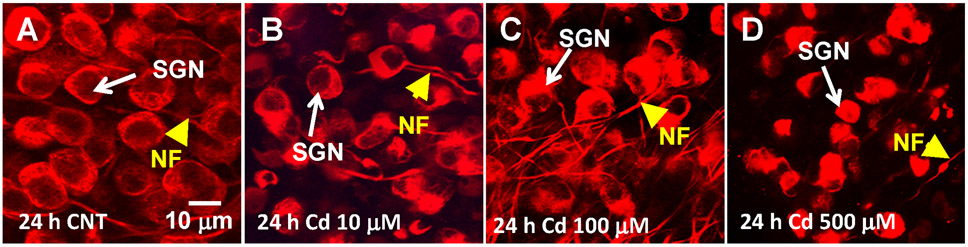
Description:Cadmium (Cd), a widely used industrial metal, is extremely nephrotoxic and neurotoxic; however, its effects on the peripheral auditory system are poorly understood. To evaluate the ototoxicity of Cd, we treated cochlear organotypic cultures from postnatal day 3 rats with Cd concentrations from 10 to 500 μM for 24 or 48 h. Afterward, we evaluated the degree of damage to hair cells, auditory nerve fibers, and spiral ganglion neurons. Damage to the hair cells, auditory nerve fibers, and spiral ganglion neurons systematically increased in a dose and time-dependent manner. Exposure to Cd concentrations of 10 μM for 24 and 48 h resulted in minor inner and outer hair cell loss in the basal third of the cochlea. As Cd concentrations increased, toxicity spread toward the apex, also in a time-dependent manner. Treatment with 100 μM Cd for 48 h resulted in substantial (>30 %) hair cell loss over the entire cochlea. Cd was also toxic to auditory nerve fibers and spiral ganglion neurons; 100 μM of Cd for 24 h or 10 μM of Cd for 48 h resulted in considerable damage to auditory nerve fibers and spiral ganglion neurons. These findings are the first to demonstrate that Cd can cause significant lesions to peripheral auditory nerve fibers, spiral ganglion neurons, and sensory hair cells in organotypic cultures from postnatal cochleae.
-
Subjects:
-
Source:Neurotox Res. 26(2):179-189
-
Pubmed ID:24577639
-
Pubmed Central ID:PMC9100876
-
Document Type:
-
Funding:
-
Volume:26
-
Issue:2
-
Collection(s):
-
Main Document Checksum:urn:sha256:6d9acbab9ff2858e9029f8fbdc04ba962188af53b2e847cd39b202b2252a5f45
-
Download URL:
-
File Type:
 [PDF
- 2.72 MB
]
[PDF
- 2.72 MB
]
Supporting Files


File Language:
English
ON THIS PAGE




CDC STACKS serves as an archival repository of CDC-published products including
scientific findings,
journal articles, guidelines, recommendations, or other public health information authored or
co-authored by CDC or funded partners.
As a repository, CDC STACKS retains documents in their original published format to ensure public access to scientific information.
As a repository, CDC STACKS retains documents in their original published format to ensure public access to scientific information.
You May Also Like
COLLECTION
CDC Public Access