



Micronutrient Supplementation and Pregnancy Outcomes
Supporting Files

-
2 25 2013
-
File Language:
English
Details
-
Alternative Title:JAMA Intern Med
-
Personal Author:
-
Description:Background:
Beyond perinatal folic acid supplementation, the need for additional prenatal prophylaxis of iron with or without other micronutrients remains unclear. We aim to investigate the maternal and infant health effects of iron plus folic acid and multiple micronutrient supplements vs folic acid alone when provided to pregnant women with no or mild anemia.
Methods:
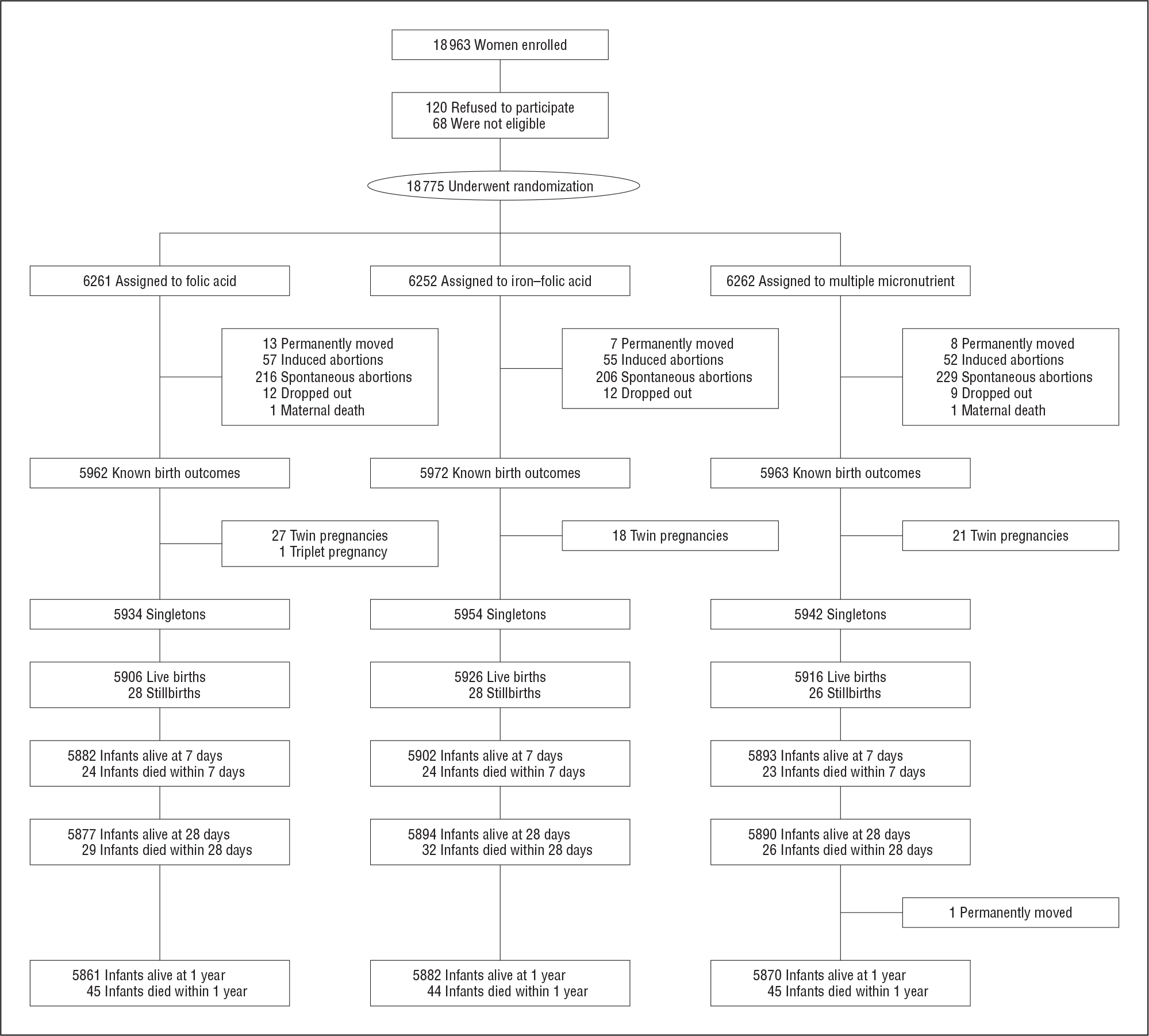
In this randomized double-blind controlled trial, 18 775 nulliparous pregnant women with mild or no anemia were enrolled from 5 counties of northern China from May 2006 through April 2009. Women were randomly assigned to daily folicacid (400 μg)(control), folic acid–iron (30 mg), or folic acid, iron, and 13 additional vitamins and minerals provided before 20 weeks gestation to delivery. Primary outcome was perinatal mortality. Secondary outcomes included neonatal and infant mortality, preterm delivery, birthweight, birth length, gestational duration, and maternal hemoglobin concentration and anemia.
Results:
A total of 92.7% of women consumed 80% to 100% of supplements as instructed. On average, women consumed 177 supplements. Compared with daily prenatal folic acid, supplementation with iron–folic acid with or without other micronutrients did not affect the rate of perinatal mortality (8.8, 8.7, and 8.3, respectively) per 1000 births, and relative risks (RRs) were 1.00 (95% CI, 0.68–1.46; P=.99) and 0.94 (95% CI, 0.64–1.39; P=.76), respectively. Risk of other adverse maternal and infant outcomes also did not differ, except that RRs for third-trimester maternal anemia were 0.72 (95% CI, 0.63–0.83; P < .001) and 0.71 (95% CI, 0.62–0.82; P < .001), respectively.
Conclusion:
Prenatal iron–folic acid and other micronutrient supplements provided to Chinese women with no or mild anemia prevented later pregnancy anemia beyond any benefit conferred by folic acid alone but did not affect perinatal mortality or other infant outcomes.
Trial Registration:
clinicaltrials.gov Identifier: NCT00133744
-
Subjects:
-
Source:JAMA Intern Med. 173(4):276-282
-
Pubmed ID:23303315
-
Pubmed Central ID:PMC9069205
-
Document Type:
-
Funding:
-
Place as Subject:
-
Volume:173
-
Issue:4
-
Collection(s):
-
Main Document Checksum:urn:sha256:25f8ad90f299451d89f086c881f88e4088919b28480b8bcfd8d7fe8c66df775d
-
Download URL:
-
File Type:
 [PDF
- 457.90 KB
]
[PDF
- 457.90 KB
]
Supporting Files


File Language:
English
 Was this page helpful?
 Found an issue?
CDC STACKS serves as an archival repository of CDC-published products including
scientific findings,
journal articles, guidelines, recommendations, or other public health information authored or
co-authored by CDC or funded partners.
As a repository, CDC STACKS retains documents in their original published format to ensure public access to scientific information.
As a repository, CDC STACKS retains documents in their original published format to ensure public access to scientific information.
You May Also Like
COLLECTION
CDC Public Access