



Mold clean-up practices vary by sociodemographic and allergy factors
Supporting Files

-
12 2020
-
Available in CDC Stacks on April 04, 2022, 12:00 AM
File Language:
English
Details
-
Alternative Title:J Environ Health
-
Personal Author:
-
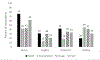
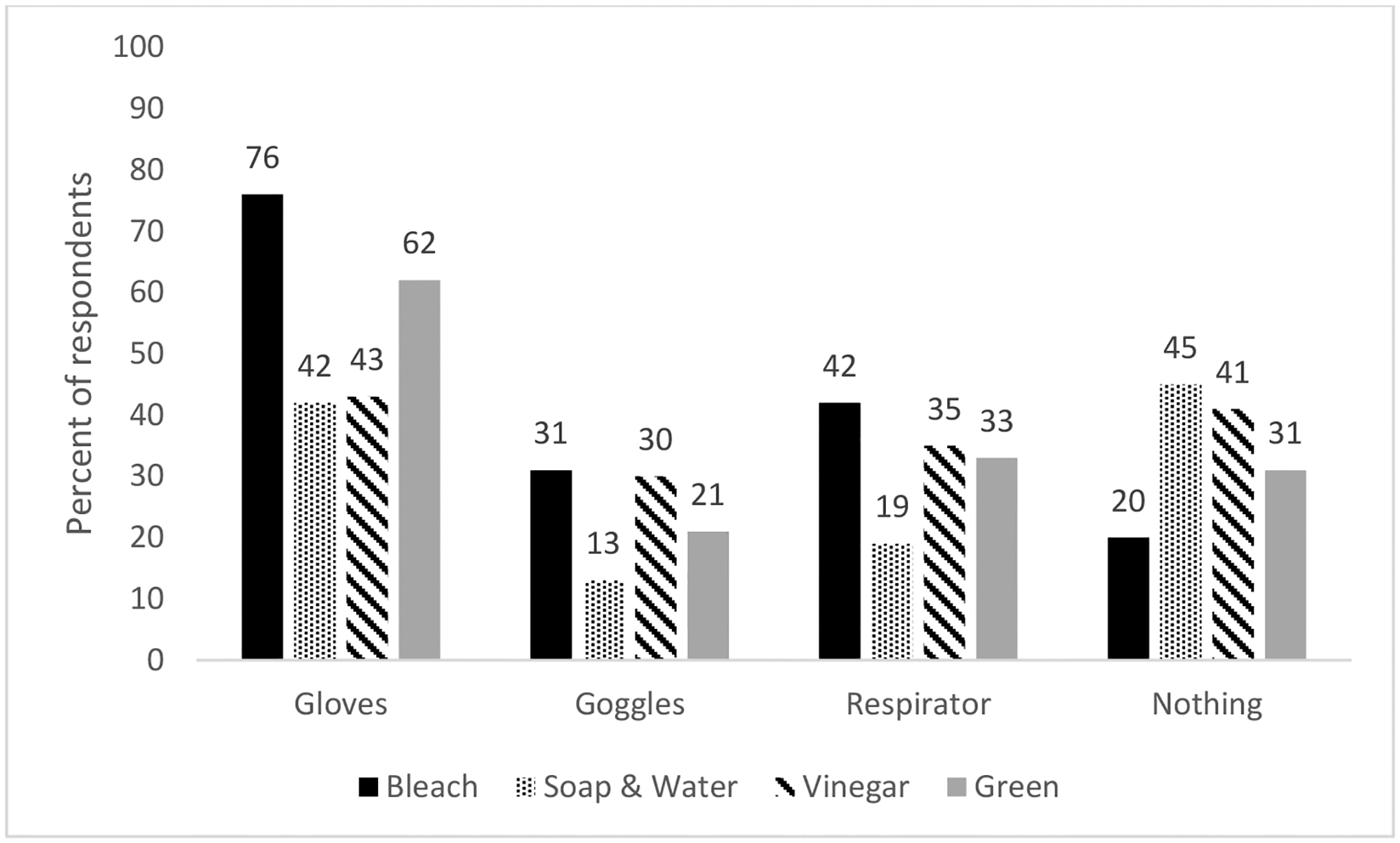
Description:We examined mold clean-up practices in a general population (not selected on history of natural disaster). We used a population-based survey (n= 3,624) to assess associations between sociodemographic/ housing/ respiratory health variables and mold clean-up, PPE use, and cleaning agent use. Bleach was the most commonly used cleaning agent with approximately 90% of residents reporting using bleach alone or with other agents. More respondents used gloves (76%) than any other PPE. The use of PPE varied; 42% of bleach users wore a breathing mask/respirator compared with only 19% of soap and water users. Hispanic populations frequently reported mold clean-up. Bleach use was less likely in the West and among Asians. Although "Green" products were rarely used, Asians were more likely to use them. Bleach was the most commonly used cleaning agent for mold, and PPE use was common when using bleach, supporting the need for current CDC safe use recommendations.
-
Subjects:
-
Source:J Environ Health. 83(5):18-21
-
Pubmed ID:35382222
-
Pubmed Central ID:PMC8978808
-
Document Type:
-
Funding:
-
Volume:83
-
Issue:5
-
Download URL:
-
File Type:
 [PDF - 208.78 KB]
 -
Collection(s):
-
Main Document Checksum:urn:sha256:6431368579af3006c6b760e398d9f07237106cf541caf59fed6075279c7ac8ee
Supporting Files


File Language:
English
 Was this page helpful?
 Found an issue?

CDC STACKS serves as an archival repository of CDC-published products including
scientific findings, journal articles, guidelines, recommendations, or other public health information authored or
co-authored by CDC or funded partners.
As a repository, CDC STACKS retains documents in their original published format to ensure public access to scientific information.
As a repository, CDC STACKS retains documents in their original published format to ensure public access to scientific information.
You May Also Like
COLLECTION
CDC Public Access