



Prevalence of Hearing Protection Device Non-Use among Noise-exposed U.S. Workers in 2007 and 2014
Supporting Files

-
12 2021
-
Available in CDC Stacks on December 01, 2022, 12:00 AM
File Language:
English
Details
-
Alternative Title:Am J Ind Med
-
Personal Author:
-
Description:Background:
This study estimated the prevalence of hearing protection device (HPD) non-use among US workers exposed to hazardous workplace noise and provided risk estimates.
Methods:
Self-reported data from the National Health Interview Survey in 2007 (15,852 workers) and 2014 (23,656 workers) were examined. Weighted prevalence and adjusted prevalence ratios of HPD non-use (using HPDs half the time or less when exposed to hazardous noise) were estimated by demographic, industry and occupation. Differences in the prevalences of non-use were estimated and compared.
Results:
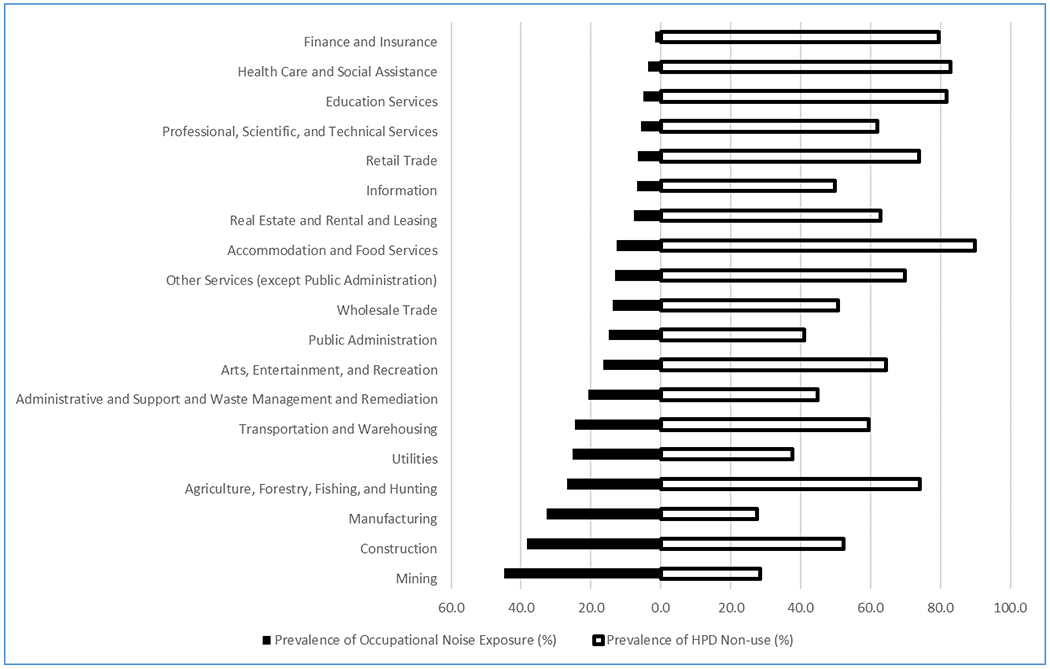
The prevalence of HPD non-use was 53% among all noise-exposed workers in 2014. Workers in the Accommodation and Food Services industry had the highest prevalence (90%) and risk (PR: 2.47, 95% CI: 1.54-3.96) of HPD non-use. The industries with the lowest prevalences of noise exposure, including Finance and Insurance (2%) and Health Care and Social Assistance (4%), had some of the highest prevalences of HPD non-use (80% and 83%, respectively). There were no statistically significant changes in HPD non-use among industries between 2007 and 2014. Among occupations, HPD non-use increased 37% in Arts, Design, Entertainment, Sports and Media, and decreased 39% in Architecture and Engineering.
Conclusion:
The prevalence of HPD non-use remains high; especially within industries and occupations with fewer noise-exposed workers. These groups need targeted attention to increase awareness and compliance. Employers should require HPD use and trainings among noise-exposed workers and provide an assortment of HPDs tailored to noise level and type, workplace environment, communication and audibility needs, and individual comfort and convenience. -
Subjects:
-
Source:Am J Ind Med. 64(12):1002-1017
-
Pubmed ID:34597431
-
Pubmed Central ID:PMC9020887
-
Document Type:
-
Funding:
-
Volume:64
-
Issue:12
-
Download URL:
-
File Type:
 [PDF - 344.21 KB]
 -
Collection(s):
-
Main Document Checksum:urn:sha256:6f29dc657938506f5af06d566c599646455671cddd0f8fad081c89c0d4deeaa8
Supporting Files


File Language:
English
 Was this page helpful?
 Found an issue?



CDC STACKS serves as an archival repository of CDC-published products including
scientific findings, journal articles, guidelines, recommendations, or other public health information authored or
co-authored by CDC or funded partners.
As a repository, CDC STACKS retains documents in their original published format to ensure public access to scientific information.
As a repository, CDC STACKS retains documents in their original published format to ensure public access to scientific information.
You May Also Like
COLLECTION
CDC Public Access