



Left ventricular dysfunction in Duchenne muscular dystrophy
Supporting Files

-
2 2020 ; 2-2020
-
Available in CDC Stacks on 2022-03-23T00:00:00Z
File Language:
English
Details
-
Alternative Title:Cardiol Young
-
Personal Author:James, Katherine A. ; Gralla, Jane ; Ridall, Leslie A. ; Do, ThuyQuynh N. ; Czaja, Angela S. ; Mourani, Peter M. ; Ciafaloni, Emma ; Cunniff, Christopher ; Donnelly, Jennifer ; Oleszek, Joyce ; Pandya, Shree ; Price, Elinora ; Yang, Michele L. ; Auerbach, Scott R.
-
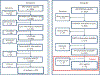
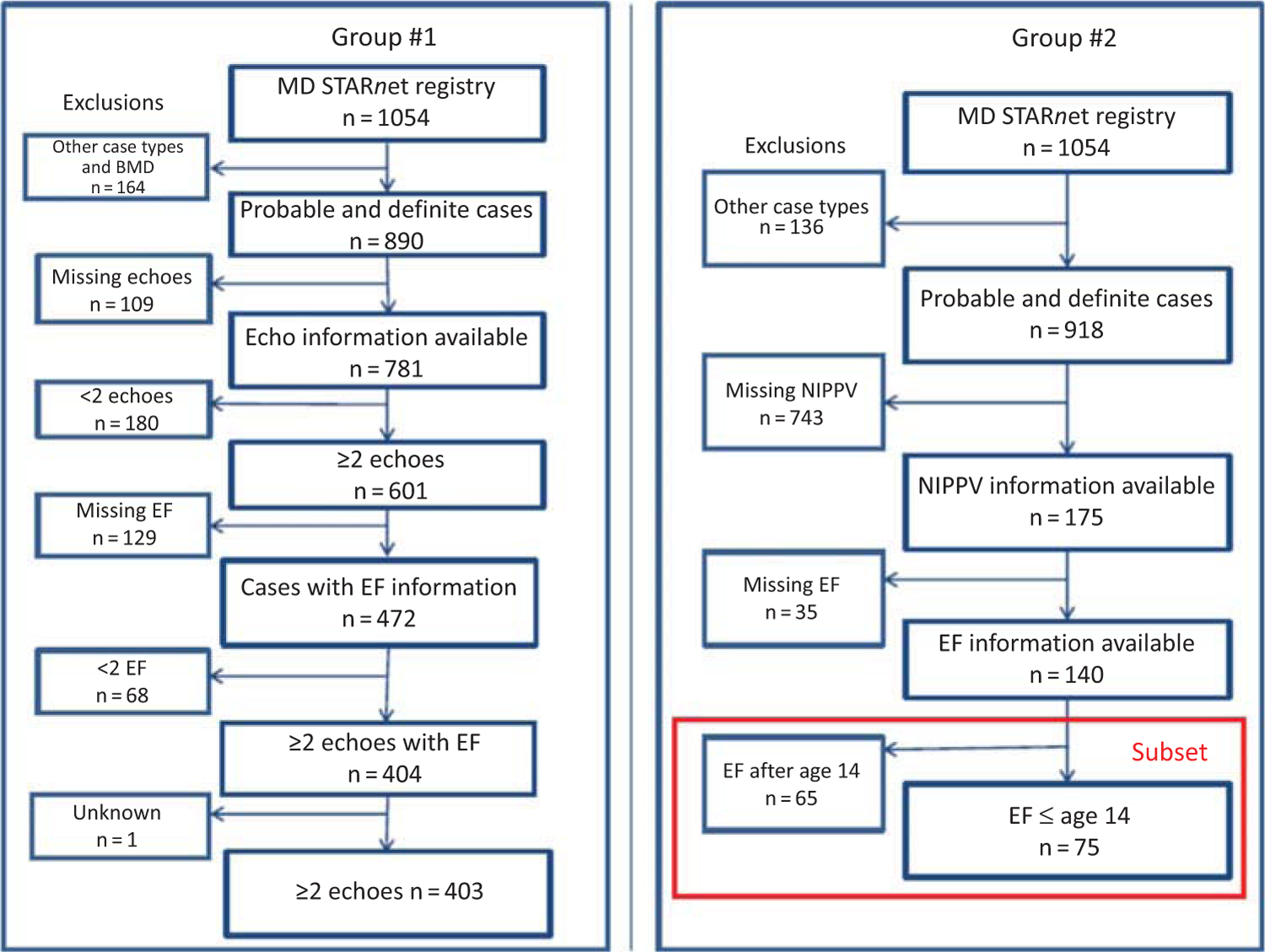
Description:Background: ; Duchenne muscular dystrophy is associated with progressive cardiorespiratory failure, including left ventricular dysfunction. ; Methods and Results: ; Males with probable or definite diagnosis of Duchenne muscular dystrophy, diagnosed between 1 January, 1982 and 31 December, 2011, were identified from the Muscular Dystrophy Surveillance Tracking and Research Network database. Two non-mutually exclusive groups were created: patients with ≥2 echocardiograms and non-invasive positive pressure ventilation-compliant patients with ≥1 recorded ejection fraction. Quantitative left ventricular dysfunction was defined as an ejection fraction <55%. Qualitative dysfunction was defined as mild, moderate, or severe. Progression of quantitative left ventricular dysfunction was modelled as a continuous time-varying outcome. Change in qualitative left ventricle function was assessed by the percentage of patients within each category at each age. Forty-one percent (n = 403) had ≥2 ejection fractions containing 998 qualitative assessments with a mean age at first echo of 10.8 ± 4.6 years, with an average first ejection fraction of 63.1 ± 12.6%. Mean age at first echo with an ejection fraction <55 was 15.2 ± 3.9 years. Thirty-five percent (140/403) were non-invasive positive pressure ventilation-compliant and had ejection fraction information. The estimated rate of decline in ejection fraction from first ejection fraction was 1.6% per year and initiation of non-invasive positive pressure ventilation did not change this rate. ; Conclusions: ; In our cohort, we observed that left ventricle function in patients with Duchenne muscular dystrophy declined over time, independent of non-invasive positive pressure ventilation use. Future studies are needed to examine the impact of respiratory support on cardiac function.
-
Subjects:
- Article
- Duchenne muscular dystrophy
- non-invasive positive pressure ventilation
- left ventricular dysfunction
- Adolescent
- Adult
- Child
- Child, Preschool
- Cohort Studies
- Echocardiography
- Glucocorticoids
- Humans
- Infant
- Infant, Newborn
- Male
- Muscular Dystrophy, Duchenne
- Stroke Volume
- Ventricular Dysfunction, Left
- Young Adult
-
Source:Cardiol Young. 30(2):171-176
-
Pubmed ID:31964455
-
Pubmed Central ID:PMC8941672
-
Document Type:
-
Funding:U01 DD001126/DD/NCBDD CDC HHSUnited States/ ; U01 DD000187/DD/NCBDD CDC HHSUnited States/ ; U01 DD001123/DD/NCBDD CDC HHSUnited States/ ; U01DD001123/ACL/ACL HHSUnited States/ ; U01 DD000189/DD/NCBDD CDC HHSUnited States/ ; U01DD001119/ACL/ACL HHSUnited States/ ; CC999999/ImCDC/Intramural CDC HHSUnited States/ ; U01DD001126/ACL/ACL HHSUnited States/ ; U01 DD000191/DD/NCBDD CDC HHSUnited States/ ; U01 DD001119/DD/NCBDD CDC HHSUnited States/
-
Volume:30
-
Issue:2
-
Download URL:
-
File Type:
 [PDF - 430.03 KB]
 -
Collection(s):
-
Main Document Checksum:urn:sha256:9f8aa4a2eac2d9ce4f84840f0436568b7bec85e357a2da4e494f9b547df5f035
Supporting Files


File Language:
English
 Was this page helpful?
 Found an issue?



CDC STACKS serves as an archival repository of CDC-published products including
scientific findings, journal articles, guidelines, recommendations, or other public health information authored or
co-authored by CDC or funded partners.
As a repository, CDC STACKS retains documents in their original published format to ensure public access to scientific information.
As a repository, CDC STACKS retains documents in their original published format to ensure public access to scientific information.
You May Also Like
COLLECTION
CDC Public Access