



Estimating Neonatal Herpes Simplex Virus Incidence and Mortality Using Capture-recapture, Florida
Supporting Files

-
8 02 2021 ; 8-02-
-
Available in CDC Stacks on 2022-08-02T00:00:00Z
File Language:
English
Details
-
Alternative Title:Clin Infect Dis
-
Personal Author:
-
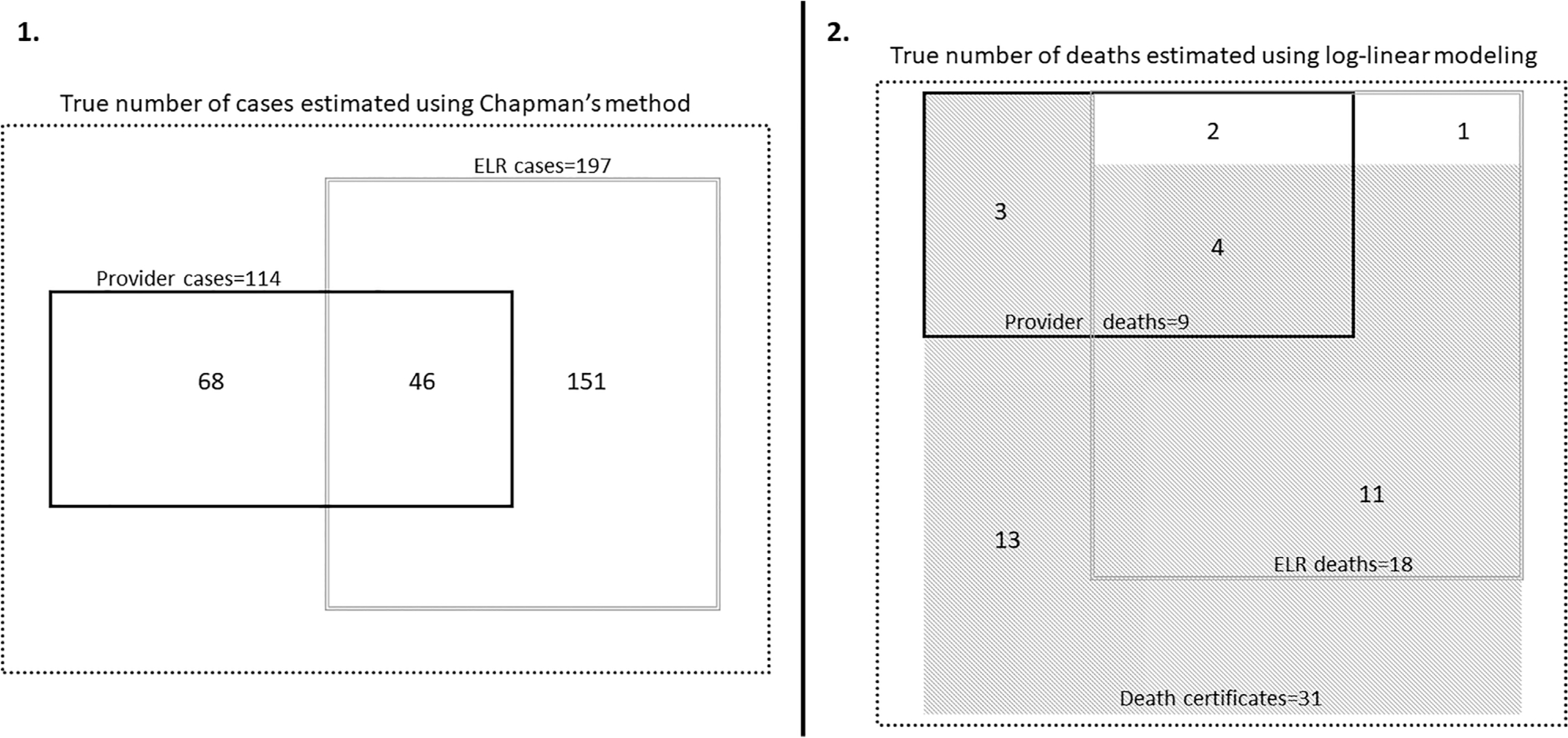
Description:Background. ; Neonatal herpes simplex virus infection (nHSV) leads to severe morbidity and mortality, but national incidence is uncertain. Florida regulations require that healthcare providers report cases, and clinical laboratories report test results when herpes simplex virus (HSV) is detected. We estimated nHSV incidence using laboratory-confirmed provider-reported cases and electronic laboratory reports (ELR) stored separately from provider-reported cases. Mortality was estimated using provider-reported cases, ELR, and vital statistics death records. ; Methods. ; For 2011–2017, we reviewed: provider-reported cases (infants ≤ 60 days of age with HSV infection confirmed by culture or polymerase chain reaction PCR), ELR of HSV-positive culture or PCR results in the same age group, and death certificates containing International Classification of Disease, Tenth Revision, codes for herpes infection: P35.2, B00.0-B00.9, and A60.0-A60.9. Provider-reported cases were matched against ELR reports. Death certificates were matched with provider and ELR reports. Chapman’s capture-recapture method was used to estimate nHSV incidence and mortality. Mortality from all 3 sources was estimated using log-linear modeling. ; Results. ; Providers reported 114 nHSV cases, and ELR identified 197 nHSV cases. Forty-six cases were common to both datasets, leaving 265 unique nHSV reports. Chapman’s estimate suggests 483 (95% confidence interval CI, 383–634) nHSV cases occurred (31.5 infections per 100 000 live births). The nHSV deaths were reported by providers (n = 9), ELR (n = 18), and vital statistics (n = 31), totaling 34 unique reports. Log-linear modeling estimates 35.8 fatal cases occurred (95% CI, 34–40). ; Conclusions. ; Chapman’s estimates using data collected over 7 years in Florida conclude nHSV infections occurred at a rate of 1 per 3000 live births.
-
Subjects:
-
Keywords:
-
Source:Clin Infect Dis. 73(3):506-512
-
Pubmed ID:32507882
-
Pubmed Central ID:PMC8935354
-
Document Type:
-
Funding:
-
Volume:73
-
Issue:3
-
Download URL:
-
File Type:
 [PDF - 323.05 KB]
 -
Collection(s):
-
Main Document Checksum:urn:sha256:c2d52c68095cd5703c1dbb1d5d1665492b97d5948ee9787e716c1e0fadacc83e
Supporting Files


File Language:
English
 Was this page helpful?
 Found an issue?

CDC STACKS serves as an archival repository of CDC-published products including
scientific findings, journal articles, guidelines, recommendations, or other public health information authored or
co-authored by CDC or funded partners.
As a repository, CDC STACKS retains documents in their original published format to ensure public access to scientific information.
As a repository, CDC STACKS retains documents in their original published format to ensure public access to scientific information.
You May Also Like
COLLECTION
CDC Public Access