



Etymologia: Schizophyllum commune
Supporting Files
Public Domain

-
3 2022
File Language:
English
Details
-
Alternative Title:Emerg Infect Dis
-
Personal Author:
-
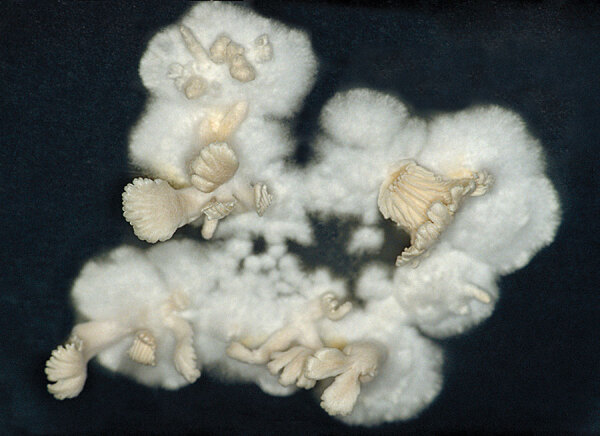
Description:Schizophyllum commune, or split-gill mush- room, is an environmental, wood-rotting basidiomycetous fungus. Schizophyllum is derived from “Schíza” meaning split because of the appearance of radial, centrally split, gill like folds; “commune” means common or shared ownership or ubiquitous. Swedish mycologist, Elias Magnus Fries (1794–1878), the Linnaeus of Mycology, assigned the scientific name in 1815. German mycologist Hans Kniep in 1930 discovered its sexual reproduc- tion by consorting and recombining genomes with any one of numerous compatible mates (currently >2,800). ; Isolation by Kligman in 1950 of fleshy fungus that had fan-shaped sporophores from a case of onychomycosis was regarded as interesting. However, it was dismissed as improbable because mushrooms were not known to invade animal tissue. This emerging fungal pathogen is characterized by the presence of clamp connections, hy- phal spicules, and formation of basidiocarps with basidiospores.
-
Subjects:
-
Source:Emerg Infect Dis. 2022; 28(3):725
-
Pubmed Central ID:PMC8888233
-
Document Type:
-
Corporate as Subject:
-
Genre:
-
Volume:28
-
Issue:3
-
Download URL:
-
File Type:
 [PDF - 1.23 MB]
 -
Collection(s):
-
Main Document Checksum:urn:sha256:b51fea4d3ce5a1d6b0d578ad5fc3b30f0a3a32b272f33f13800c98a597bad5a8
Supporting Files


File Language:
English
 Was this page helpful?
 Found an issue?



CDC STACKS serves as an archival repository of CDC-published products including
scientific findings, journal articles, guidelines, recommendations, or other public health information authored or
co-authored by CDC or funded partners.
As a repository, CDC STACKS retains documents in their original published format to ensure public access to scientific information.
As a repository, CDC STACKS retains documents in their original published format to ensure public access to scientific information.
You May Also Like
COLLECTION
Emerging Infectious Diseases