


The Role of Negative Emotionality in the Development of Child Executive Function and Language Abilities From Toddlerhood to First Grade: An Adoption Study
Supporting Files

-
3 2021
-
File Language:
English
Details
-
Alternative Title:Dev Psychol
-
Personal Author:
-
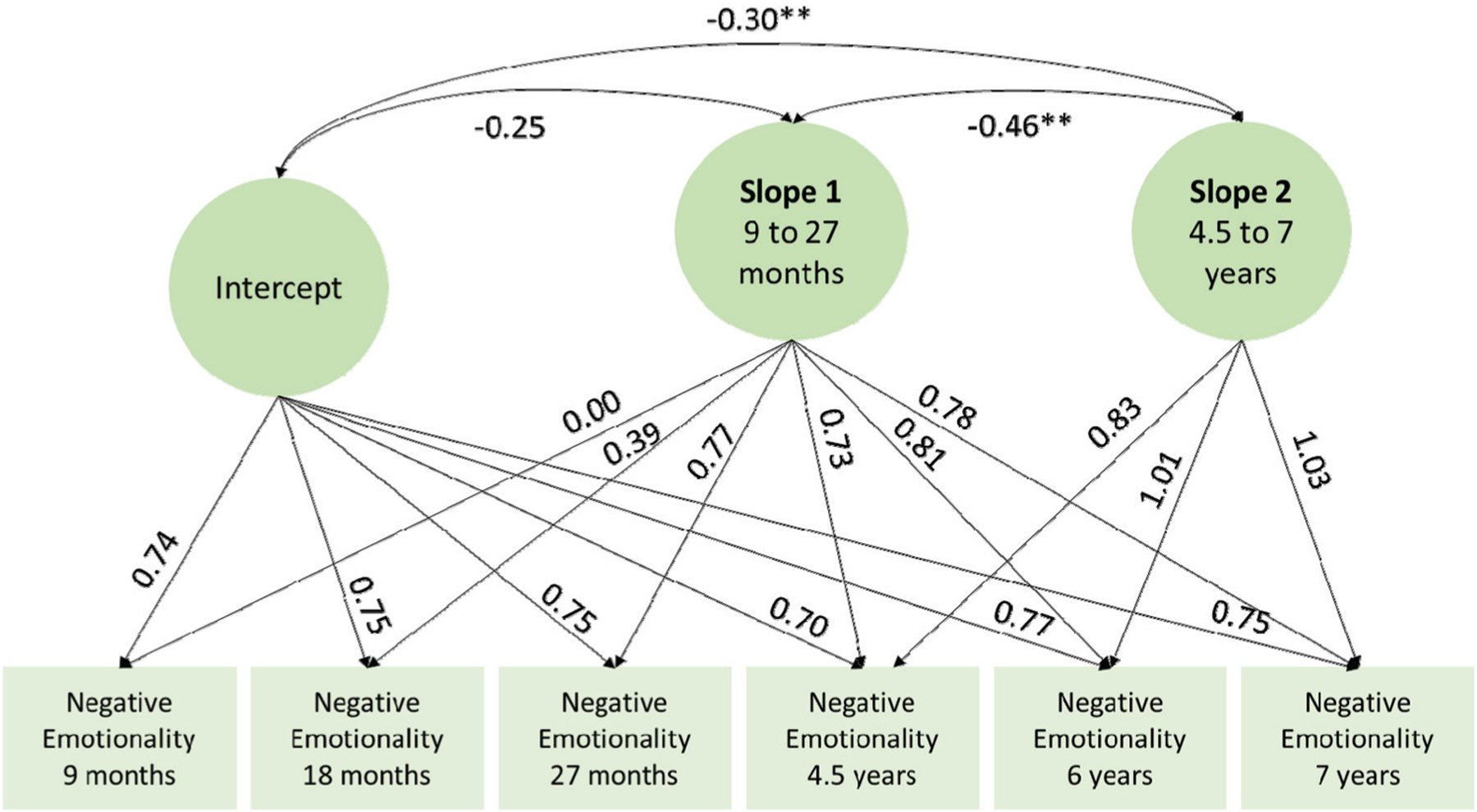
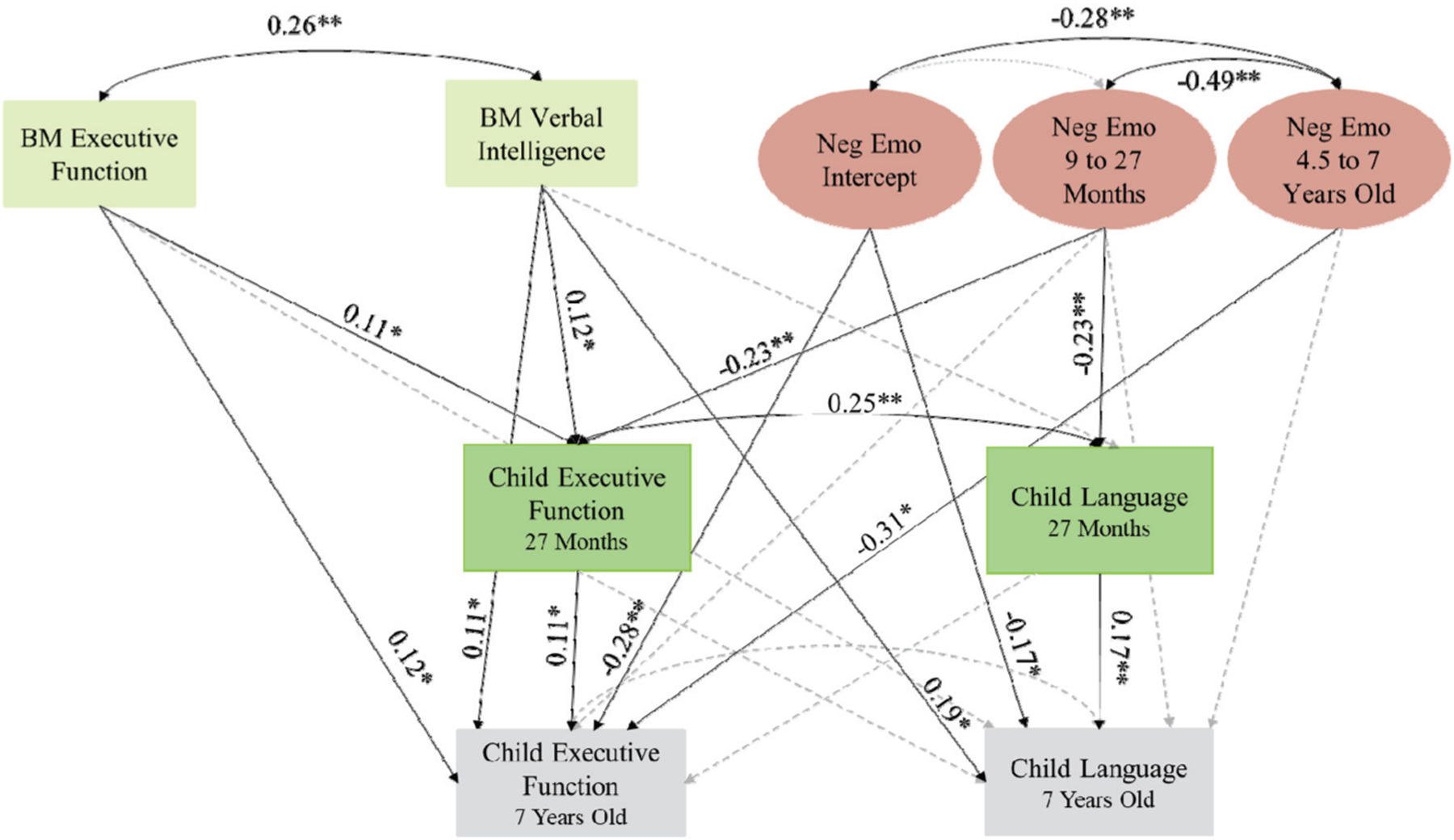
Description:Understanding the role of negative emotionality in the development of executive functioning (EF) and language skills can help identify developmental windows that may provide promising opportunities for intervention. In addition, because EF and language skills are, in part, genetically influenced, intergenerational transmission patterns are important to consider. The prospective parent-offspring adoption design used in this study provides a unique opportunity to examine the intergenerational transmission of EF and language skills. Participants were 561 children adopted around the time of birth. Accounting for birth mother EF and language contributions, we examined the role of child negative emotionality in toddlerhood (age 9 to 27 months) and childhood (age 4.5 to 7 years) on child EF and language skills in first grade (age 7 years). There was continuity in EF from age 27 months to 7 years, and in language ability from age 27 months to 7 years, with no cross-lagged effects between child EF and language ability. Negative emotionality at age 9 months predicted lower EF and lower language abilities at age 7 years, and growth in negative emotionality from age 4.5 to 7 years predicted lower child EF at age 7 years. Overall, findings suggested that lower negative emotionality at age 9 months was associated with higher toddler and child EF and language skills and that preventing growth in negative emotionality from age 4.5 to 7 years may lead to improvements in child EF. (PsycInfo Database Record (c) 2021 APA, all rights reserved).
-
Subjects:
-
Source:Dev Psychol. 57(3):347-360
-
Pubmed ID:33570984
-
Pubmed Central ID:PMC7970442
-
Document Type:
-
Funding:R01 HD042608/HD/NICHD NIH HHSUnited States/ ; R01 DA020585/DA/NIDA NIH HHSUnited States/ ; UH3 OD023389/OD/NIH HHSUnited States/ ; P50 DA048756/DA/NIDA NIH HHSUnited States/ ; F32 HD093347/HD/NICHD NIH HHSUnited States/ ; Eunice Kennedy Shriver National Institute of Child Health and Human Development/ ; R01 DA035062/DA/NIDA NIH HHSUnited States/ ; R01 DK090264/DK/NIDDK NIH HHSUnited States/ ; National Institute of Child Health and Human Development/ ; R01 MH092118/MH/NIMH NIH HHSUnited States/ ; CD/ODCDC CDC HHSUnited States/
-
Volume:57
-
Issue:3
-
Collection(s):
-
Main Document Checksum:urn:sha256:33dcf6e93512ca3acda718b55f55fd4d8af3bf96c4830f2d3a5e1f398451ad4f
-
Download URL:
-
File Type:
 [PDF
- 695.00 KB
]
[PDF
- 695.00 KB
]
Supporting Files


File Language:
English
ON THIS PAGE

CDC STACKS serves as an archival repository of CDC-published products including
scientific findings,
journal articles, guidelines, recommendations, or other public health information authored or
co-authored by CDC or funded partners.
As a repository, CDC STACKS retains documents in their original published format to ensure public access to scientific information.
As a repository, CDC STACKS retains documents in their original published format to ensure public access to scientific information.
You May Also Like
COLLECTION
CDC Public Access