


Norovirus and Other Viral Causes of Medically Attended Acute Gastroenteritis Across the Age Spectrum: Results from the MAAGE Study in the United States
Supporting Files

-
8 16 2021
-
File Language:
English
Details
-
Journal Article:Clin Infect Dis
-
Personal Author:
-
Description:Background:
Acute gastroenteritis (AGE) causes a substantial burden in the United States, but its etiology frequently remains undetermined. Active surveillance within an integrated healthcare delivery system was used to estimate the prevalence and incidence of medically attended norovirus, rotavirus, sapovirus, and astrovirus.
Methods:
Active surveillance was conducted among all enrolled members of Kaiser Permanente Northwest during July 2014 – June 2016. An age-stratified, representative sample of AGE-associated medical encounters were recruited to provide a stool specimen to be tested for norovirus, rotavirus, sapovirus, and astrovirus. Medically attended AGE (MAAGE) encounters for a patient occurring within 30 days were grouped into one episode, and all-cause MAAGE incidence was calculated. Pathogen- and healthcare setting-specific incidence estimates were calculated using age-stratified bootstrapping.
Results:
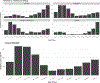
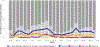
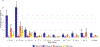
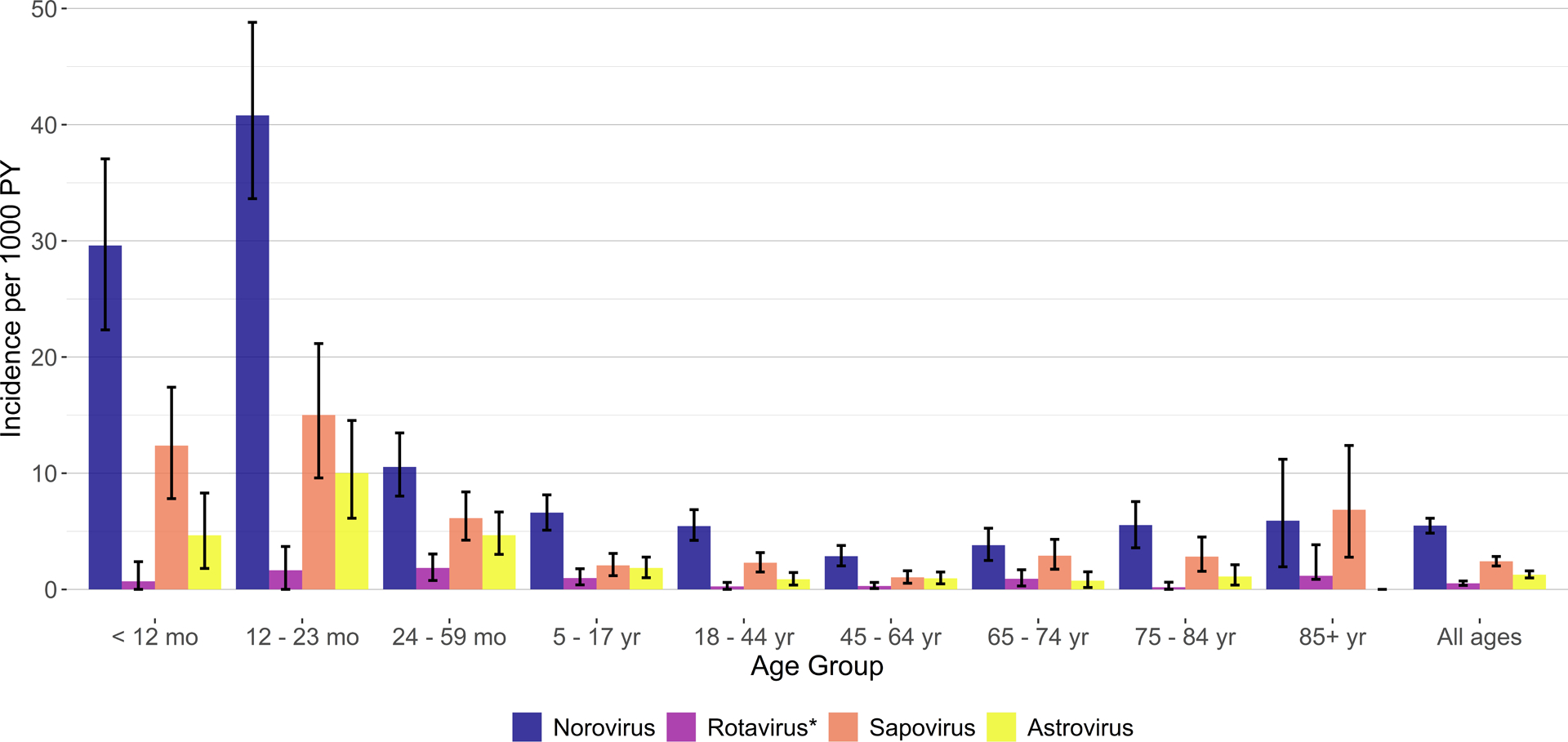
The overall incidence of MAAGE was 40.6 episodes per 1000 person-years (PY), with most episodes requiring no more than outpatient care. Norovirus was the most frequently detected pathogen, with an incidence of 5.5 medically attended episodes per 1000 PY. Incidence of norovirus MAAGE was highest among children aged <5 years (20.4 episodes per 1000 PY), followed by adults aged ≥65 years (4.5 episodes per 1000 PY). Other study pathogens showed similar patterns by age, but lower overall incidence (sapovirus: 2.4 per 1000 PY, astrovirus: 1.3 per 1000 PY, rotavirus: 0.5 per 1000 PY).
Conclusions:
Viral enteropathogens, particularly norovirus, are an important contributor to MAAGE, especially among children <5 years of age. The present findings underline the importance of judicious antibiotics use for pediatric AGE and suggest that an effective norovirus vaccine could substantially reduce MAAGE.
-
Subjects:
-
DOI:
-
Pubmed ID:34398953
-
Pubmed Central ID:PMC8862749
-
Document Type:
-
Funding:
-
Genre:
-
Place as Subject:
-
Volume:73
-
Issue:4
-
Citation:Clin Infect Dis. 73(4):e913-e920
-
Collection(s):
-
Main Document Checksum:urn:sha-512:a8e47ea6bb109ee637f84f970b510a891b51afecf564232f23d7c7e3809f9b02429ea9c335d28fd85b3f8b4636989d4051512e86104343e53480ab6cbd43c4b9
-
Download URL:
-
File Type:
 [PDF
- 607.86 KB
]
[PDF
- 607.86 KB
]
Supporting Files


File Language:
English
ON THIS PAGE




CDC STACKS serves as an archival repository of CDC-published products including
scientific findings,
journal articles, guidelines, recommendations, or other public health information authored or
co-authored by CDC or funded partners.
As a repository, CDC STACKS retains documents in their original published format to ensure public access to scientific information.
As a repository, CDC STACKS retains documents in their original published format to ensure public access to scientific information.
You May Also Like
COLLECTION
CDC Public Access