


Health communications: provider assessment of asthma control.
Supporting Files

-
12 2019
-
File Language:
English
Details
-
Alternative Title:J Asthma
-
Personal Author:
-
Description:Objective:
The patient–provider partnership is important for effective asthma care and improved asthma control. Our descriptive study describes demographic differences associated with patient–provider asthma communications using Healthy People 2020 indicators.
Methods:
Using 2013 National Health Interview Survey (NHIS) data, we examined provider assessments of asthma control at last healthcare visit for children and adults with current asthma; assessments included questions on frequency of asthma symptoms, use of quick-relief inhalers, and limitation of daily activities due to asthma. We calculated weighted prevalence and prevalence ratios (PR) with 95% confidence intervals (CI).
Results:
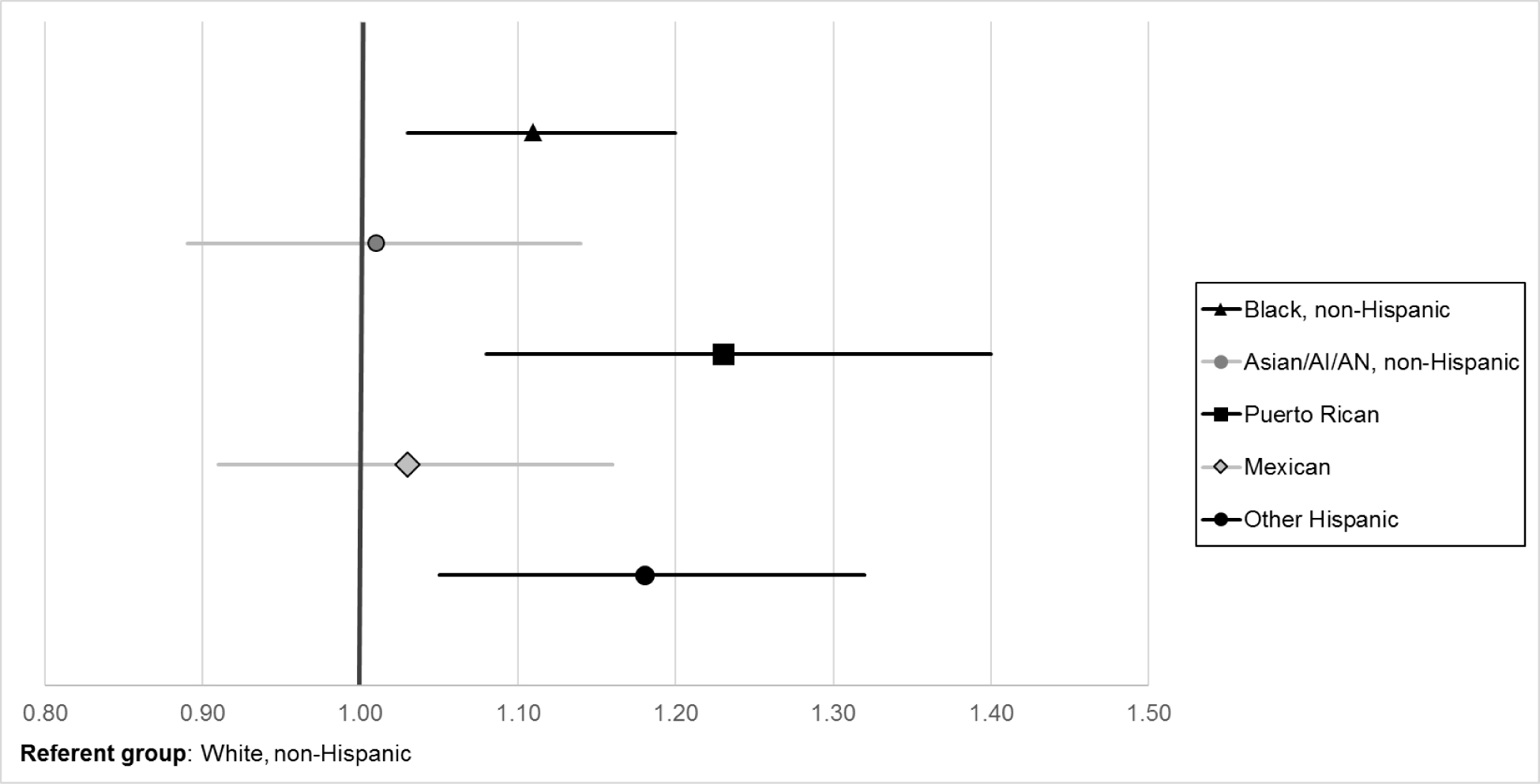
Overall, 3,684 (weighted prevalence = 7.3%; 95% confidence interval [CI]=7.0–7.6) NHIS respondents reported current asthma. Among persons with current asthma, 58% reported a routine asthma care visit in the past year. Provider assessments of asthma symptoms, quick-relief inhaler use, and activity limitations were reported by 55.4%, 59.1% and 41.5% of respondents, respectively. Non-Hispanic blacks (PR = 1.11; 95% CI = 1.03–1.20), Puerto Ricans (PR = 1.23; 95% CI = 1.08–1.40), and Other-Hispanics (PR = 1.18; 95% CI = 1.05–1.32) were asked more often than non-Hispanic whites about ≥1 of the asthma control indicators. Providers more frequently assessed asthma symptoms (PR = 1.20; CI = 1.10–1.30), quick-relief inhaler use (PR = 1.10; CI = 1.02–1.19), and activity limitations (PR = 1.25; CI = 1.11–1.41) in children than adults.
Conclusions:
Healthcare providers often discuss asthma control indicators with patients. Children and some racial and ethnic minorities were more frequently assessed on key asthma control indicators compared to adults and non-Hispanic whites, respectively. These findings may reflect provider efforts to target asthma control communications to populations with higher risk of morbidity.
-
Subjects:
-
Source:J Asthma. 56(12):1288-1293
-
Pubmed ID:31007107
-
Pubmed Central ID:PMC8862552
-
Document Type:
-
Funding:
-
Place as Subject:
-
Volume:56
-
Issue:12
-
Collection(s):
-
Main Document Checksum:urn:sha256:21f13bff32aa66c41345e6307ffdb322d5732320d78a54f949be92528fcadd3a
-
Download URL:
-
File Type:
 [PDF
- 352.16 KB
]
[PDF
- 352.16 KB
]
Supporting Files


File Language:
English
ON THIS PAGE


CDC STACKS serves as an archival repository of CDC-published products including
scientific findings,
journal articles, guidelines, recommendations, or other public health information authored or
co-authored by CDC or funded partners.
As a repository, CDC STACKS retains documents in their original published format to ensure public access to scientific information.
As a repository, CDC STACKS retains documents in their original published format to ensure public access to scientific information.
You May Also Like
COLLECTION
CDC Public Access