



Epidemiology of Hospitalized Patients with Babesiosis, United States, 2010–2016
Supporting Files

-
2 2022
File Language:
English
Details
-
Alternative Title:Emerg Infect Dis
-
Personal Author:
-
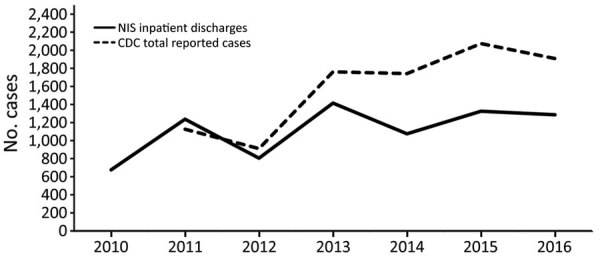
Description:Babesia spp. are tickborne parasites that cause the clinical infection babesiosis, which has an increasing incidence in the United States. We performed an analysis of hospitalizations in the United States during 2010-2016 in which babesiosis was listed as a diagnosis. We used the National Inpatient Sample database to characterize the epidemiology of Babesia-associated admissions, reflecting severe Babesia-related disease. Over a 7-year period, a total of 7,818 hospitalizations listed babesiosis as a primary or secondary admitting diagnosis. Hospitalizations were seasonal (71.2% occurred during June-August) and situated overwhelmingly in the Northeast and Midwest. The patients were predominantly male and of advanced age, which is consistent with the expected epidemiology. Despite a higher severity of illness in more than (58.5%), the mortality rate was low (1.6%). Comparison with state reporting data suggests that the number of hospitalized persons with babesiosis increased modestly during the observation period.
-
Subjects:
-
Source:Emerg Infect Dis. 2022; 28(2):354-362
-
Pubmed ID:35076004
-
Pubmed Central ID:PMC8798708
-
Document Type:
-
Funding:
-
Place as Subject:
-
Volume:28
-
Issue:2
-
Download URL:
-
File Type:
 [PDF - 2.21 MB]
 -
Collection(s):
-
Main Document Checksum:urn:sha256:0df89be2aeba1777e08e0d19f6b7e9f7f9ab4974da04c9788e3709b3ad6120f9
Supporting Files


File Language:
English
 Was this page helpful?
 Found an issue?

CDC STACKS serves as an archival repository of CDC-published products including
scientific findings, journal articles, guidelines, recommendations, or other public health information authored or
co-authored by CDC or funded partners.
As a repository, CDC STACKS retains documents in their original published format to ensure public access to scientific information.
As a repository, CDC STACKS retains documents in their original published format to ensure public access to scientific information.
You May Also Like
COLLECTION
Emerging Infectious Diseases