



Intensive In-Bed Sensorimotor Rehabilitation of Early Subacute Stroke Survivors With Severe Hemiplegia Using a Wearable Robot
Supporting Files

-
2021
-
Available in CDC Stacks on 2022-02-14T00:00:00Z
File Language:
English
Details
-
Alternative Title:IEEE Trans Neural Syst Rehabil Eng
-
Personal Author:
-
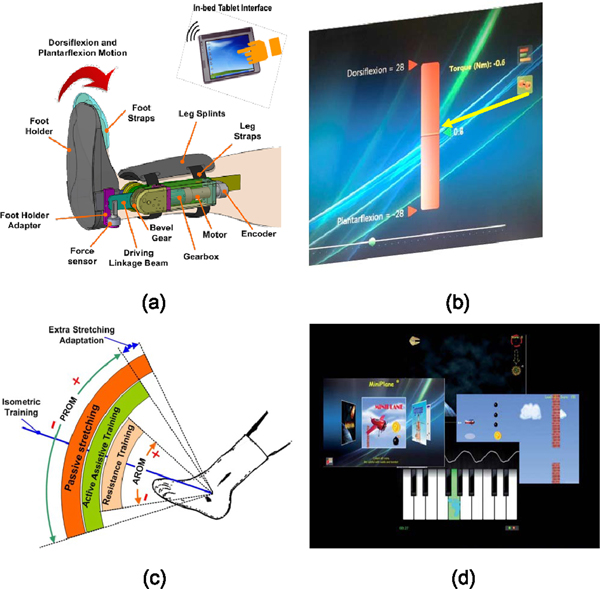
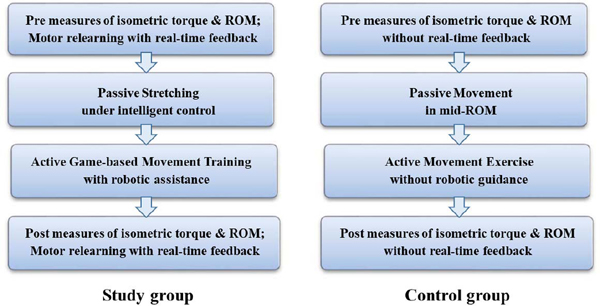
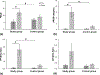
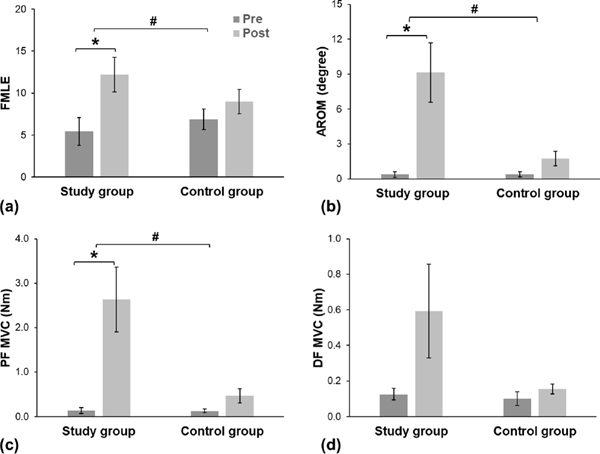
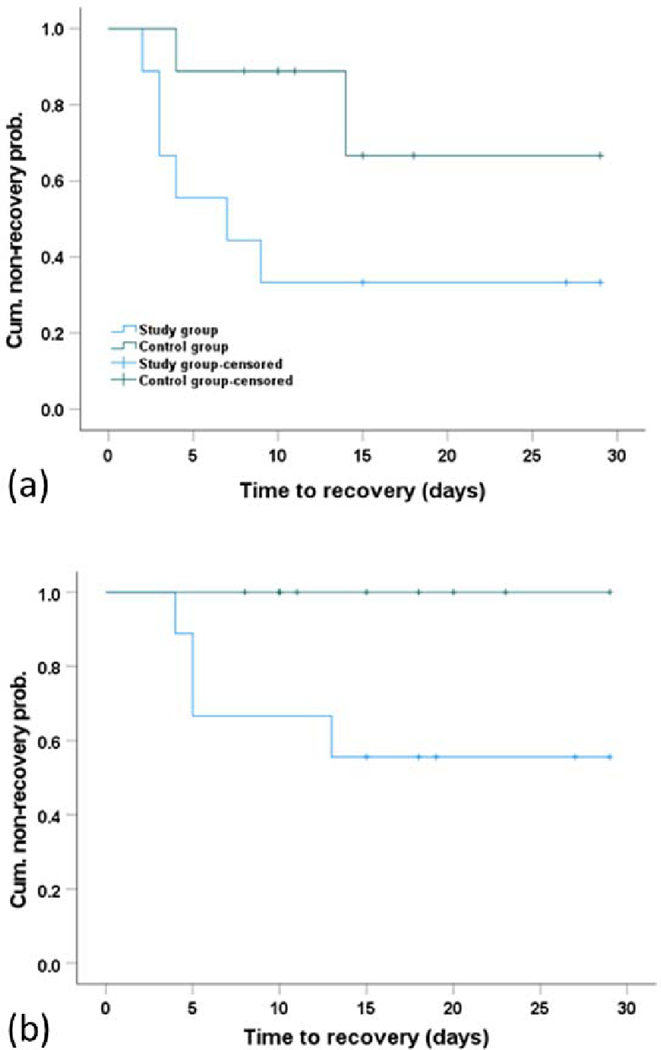
Description:Rehabilitation for stroke survivors with severe motor impairment remains challenging. Early motor rehabilitation is critical for improving mobility function post stroke, but it is often delayed due to limited resources in clinical practice. The objectives of this study were to investigate the feasibility and effectiveness of early in-bed sensorimotor rehabilitation on acute stroke survivors with severe hemiplegia using a wearable ankle robot. Eighteen patients (9 in the study group and 9 in the control group) with severe hemiplegia and no active ankle movement were enrolled in acute/subacute phase post stroke. During a typical 3-week hospital stay, patients in the study group received ankle robot-guided in-bed training (50 minutes/session, 5 sessions/week), including motor relearning under real-time visual feedback of re-emerging motor output, strong passive stretching under intelligent control, and game-based active movement training with robotic assistance. Whereas the control group received passive ankle movement in the mid-range of motion and attempted active ankle movement without robotic assistance. After multi-session training, the study group achieved significantly greater improvements in Fugl-Meyer Lower Extremity motor score (p = 0.007), plantarflexor strength (p = 0.009), and active range of motion (p = 0.011) than controls. The study group showed earlier motor recovery for plantarflexion and dorsiflexion than the control group (p < 0.05). This study showed that in-bed sensorimotor rehabilitation guided by a wearable ankle robot through combining motor relearning in real-time feedback, strong passive stretching, and active movement training facilitated early motor recovery for stroke survivors with severe hemiplegia in the acute/subacute phase.
-
Subjects:
-
Source:IEEE Trans Neural Syst Rehabil Eng. 29:2252-2259
-
Pubmed ID:34665733
-
Pubmed Central ID:PMC8843010
-
Document Type:
-
Funding:R42 HD043664/HD/NICHD NIH HHSUnited States/ ; R01 HD044295/HD/NICHD NIH HHSUnited States/ ; 90REMM0001/ACL/ACL HHSUnited States/ ; 90BISB0001/ACL/ACL HHSUnited States/ ; R01 NS114045/NS/NINDS NIH HHSUnited States/ ; R01 DP000099/DP/NCCDPHP CDC HHSUnited States/ ; 90AR5028/ACL/ACL HHSUnited States/ ; 90DP0099/ACL/ACL HHSUnited States/
-
Volume:29
-
Download URL:
-
File Type:
 [PDF - 1.02 MB]
 -
Collection(s):
-
Main Document Checksum:urn:sha256:14d4b3a2c5e24d66889e58762ef2638ce6ab987869766769d7d2665a083c4ad0
Supporting Files


File Language:
English
 Was this page helpful?
 Found an issue?




CDC STACKS serves as an archival repository of CDC-published products including
scientific findings, journal articles, guidelines, recommendations, or other public health information authored or
co-authored by CDC or funded partners.
As a repository, CDC STACKS retains documents in their original published format to ensure public access to scientific information.
As a repository, CDC STACKS retains documents in their original published format to ensure public access to scientific information.
You May Also Like
COLLECTION
CDC Public Access