



The Impact of a PDMP-EHR Data Integration combined with Clinical Decision Support on Opioid and Benzodiazepine Prescribing Across Clinicians in a Metropolitan Area
Supporting Files

-
2022 ; May-Jun 2022
-
Available in CDC Stacks on January 01, 2023, 12:00 AM
File Language:
English
Details
-
Alternative Title:J Addict Med
-
Personal Author:
-
Description:Introduction
Despite inconclusive evidence that prescription drug monitoring programs (PDMP) reduce opioid-related mortality, guidelines recommend PDMP review with opioid prescribing. Some reported barriers to use include time-consuming processes to obtain data and workflow disruptions.
Methods
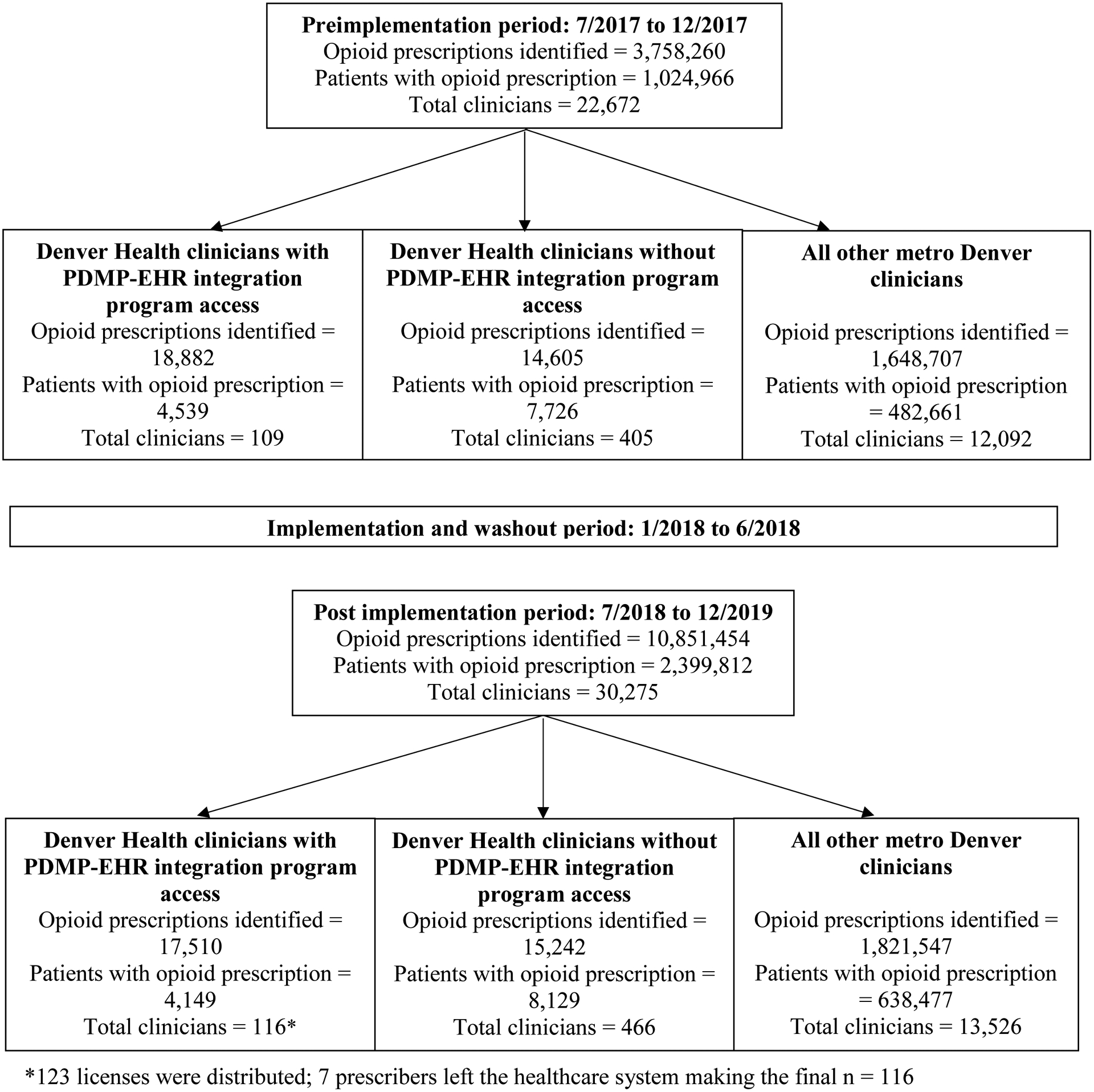
We provided access to a PMDP-electronic health record (EHR) integrated program to 123 clinicians in one healthcare system. Remaining clinicians within the healthcare system and metropolitan area did not receive PDMP-EHR integration program access. We identified changes in opioid prescribing by linking prescription data available in the state PMDP database to individual clinicians. The primary outcome was change in receipt of high dose opioid prescriptions (>90 milligram morphine equivalents) by Colorado residents before and after program integration. Secondary outcomes included changes in long-acting opioid receipt and overlapping opioid and benzodiazepine prescription days. Next, we surveyed clinicians to assess their perspectives on PDMP data acquisition before and after PDMP-EHR integration program access.
Results
High-dose opioid receipt decreased significantly across all three clinician groups (PDMP-EHR integration program access 27.6%, to 6.9%, p < 0.001; no program access in the same healthcare system 4.8% to 2.9%, p < 0.001, and no program access across the metropolitan area 13.5% to 6.1%, p < 0.001). Clinicians reported improved access to PDMP data using the PDMP-EHR integrated program compared to the state PDMP website (98.6%).
Conclusions
Further study of PDMP-EHR integration programs on patient and clinician outcomes may illuminate the role of this technology in public health and in clinical practice. -
Subjects:
-
Keywords:
-
Source:J Addict Med. 16(3):324-332
-
Pubmed ID:34392255
-
Pubmed Central ID:PMC8831644
-
Document Type:
-
Funding:
-
Volume:16
-
Issue:3
-
Download URL:
-
File Type:
 [PDF - 405.55 KB]
 -
Collection(s):
-
Main Document Checksum:urn:sha-512:1835e8f11e019ee52ac0b61be05ce890926d4ef54ae69253c51e8c898f2456ff1d49775d5ea6d9e9196f21b83cdaa95d4164e005e81aa66b8fb1ea8df6f4a1f1


File Language:
English
 Was this page helpful?
 Found an issue?

CDC STACKS serves as an archival repository of CDC-published products including
scientific findings, journal articles, guidelines, recommendations, or other public health information authored or
co-authored by CDC or funded partners.
As a repository, CDC STACKS retains documents in their original published format to ensure public access to scientific information.
As a repository, CDC STACKS retains documents in their original published format to ensure public access to scientific information.
You May Also Like
COLLECTION
CDC Public Access