


Health Risk Behavior Profile of Construction Workers, 32 States, 2013–2016
Supporting Files

-
7 2020
-
File Language:
English
Details
-
Alternative Title:J Occup Environ Med
-
Personal Author:
-
Description:Background:
Research has suggested that several health risk behaviors were more prevalent among construction workers than among the general workforce.
Methods:
The prevalences of six health risk behaviors among construction workers were compared to workers in other industries using data from 32 states in the 2013–2016 Behavioral Risk Factor Surveillance System (BRFSS).
Results:
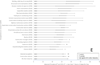
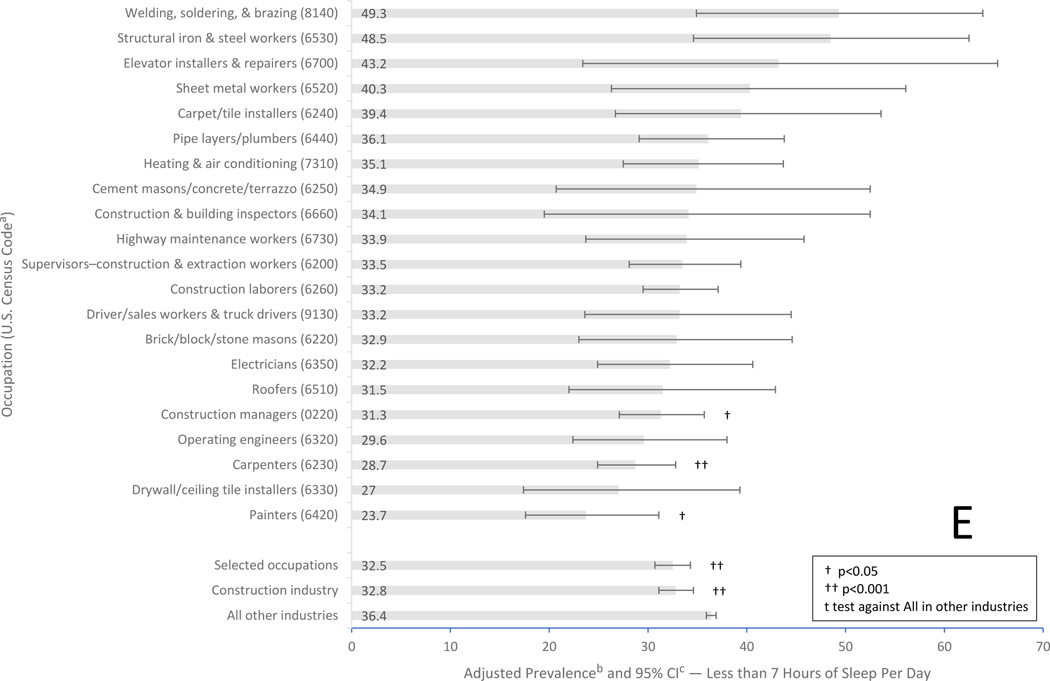
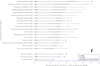
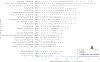
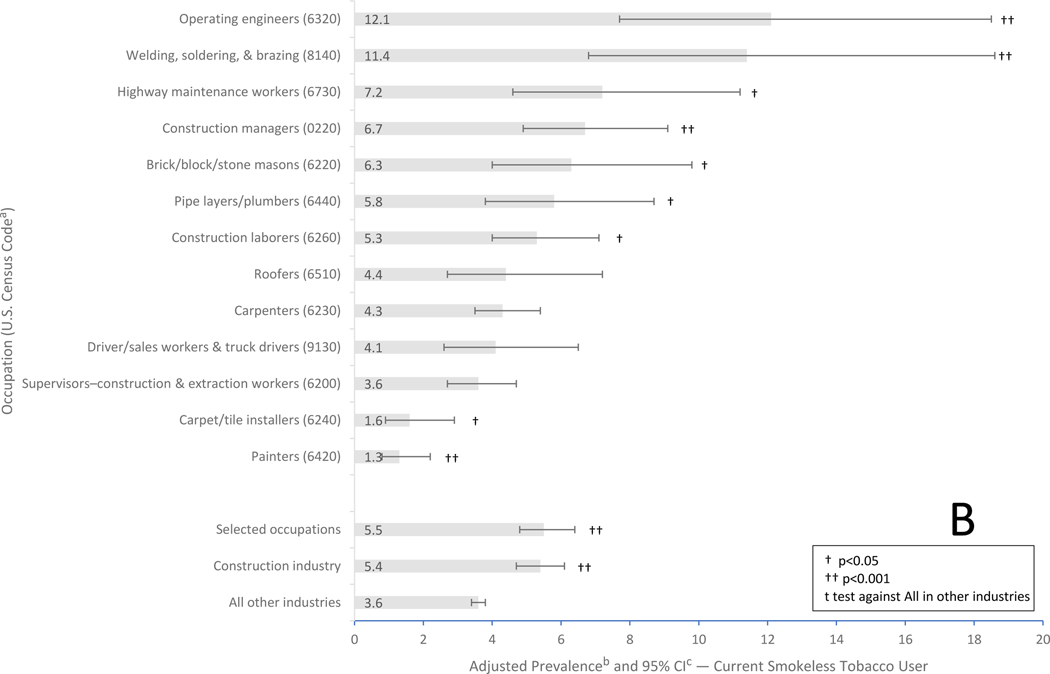
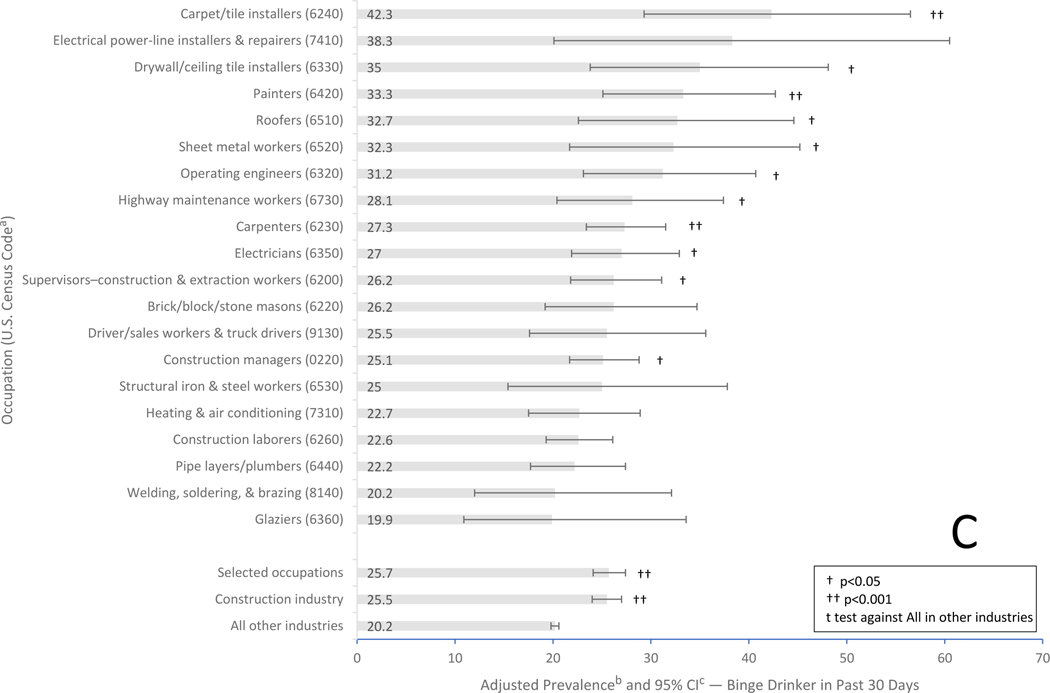
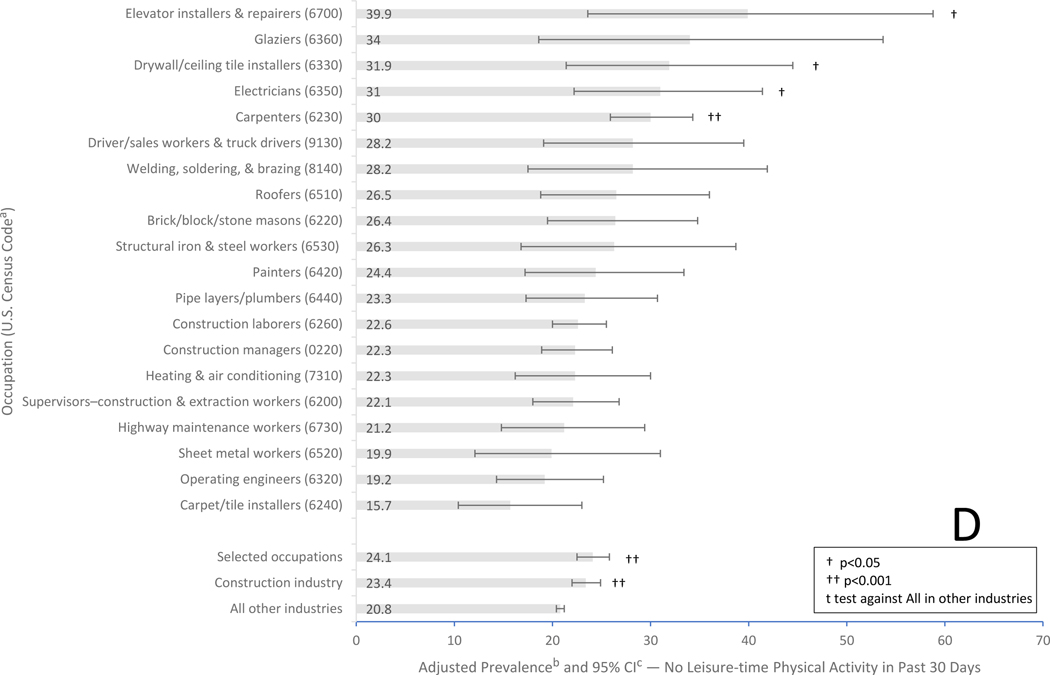
Smoking, smokeless tobacco use, binge drinking, no leisure-time physical activity, and not always using a seatbelt were significantly more prevalent (p<.001), and short sleep significantly less prevalent (p<.05), for all construction workers combined compared to workers in other industries. Prevalences varied substantially for all six health risk behaviors by construction occupation.
Conclusions:
Due to the high prevalence of some health risk behaviors, construction workers may benefit from interventions to reduce these behaviors, particularly since they are also potentially exposed to workplace hazards.
-
Subjects:
-
Keywords:
-
Source:J Occup Environ Med. 62(7):493-502
-
Pubmed ID:32730025
-
Pubmed Central ID:PMC8827135
-
Document Type:
-
Funding:
-
Volume:62
-
Issue:7
-
Collection(s):
-
Main Document Checksum:urn:sha-512:fa67220c3c95ec053706d5258485db7d1b93cb328c04baff8a9378ab35a5f1b6605fed959549bd642ad1c8a01af985b921de1654ab85f6bb453c7e9b00ee1c72
-
Download URL:
-
File Type:
 [PDF
- 1.32 MB
]
[PDF
- 1.32 MB
]
Supporting Files


File Language:
English
ON THIS PAGE



CDC STACKS serves as an archival repository of CDC-published products including
scientific findings,
journal articles, guidelines, recommendations, or other public health information authored or
co-authored by CDC or funded partners.
As a repository, CDC STACKS retains documents in their original published format to ensure public access to scientific information.
As a repository, CDC STACKS retains documents in their original published format to ensure public access to scientific information.
You May Also Like
COLLECTION
CDC Public Access