



PROPHETIC: Prospective Identification of Pneumonia in Hospitalized Patients in the Intensive Care Unit
Supporting Files

-
12 2020
-
File Language:
English
Details
-
Alternative Title:Chest
-
Personal Author:Bergin, Stephen P. ; Coles, Adrian ; Calvert, Sara B. ; Farley, John ; Powers, John H. ; Zervos, Marcus J. ; Sims, Matthew ; Kollef, Marin H. ; Durkin, Michael J. ; Kabchi, Badih A. ; Donnelly, Helen K. ; Bardossy, Ana Cecilia ; Greenshields, Claire ; Rubin, Daniel ; Sun, Jie-Lena ; Chiswell, Karen ; Santiago, Jonas ; Gu, Peidi ; Tenaerts, Pamela ; Fowler, Vance G. ; Holland, Thomas L.
-
Description:Background:
Pneumònia is the leading infection-related cause of death. Using simple clinical criteria and contemporary epidemiology to identify patients at high risk of nosocomial pneumonia should enhance prevention efforts and facilitate development of new treatments in clinical trials.
Research Question:
What are the clinical criteria and contemporary epidemiology trends helpful in identifying patients at high risk of nosocomial pneumonia?
Study Design and Methods:
Within the intensive care units of 28 United States hospitals, we conducted a prospective cohort study among adults hospitalized more than 48 hours and considered high risk for pneumonia (defined as treatment with invasive or noninvasive ventilatory support or high levels of supplemental oxygen). We estimated the proportion of high-risk patients developing nosocomial pneumonia. Using multivariable logistic regression, we identified patient characteristics and treatment exposures associated with increased risk of pneumonia development during the intensive care unit admission.
Results:
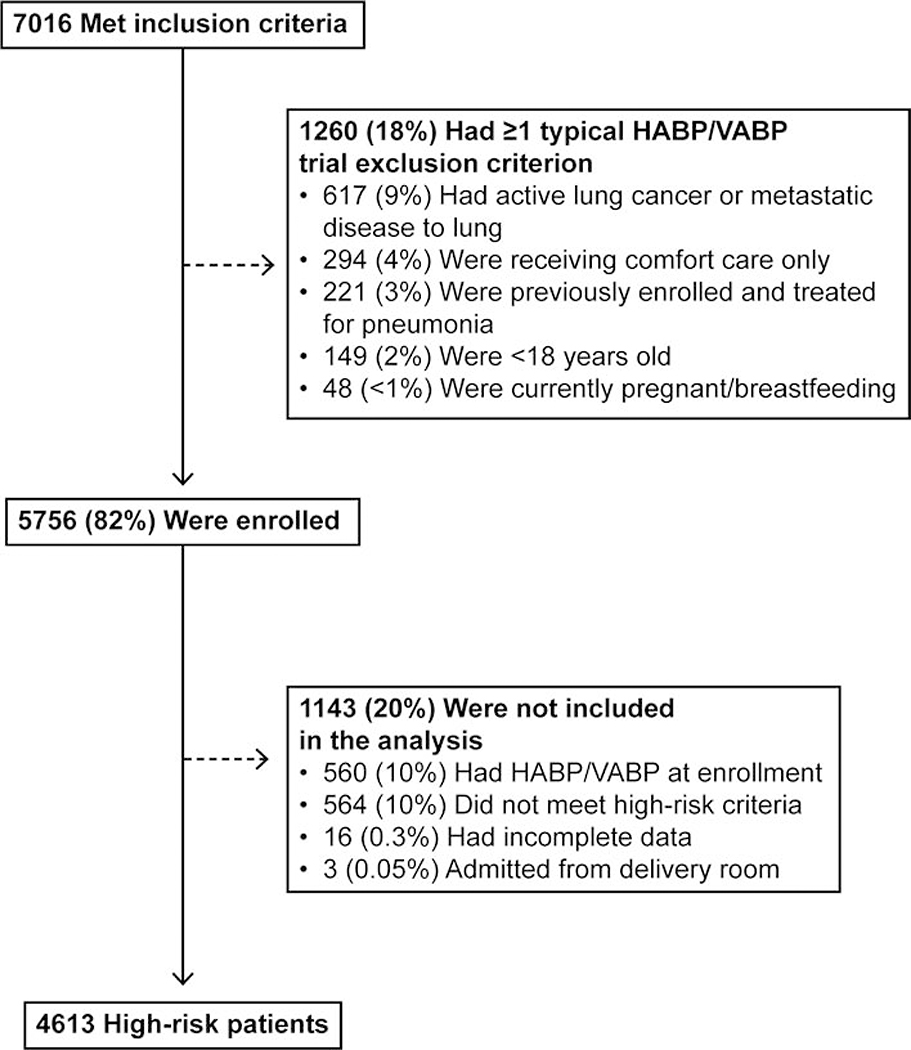
Between February 6, 2016 and October 7, 2016, 4613 high-risk patients were enrolled. Among 1464/4613 (32%) high-risk patients treated for possible nosocomial pneumonia, 537/1464 (37%) met the study pneumonia definition. Among high-risk patients, a multivariable logistic model was developed to identify key patient characteristics and treatment exposures associated with increased risk of nosocomial pneumonia development (c-statistic 0.709, 95% confidence interval 0.686 to 0.731). Key factors associated with increased odds of nosocomial pneumonia included an admission diagnosis of trauma or cerebrovascular accident, receipt of enteral nutrition, documented aspiration risk, and receipt of systemic antibacterials within the preceding 90 days.
Interpretation:
Treatment for nosocomial pneumònia is common among intensive care unit patients receiving high levels of respiratory support, yet more than half of patients treated do not fulfill standard diagnostic criteria for pneumonia. Application of simple clinical criteria may improve the feasibility of clinical trials of pneumonia prevention and treatment by facilitating prospective identification of patients at highest risk.
-
Subjects:
-
Source:Chest. 158(6):2370-2380
-
Pubmed ID:32615191
-
Pubmed Central ID:PMC7722207
-
Document Type:
-
Funding:
-
Place as Subject:
-
Volume:158
-
Issue:6
-
Collection(s):
-
Main Document Checksum:urn:sha256:237f919df2d34d19aa62dc0dbb07d7ab374655a2b19ae677a87903d769c608a8
-
Download URL:
-
File Type:
 [PDF
- 979.31 KB
]
[PDF
- 979.31 KB
]
Supporting Files


File Language:
English
 Was this page helpful?
 Found an issue?




CDC STACKS serves as an archival repository of CDC-published products including
scientific findings,
journal articles, guidelines, recommendations, or other public health information authored or
co-authored by CDC or funded partners.
As a repository, CDC STACKS retains documents in their original published format to ensure public access to scientific information.
As a repository, CDC STACKS retains documents in their original published format to ensure public access to scientific information.
You May Also Like
COLLECTION
CDC Public Access