


Race/Ethnic Differences in Prevalence and Correlates of Posttraumatic Stress Disorder in World Trade Center Responders: Results from a Population-Based, Health Monitoring Cohort
Supporting Files

-
2 2022
-
File Language:
English
Details
-
Alternative Title:Psychol Trauma
-
Personal Author:
-
Description:Objective:
This study evaluated race/ethnic differences in the prevalence and correlates of World Trade Center (WTC)-related posttraumatic stress disorder (PTSD) in WTC responders.
Methods:
Data were analyzed from a population-based, health monitoring cohort of 15,440 non-traditional (i.e., construction workers) and 13,403 police WTC responders.
Results:
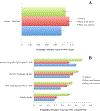
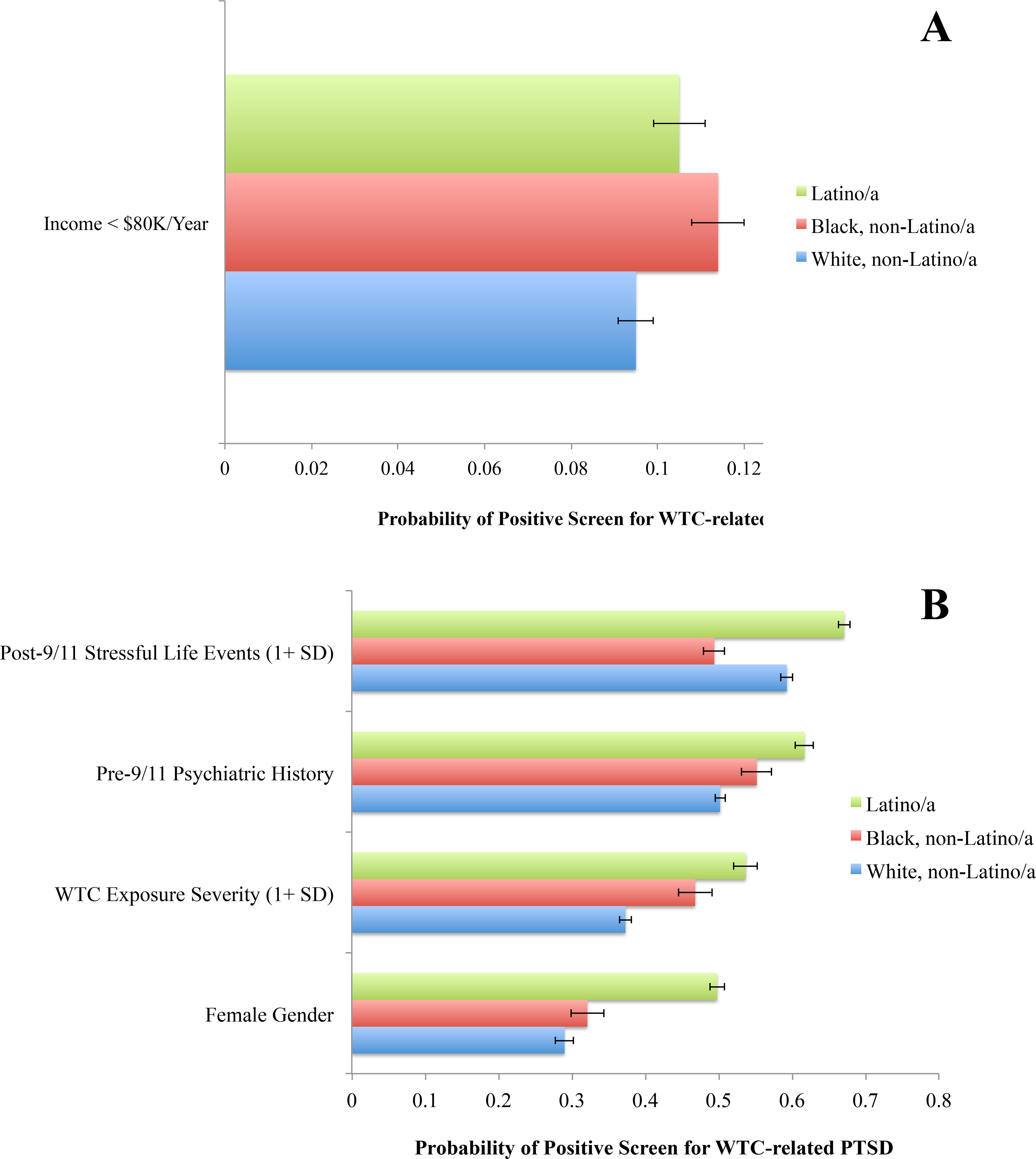
Among non-traditional responders, the prevalence of WTC-related PTSD was highest in Latino/a (40.4%) vs. Black (27.3%) and White (26.5%) responders; among police responders, Latino/a (10.4%) responders also had higher prevalence of PTSD relative to Black (9.8%) and White (8.7%) responders. However, multivariable analyses revealed that prior psychiatric diagnosis, greater severity of WTC-related exposures, post-9/11 stressful life events, (in police responders only) older age, and (in non-traditional responders only) lower income and education levels accounted for substantially higher prevalence of WTC-related PTSD across ethnic/racial groups. Additionally, among non-traditional responders, subgroups with added risk included responders who were: Latino/a or White had high post-911 stressful events; Latino/a or Black and had pre-9/11 psychiatric history; and Latinas. Among police responders, subgroups with added risk were Latino/a or Black police with a low annual income.
Conclusions:
Collectively, results of this study underscore the burden of differential vulnerability that can contribute to higher prevalence of PTSD in certain cultural subgroups following large magnitude traumatic events.
-
Subjects:
-
Source:Psychol Trauma. 14(2):199-208
-
Pubmed ID:34647790
-
Pubmed Central ID:PMC8795466
-
Document Type:
-
Funding:
-
Volume:14
-
Issue:2
-
Collection(s):
-
Main Document Checksum:urn:sha256:2dbfa381de687c5af57338c5ab3ca53884a4b7cb86c68e0f450b47fcb616e036
-
Download URL:
-
File Type:
 [PDF
- 572.37 KB
]
[PDF
- 572.37 KB
]
Supporting Files


File Language:
English
ON THIS PAGE

CDC STACKS serves as an archival repository of CDC-published products including
scientific findings,
journal articles, guidelines, recommendations, or other public health information authored or
co-authored by CDC or funded partners.
As a repository, CDC STACKS retains documents in their original published format to ensure public access to scientific information.
As a repository, CDC STACKS retains documents in their original published format to ensure public access to scientific information.
You May Also Like
COLLECTION
CDC Public Access