



IgE-based therapeutic combination enhances anti-tumor response in preclinical models of pancreatic cancer
Supporting Files

-
12 2021 ; 12-2021
-
Available in CDC Stacks on June 01, 2022, 12:00 AM
File Language:
English
Details
-
Alternative Title:Mol Cancer Ther
-
Personal Author:Markov, Spas Dimitrov ; Caffrey, Thomas C. ; O’Connell, Kelly A. ; Grunkemeyer, James A. ; Shin, Simon ; Hanson, Ryan ; Patil, Prathamesh P. ; Shukla, Surendra K. ; Gonzalez, Daisy ; Crawford, Ayrianne J. ; Vance, Krysten E. ; Huang, Ying ; Eberle, Kirsten C. ; Radhakrishnan, Prakash ; Grandgenett, Paul M. ; Singh, Pankaj K. ; Madiyalakan, Ragupathy ; Daniels-Wells, Tracy R. ; Penichet, Manuel L. ; Nicodemus, Christopher F. ; Poole, Jill A. ; Jaffee, Elizabeth M. ; Hollingsworth, Michael A. ; Mehla, Kamiya
-
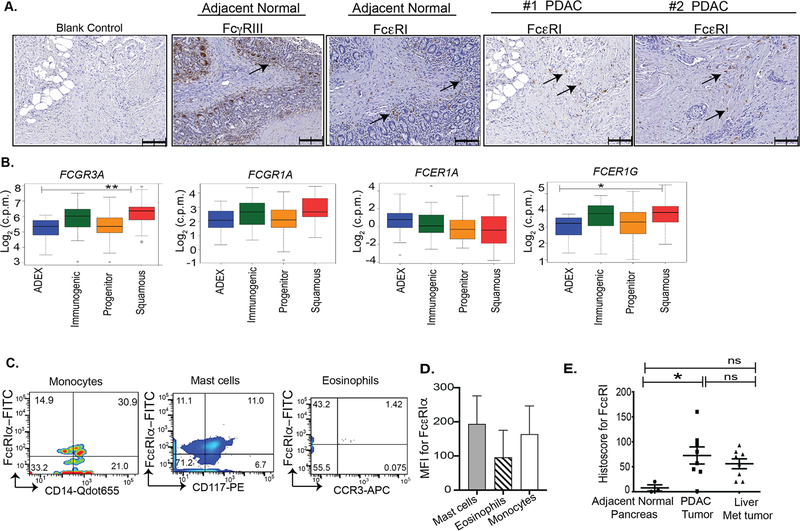
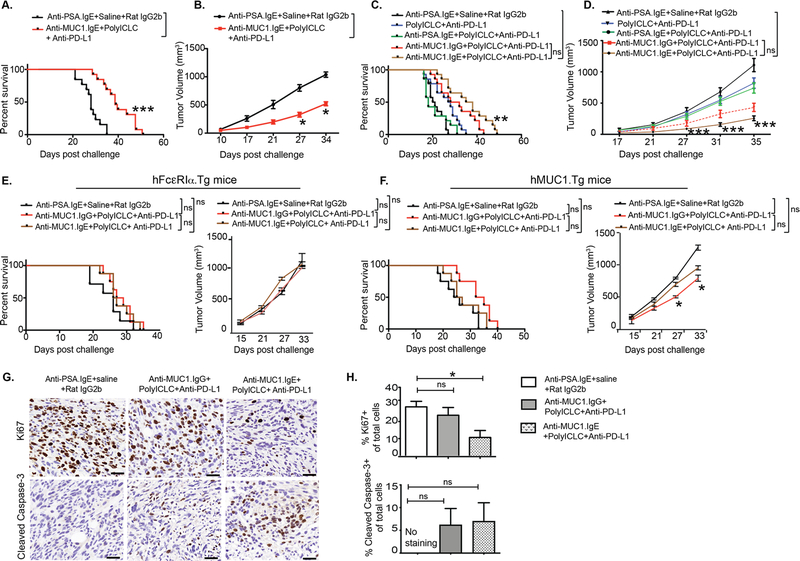
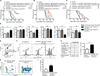
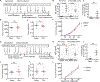
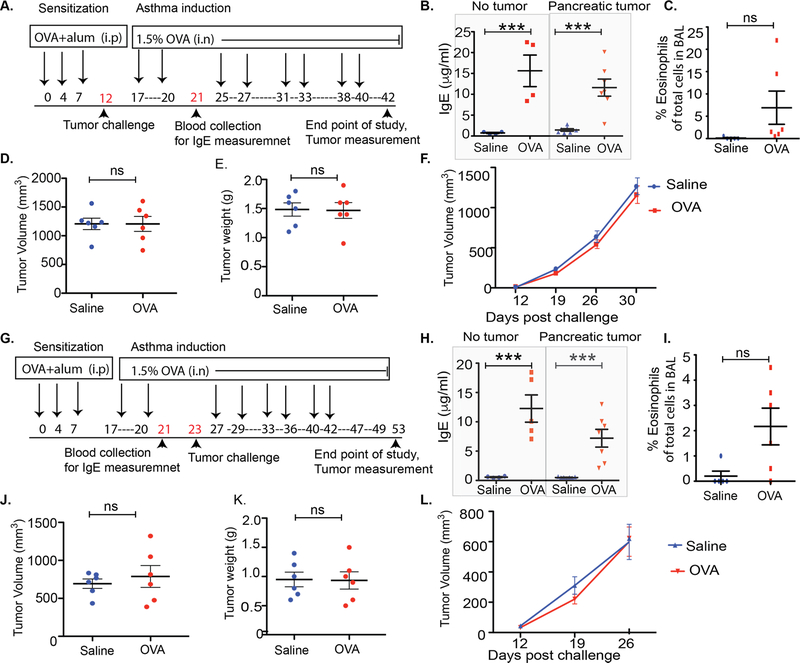
Description:Pancreatic ductal adenocarcinoma (PDAC) represents 3% of all cancer cases and 7% of all cancer deaths in the United States. Late diagnosis and inadequate response to standard chemotherapies contribute to an unfavorable prognosis and an overall 5-year survival rate of less than 10% in PDAC. Despite recent advances in tumor immunology, tumor-induced immunosuppression attenuates the immunotherapy response in PDAC. To date, studies have focused on IgG-based therapeutic strategies in PDAC. With the recent interest in IgE-based therapies in multiple solid tumors, we explored the MUC1-targeted IgE potential against pancreatic cancer. Our study demonstrates the notable expression of FceRI (receptor for IgE antibody) in tumors from PDAC patients. Our study showed that administration of MUC1 targeted-IgE (mouse/human chimeric anti-MUC1.IgE) antibody at intermittent levels in combination with checkpoint inhibitor (anti-PD-L1) and TLR3 agonist (PolyICLC) induces a robust antitumor response that is dependent on NK and CD8 T cells in pancreatic tumor-bearing mice. Subsequently, our study showed that the antigen specificity of the IgE antibody plays a vital role in executing the antitumor response as nonspecific IgE, induced by ovalbumin (OVA), failed to restrict tumor growth in pancreatic tumor-bearing mice. Utilizing the OVA-induced allergic asthma-PDAC model, we demonstrate that allergic phenotype induced by OVA cannot restrain pancreatic tumor growth in orthotopic tumor-bearing mice. Together, our data demonstrate the novel tumor protective benefits of tumor antigen-specific IgE-based therapeutics in a preclinical model of pancreatic cancer, which can open new avenues for future clinical interventions.
-
Keywords:
-
Source:Mol Cancer Ther. 20(12):2457-2468
-
Pubmed ID:34625505
-
Pubmed Central ID:PMC8762606
-
Document Type:
-
Funding:R01 CA216853/CA/NCI NIH HHSUnited States/ ; R01 CA181115/CA/NCI NIH HHSUnited States/ ; U54OH010162/ACL/ACL HHSUnited States/ ; R01 CA163649/CA/NCI NIH HHSUnited States/ ; T32 CA009476/CA/NCI NIH HHSUnited States/ ; U54 OH010162/OH/NIOSH CDC HHSUnited States/ ; P50 CA127297/CA/NCI NIH HHSUnited States/ ; R50 CA211462/CA/NCI NIH HHSUnited States/ ; R01 ES019325/ES/NIEHS NIH HHSUnited States/ ; R01 CA210439/CA/NCI NIH HHSUnited States/ ; U01 CA210240/CA/NCI NIH HHSUnited States/
-
Volume:20
-
Issue:12
-
Download URL:
-
File Type:
 [PDF - 2.44 MB]
 -
Collection(s):
-
Main Document Checksum:urn:sha256:25a914ff801e3fe4dba06c9857be05b0b01b30851d2d931e40f7c825d3c38eb9
Supporting Files


File Language:
English
 Was this page helpful?
 Found an issue?




CDC STACKS serves as an archival repository of CDC-published products including
scientific findings, journal articles, guidelines, recommendations, or other public health information authored or
co-authored by CDC or funded partners.
As a repository, CDC STACKS retains documents in their original published format to ensure public access to scientific information.
As a repository, CDC STACKS retains documents in their original published format to ensure public access to scientific information.
You May Also Like
COLLECTION
CDC Public Access