



Severe Acute Respiratory Syndrome Coronavirus 2 and Respiratory Virus Sentinel Surveillance, California, USA, May 10, 2020–June 12, 2021
Supporting Files
Public Domain

-
1 2022
File Language:
English
Details
-
Alternative Title:Emerg Infect Dis
-
Personal Author:Cooksey, Gail L. Sondermeyer ; Morales, Christina ; Linde, Lauren ; Schildhauer, Samuel ; Guevara, Hugo ; Chan, Elena ; Gibb, Kathryn ; Wong, Jessie ; Lin, Wen ; Bonin, Brandon J. ; Arizmendi, Olivia ; Lam-Hine, Tracy ; Tzvieli, Ori ; McDowell, Ann ; Kampen, Kirstie M. ; Lopez, Denise L. ; Ennis, Josh ; Lewis, Linda S. ; Oren, Eyal ; Hatada, April ; Molinar, Blanca ; Frederick, Matt ; Han, George S. ; Sanchez, Martha ; Garcia, Michael A. ; McGrath, Alana ; Le, Nga Q. ; Boyd, Eric ; Bertolucci, Regina M. ; Corrigan, Jeremy ; Brodine, Stephanie ; Austin, Michael ; Roach, William R. K. ; Levin, Robert M. ; Tyson, Brian M. ; Pry, Jake M. ; Cummings, Kristin J. ; Wadford, Debra A. ; Jain, Seema
-
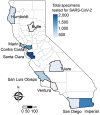
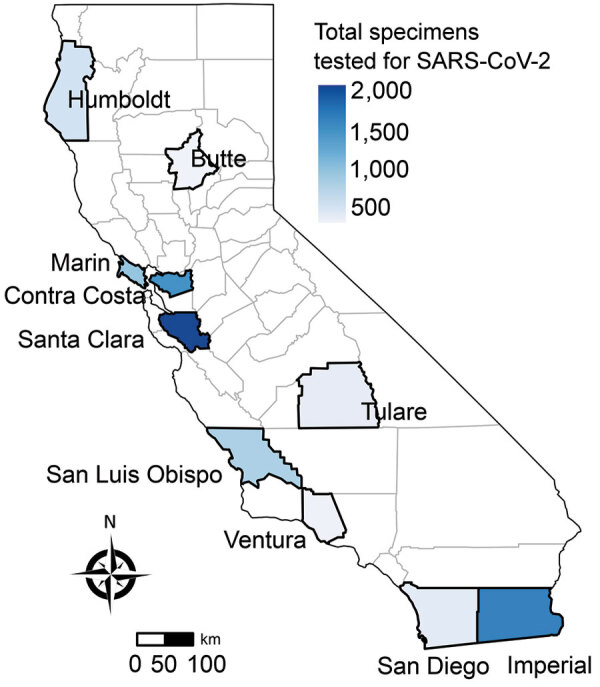
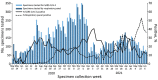
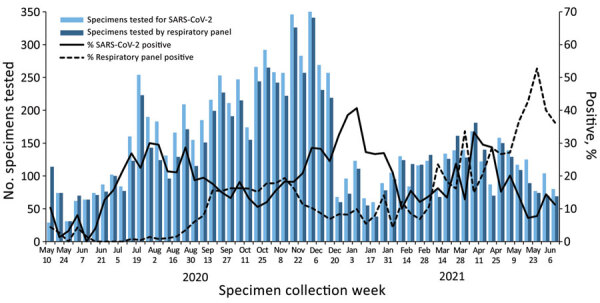
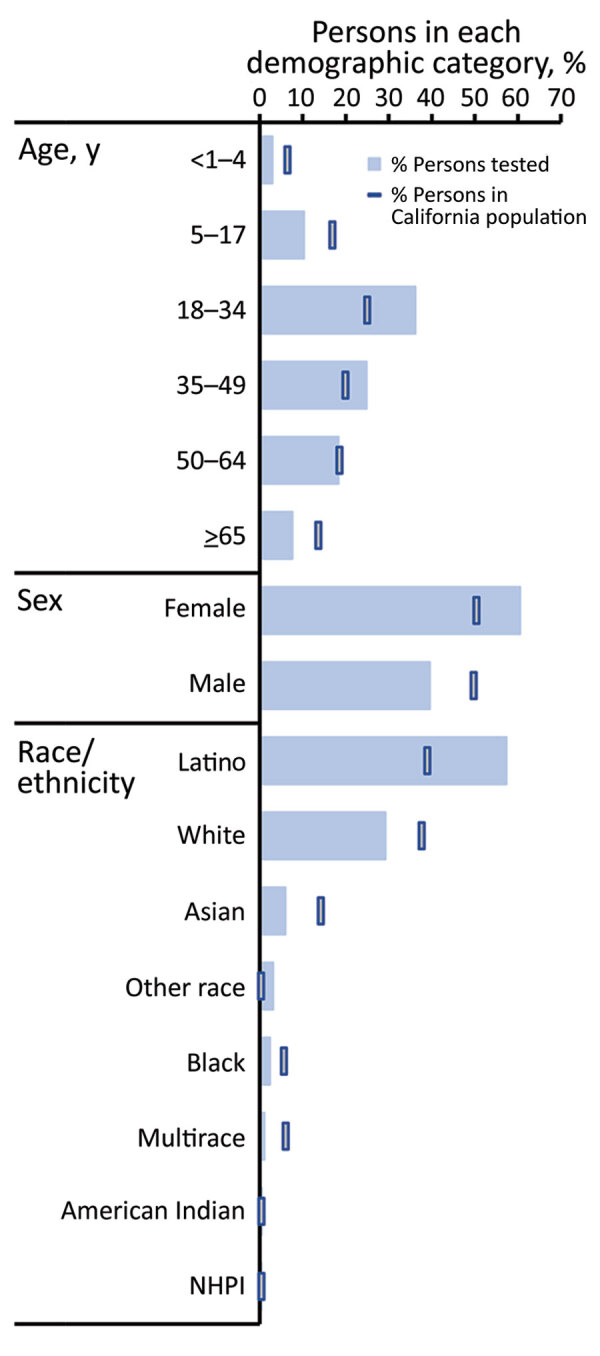
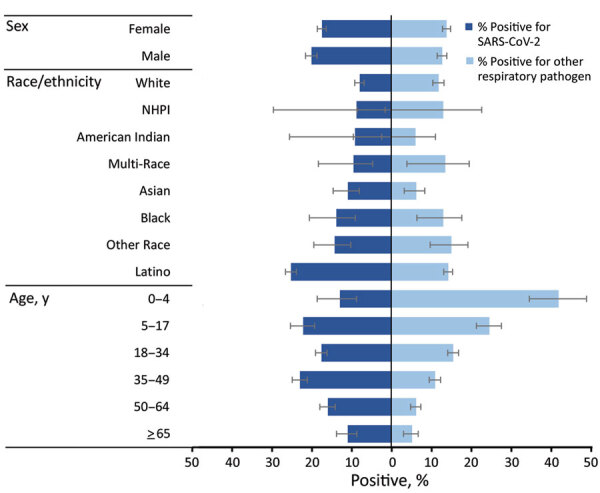
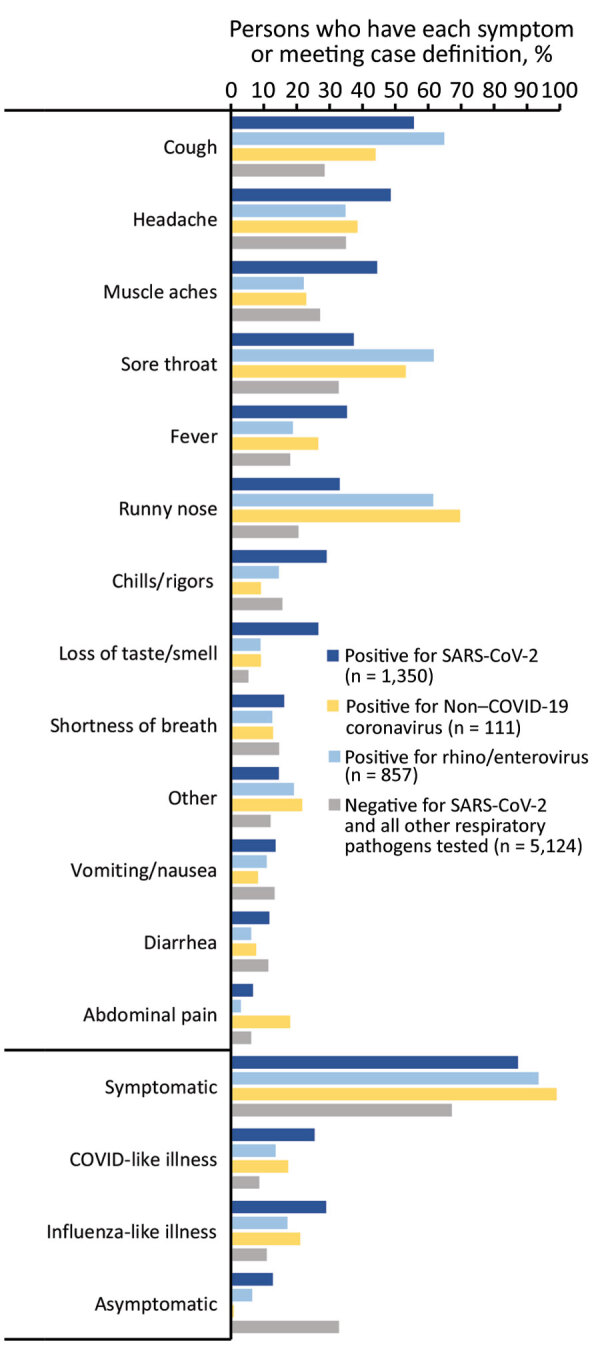
Description:State and local health departments established the California Severe Acute Respiratory Syndrome Coronavirus 2 (SARS-CoV-2) and Respiratory Virus Sentinel Surveillance System to conduct enhanced surveillance for SARS-CoV-2 and other respiratory pathogens at sentinel outpatient testing sites in 10 counties throughout California, USA. We describe results obtained during May 10, 2020‒June 12, 2021, and compare persons with positive and negative SARS-CoV-2 PCR results by using Poisson regression. We detected SARS-CoV-2 in 1,696 (19.6%) of 8,662 specimens. Among 7,851 specimens tested by respiratory panel, rhinovirus/enterovirus was detected in 906 (11.5%) specimens and other respiratory pathogens in 136 (1.7%) specimens. We also detected 23 co-infections with SARS-CoV-2 and another pathogen. SARS-CoV-2 positivity was associated with male participants, an age of 35-49 years, Latino race/ethnicity, obesity, and work in transportation occupations. Sentinel surveillance can provide useful virologic and epidemiologic data to supplement other disease monitoring activities and might become increasingly useful as routine testing decreases.
-
Subjects:
-
Source:Emerg Infect Dis. 2022; 28(1):9-19
-
Pubmed ID:34932449
-
Pubmed Central ID:PMC8714231
-
Document Type:
-
Place as Subject:
-
Volume:28
-
Issue:1
-
Download URL:
-
File Type:
 [PDF - 2.21 MB]
 -
Collection(s):
-
Main Document Checksum:urn:sha256:211935192f1e8d4c37c7e10d437622083176ace82dd7ea7be91a7071daa85f2d
Supporting Files


File Language:
English
 Was this page helpful?
 Found an issue?

CDC STACKS serves as an archival repository of CDC-published products including
scientific findings, journal articles, guidelines, recommendations, or other public health information authored or
co-authored by CDC or funded partners.
As a repository, CDC STACKS retains documents in their original published format to ensure public access to scientific information.
As a repository, CDC STACKS retains documents in their original published format to ensure public access to scientific information.
You May Also Like
COLLECTION
Emerging Infectious Diseases