


Fungal Infections Caused by Kazachstania spp., Strasbourg, France, 2007–2020
Supporting Files
Public Domain

-
1 2022
-
File Language:
English
Details
-
Alternative Title:Emerg Infect Dis
-
Personal Author:Kaeuffer, Charlotte ; Baldacini, Mathieu ; Ruge, Tiffany ; Ruch, Yvon ; Zhu, Yves-Jean ; De Cian, Manon ; Philouze, Guillaume ; Bachellier, Philippe ; Denis, Julie ; Lefebvre, Nicolas ; Schneider, Francis ; Hansmann, Yves ; Letscher-Bru, Valérie ; Herbrecht, Raoul ; Sabou, Marcela ; Danion, François
-
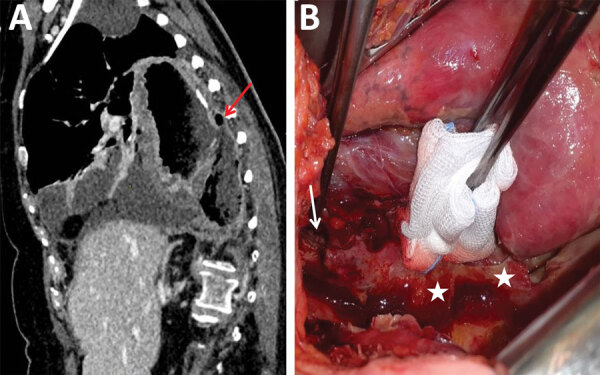
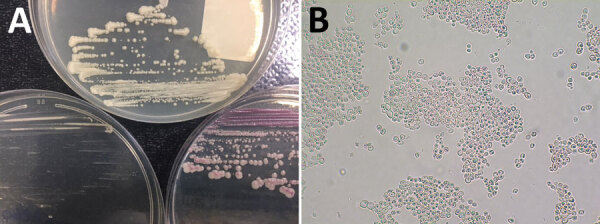
Description:Rare fungal pathogens are emerging as agents of invasive fungal infections. We analyzed 13 cases of fungal infections caused by Kazachstania (Arxiozyma) spp. in Strasbourg University Hospital, Strasbourg, France. Among the cases, 4 patients had proven fungal disease (3 cases of invasive fungal disease and 1 mucocutaneous infection) and 9 were colonized by Kazachstania (Arxiozyma) spp. Candida albicans was also isolated from 11 of the 13 patients. None of the patients with proven invasive fungal disease met host criteria, but most had underlying diseases. All strains were identified as K. telluris by matrix-assisted laser desorption/ionization time-of-flight mass spectrometry, and 3 were confirmed as K. bovina by internal transcribed spacer sequencing. For all tested strains, the MICs for fluconazole were >2 μg/mL. Emergence of this rare fungal infection might be explained by the increasing number of patients with immunocompromised conditions and gastroesophageal diseases.
-
Subjects:
-
Source:Emerg Infect Dis. 2022; 28(1):30-35
-
Pubmed ID:34932452
-
Pubmed Central ID:PMC8714217
-
Document Type:
-
Place as Subject:
-
Volume:28
-
Issue:1
-
Collection(s):
-
Main Document Checksum:urn:sha256:ee4908df3cbaa4b2711f980e9ffe0a94387632b89ef5cc32f2515fa7b80f2e58
-
Download URL:
-
File Type:
 [PDF
- 1.78 MB
]
[PDF
- 1.78 MB
]
Supporting Files


File Language:
English
ON THIS PAGE


CDC STACKS serves as an archival repository of CDC-published products including
scientific findings,
journal articles, guidelines, recommendations, or other public health information authored or
co-authored by CDC or funded partners.
As a repository, CDC STACKS retains documents in their original published format to ensure public access to scientific information.
As a repository, CDC STACKS retains documents in their original published format to ensure public access to scientific information.
You May Also Like
COLLECTION
Emerging Infectious Diseases