


Income Disparities and Cardiovascular Risk Factors among Adolescents
Supporting Files

-
11 2018
File Language:
English
Details
-
Alternative Title:Pediatrics
-
Personal Author:
-
Description:Background and Objective:
Socioeconomic disparities in cardiovascular health among adults have been documented, but disparities during adolescence are less understood. This study examined secular trends in 7 cardiovascular risk factors and disparities among US adolescents.
Methods:
We analyzed National Health and Nutrition Examination Survey data from 1999-2014, including 11,557 (4,854 fasting) participants aged 12-19 years. To examine trends in cardiovascular risk factors, adolescents were stratified into 3 groups based on family income to poverty ratio (PIR): low income (PIR, <1.3), middle income (≥1.3 and <3.5), and high income (≥3.5).
Results:
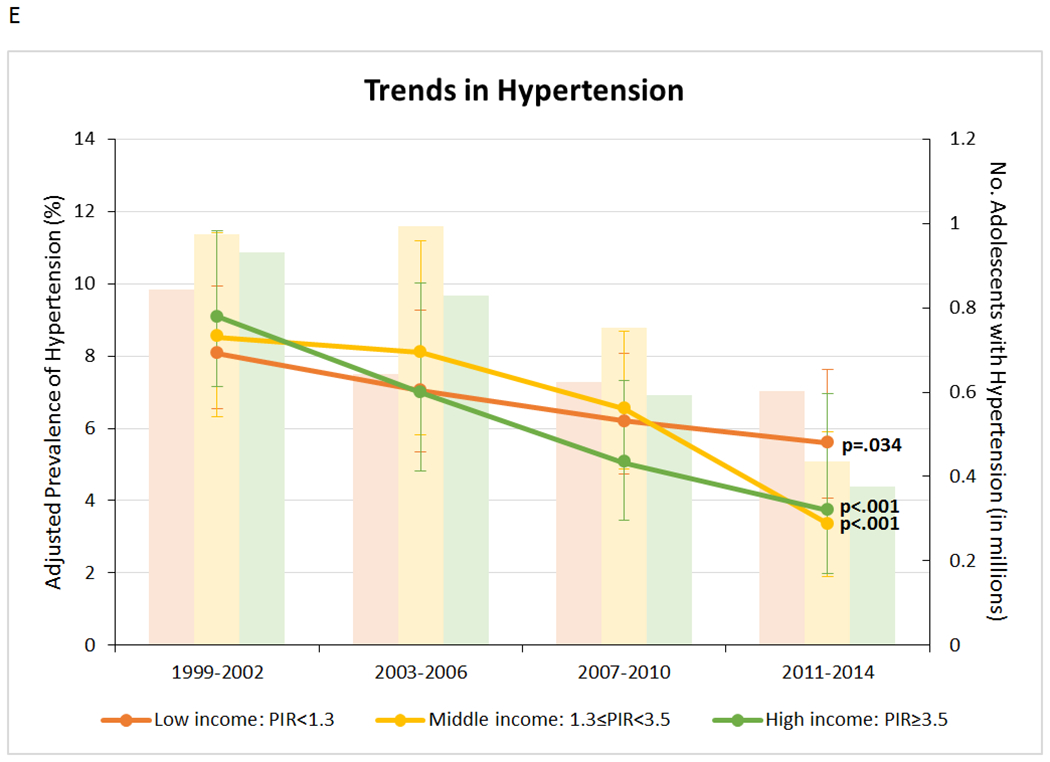
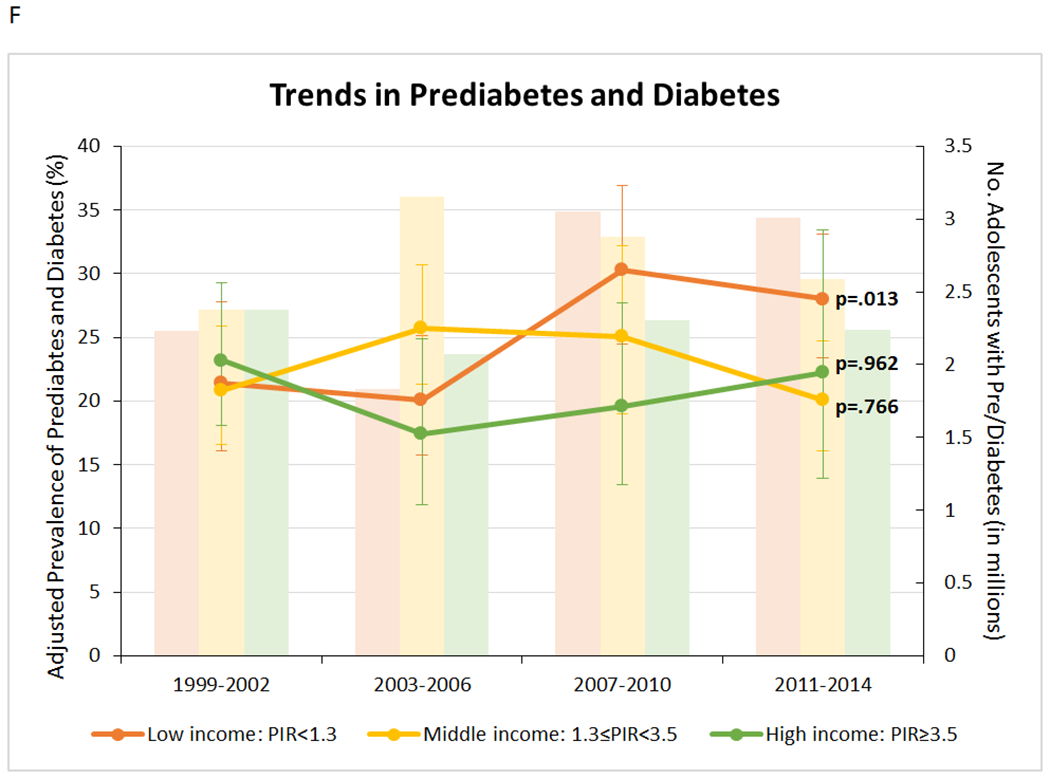
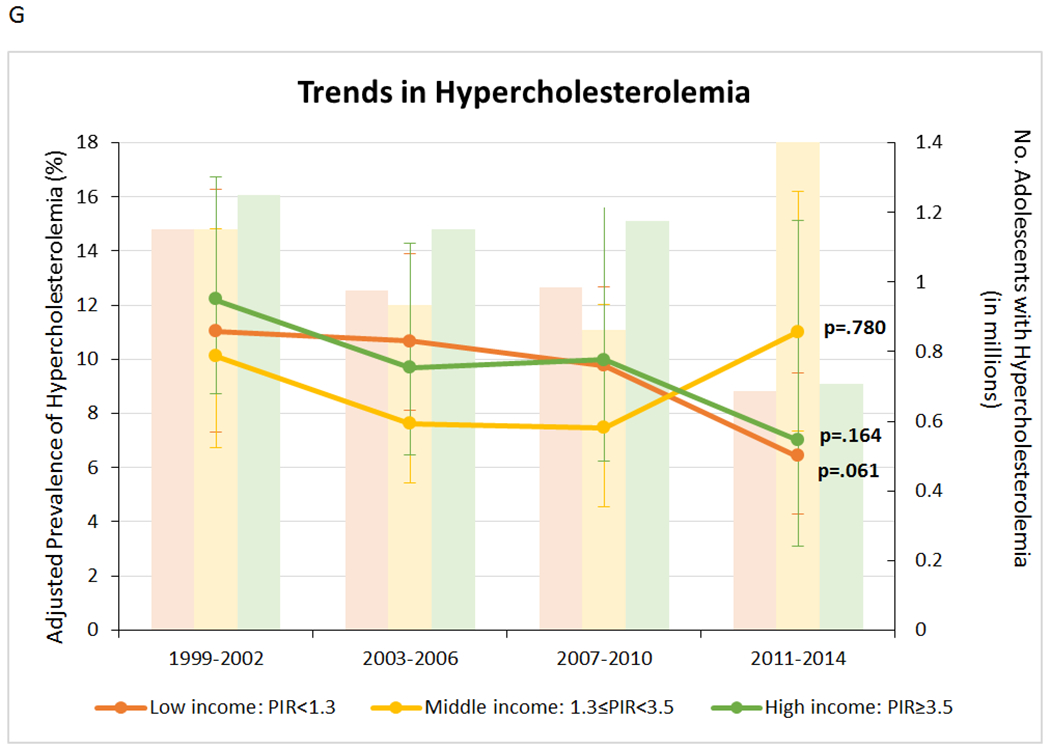
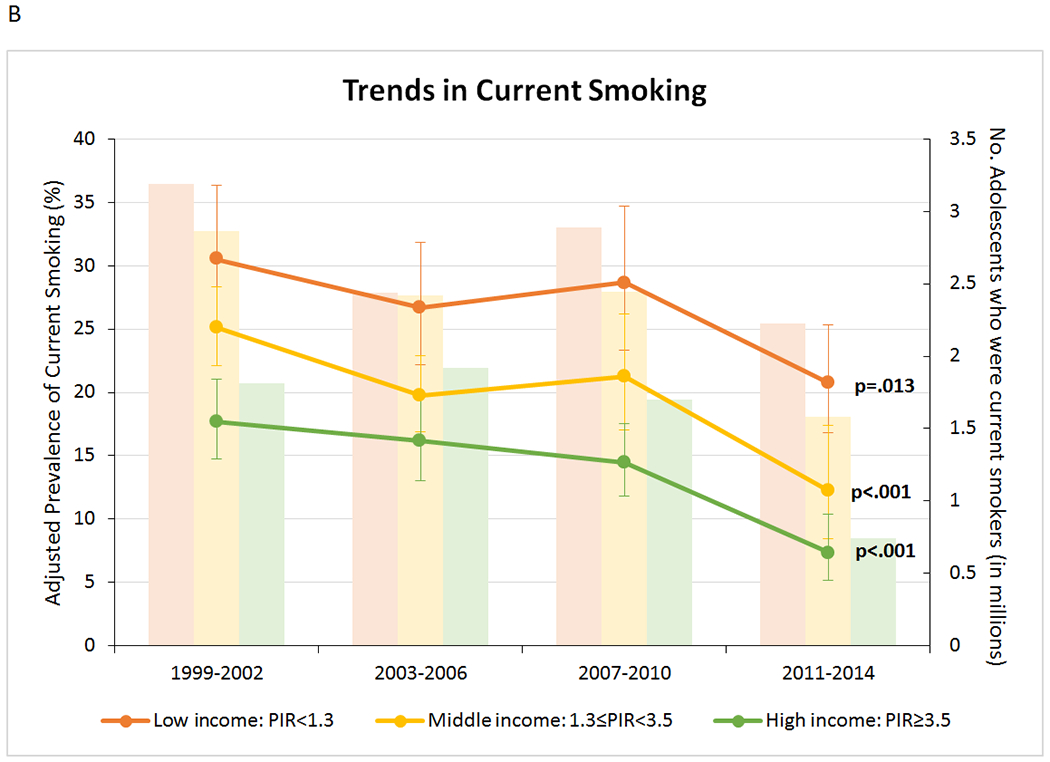
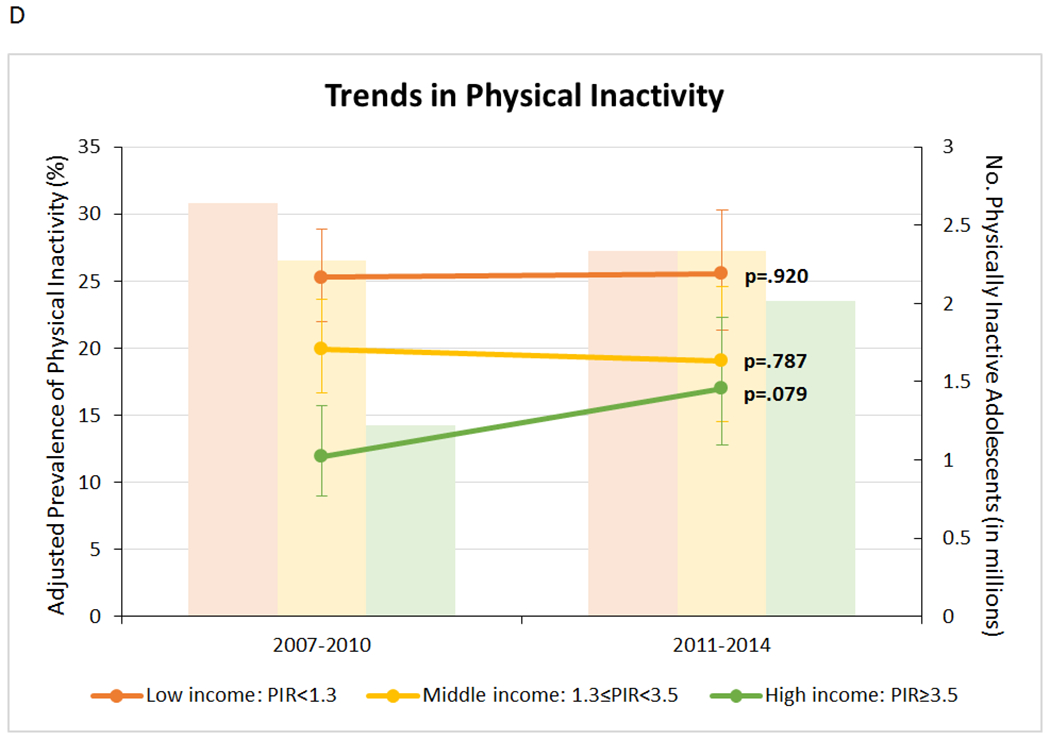
From 1999-2014, the prevalence of obesity increased (16.5% to 21.0%, p=0.001), but only among low and middle income adolescents, with significant disparities in prevalence by income (21.7% vs 14.6% among low vs high income adolescents, respectively, in 2011-2014). In addition, there were significant and persistent disparities in the prevalence of smoking (20.8% vs 7.4% among low vs high income adolescents, respectively, in 2011-2014), low quality diet (67.8% vs 49.0%), and physical inactivity (25.6% vs 17.0%). No significant disparities were observed in the prevalence of prediabetes/diabetes, hypertension, or hypercholesterolemia, although the prevalence of prediabetes/diabetes increased among low-income adolescents (21.4% to 28.0%, p=0.01). Overall, the prevalence of adolescents with two or more risk factors declined (48.3% to 37.1%, p<0.001), but this decline was only significant for high and middle income adolescents.
Conclusions:
Recent improvements in cardiovascular health have not been equally shared by US adolescents of varying socioeconomic status.
-
Subjects:
-
Keywords:
-
Source:Pediatrics. 142(5)
-
Pubmed ID:30333131
-
Pubmed Central ID:PMC8686166
-
Document Type:
-
Funding:
-
Place as Subject:
-
Volume:142
-
Issue:5
-
Collection(s):
-
Main Document Checksum:urn:sha256:0eaa3a3d4520019403876bcd180c3b9f4d263900059015796dc9f547f8d8c70f
-
Download URL:
-
File Type:
 [PDF
- 1.05 MB
]
[PDF
- 1.05 MB
]
Supporting Files


File Language:
English
ON THIS PAGE





CDC STACKS serves as an archival repository of CDC-published products including
scientific findings,
journal articles, guidelines, recommendations, or other public health information authored or
co-authored by CDC or funded partners.
As a repository, CDC STACKS retains documents in their original published format to ensure public access to scientific information.
As a repository, CDC STACKS retains documents in their original published format to ensure public access to scientific information.
You May Also Like
COLLECTION
CDC Public Access