


Proteomic analysis of primary human airway epithelial cells exposed to the respiratory toxicant diacetyl
Supporting Files

-
2 03 2017
-
File Language:
English
Details
-
Alternative Title:J Proteome Res
-
Personal Author:
-
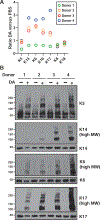
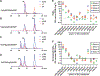
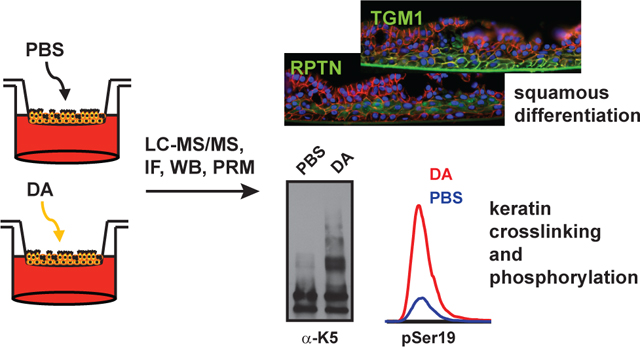
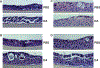
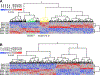
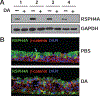
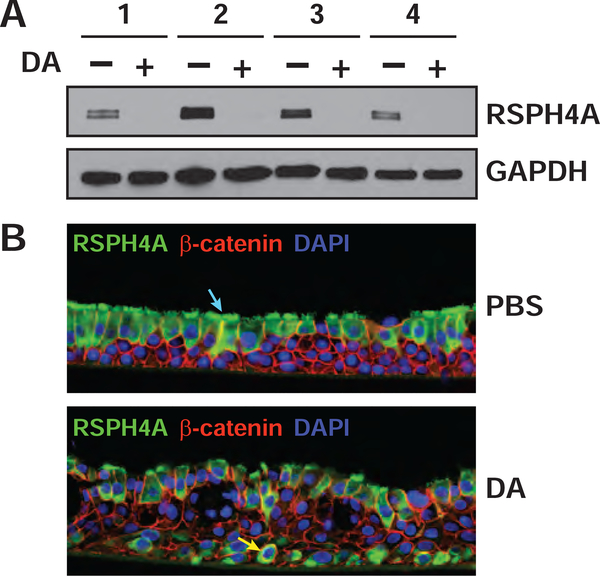
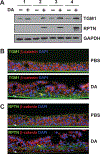
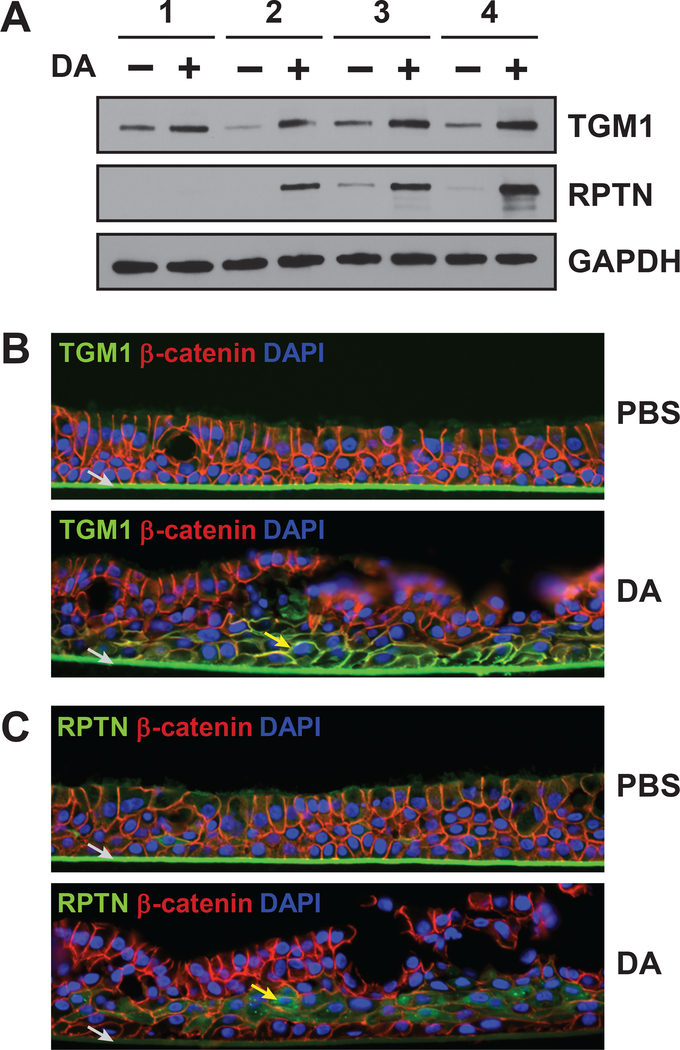
Description:Occupational exposures to the diketone flavoring agent, diacetyl, have been associated with bronchiolitis obliterans, a rare condition of airway fibrosis. Model studies in rodents have suggested that the airway epithelium is a major site of diacetyl toxicity, but the effects of diacetyl exposure upon the human airway epithelium are poorly characterized. Here we performed quantitative LC-MS/MS-based proteomics to study the effects of repeated diacetyl vapor exposures on 3D organotypic cultures of human primary tracheobronchial epithelial cells. Using a label-free approach, we quantified approximately 3400 proteins and 5700 phosphopeptides in cell lysates across four independent donors. Altered expression of proteins and phosphopeptides were suggestive of loss of cilia and increased squamous differentiation in diacetyl-exposed cells. These phenomena were confirmed by immunofluorescence staining of culture cross sections. Hyperphosphorylation and cross-linking of basal cell keratins were also observed in diacetyl-treated cells, and we used parallel reaction monitoring to confidently localize and quantify previously uncharacterized sites of phosphorylation in keratin 6. Collectively, these data identify numerous molecular changes in the epithelium that may be important to the pathogenesis of flavoring-induced bronchiolitis obliterans. More generally, this study highlights the utility of quantitative proteomics for the study of in vitro models of airway injury and disease.
-
Subjects:
-
Keywords:
-
Source:J Proteome Res. 16(2):538-549
-
Pubmed ID:27966365
-
Pubmed Central ID:PMC8630778
-
Document Type:
-
Funding:
-
Volume:16
-
Issue:2
-
Collection(s):
-
Main Document Checksum:urn:sha256:0b6cfd9141f25059258a7309a8ac22ea5ee7892c0c67f016ea4f201c5b670fff
-
Download URL:
-
File Type:
 [PDF
- 2.33 MB
]
[PDF
- 2.33 MB
]
Supporting Files


File Language:
English
ON THIS PAGE





CDC STACKS serves as an archival repository of CDC-published products including
scientific findings,
journal articles, guidelines, recommendations, or other public health information authored or
co-authored by CDC or funded partners.
As a repository, CDC STACKS retains documents in their original published format to ensure public access to scientific information.
As a repository, CDC STACKS retains documents in their original published format to ensure public access to scientific information.
You May Also Like
COLLECTION
CDC Public Access