


Trends in the number and characteristics of HIV preexposure prophylaxis providers in the United States, 2014–2019
Supporting Files

-
11 01 2021
-
File Language:
English
Details
-
Alternative Title:J Acquir Immune Defic Syndr
-
Personal Author:
-
Description:Background.
The number and characteristics of preexposure prophylaxis (PrEP) healthcare providers in the United States have not been reported.
Methods.
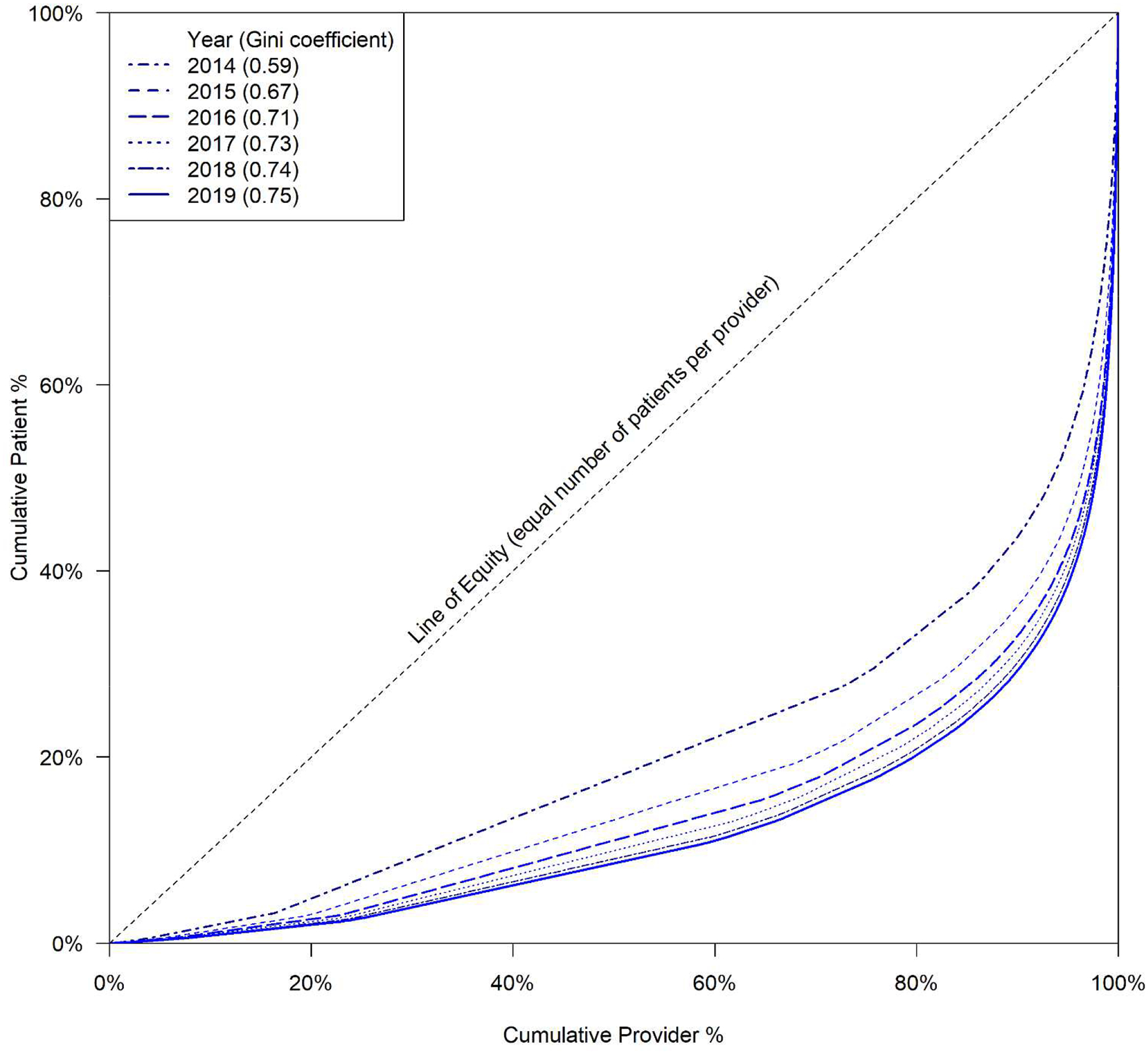
We analyzed a national pharmacy database that included >90% of all prescriptions dispensed by retail pharmacies and 60%–86% dispensed by mail order outlets. We estimated the number of PrEP providers by year, provider type, physician specialty, and geographic location. We also measured Gini coefficients for distribution of PrEP patients among providers.
Results.
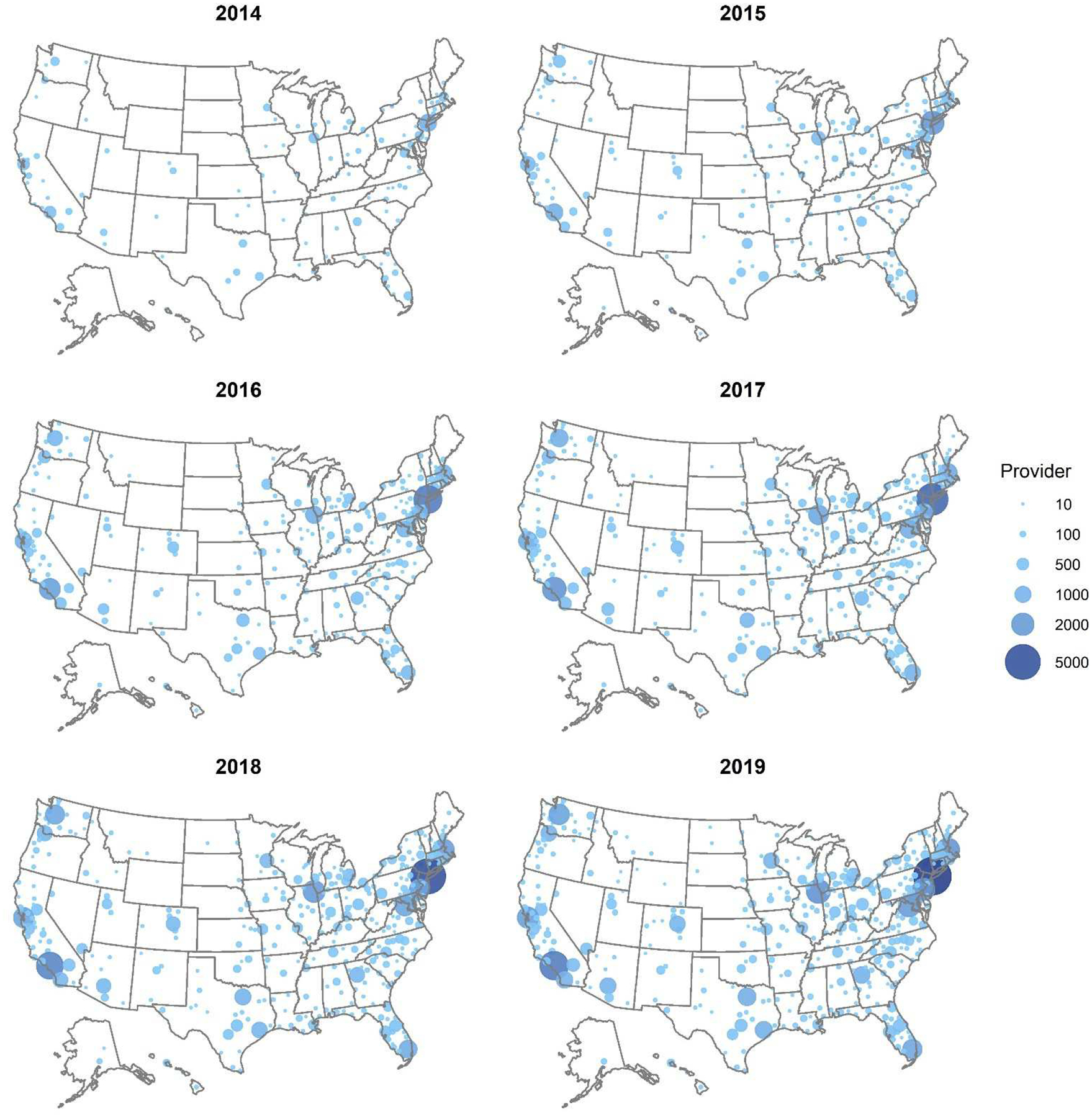
The number of PrEP providers increased from 9,621 in 2014 to 65,822 in 2019. In 2019, 68.1% of PrEP providers were physicians. The proportion of nurse practitioners or physician assistants increased from 18.0% in 2014 to 29.7% in 2019. Among all U.S. healthcare providers, those who prescribed PrEP increased from 0.7% in 2014 to 4.3% in 2019. Among all general practice/family medicine physicians, percentage of who prescribed PrEP increased from 1.8% in 2014 to 13.6% in 2019, and from 14.2% to 34.2% among infectious disease physicians. The ratio of PrEP providers to 100 persons with PrEP indications was lowest in the South with 4.4. The Gini coefficient for distribution of PrEP patients among providers was 0.75 in 2019, with 50% of the PrEP patients prescribed PrEP by 2.2% of PrEP providers.
Conclusions.
An increasing number of providers prescribed PrEP during 2014–2019. The South had the largest number of new HIV diagnoses and greatest need for HIV prevention but had less PrEP service capacity compared with other regions. Expanded access to PrEP services is needed in the United States.
-
Subjects:
-
Source:J Acquir Immune Defic Syndr. 88(3):282-289
-
Pubmed ID:34651603
-
Pubmed Central ID:PMC8568068
-
Document Type:
-
Funding:
-
Volume:88
-
Issue:3
-
Collection(s):
-
Main Document Checksum:urn:sha256:245ba22d4a0c8bb73b86ee4f5c5682ee5ea32e186f20d33c72add9a2d42939f9
-
Download URL:
-
File Type:
 [PDF
- 732.09 KB
]
[PDF
- 732.09 KB
]
Supporting Files


File Language:
English
ON THIS PAGE

CDC STACKS serves as an archival repository of CDC-published products including
scientific findings,
journal articles, guidelines, recommendations, or other public health information authored or
co-authored by CDC or funded partners.
As a repository, CDC STACKS retains documents in their original published format to ensure public access to scientific information.
As a repository, CDC STACKS retains documents in their original published format to ensure public access to scientific information.
You May Also Like
COLLECTION
CDC Public Access