


Barriers to the use of active surveillance for thyroid cancer: Results of a physician survey
Supporting Files

-
7 01 2022
-
File Language:
English
Details
-
Alternative Title:Ann Surg
-
Personal Author:
-
Description:Objective:
To determine physician-reported use of and barriers to active surveillance for thyroid cancer.
Summary Background Data:
It isn’t clear if active surveillance for thyroid cancer is widely used.
Methods:
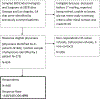
Surgeons and endocrinologists identified by thyroid cancer patients from the Surveillance, Epidemiology, and End Results (SEER) registries of Georgia and Los Angeles County were surveyed between 2018–2019. Multivariable weighted logistic regression analyses were conducted to determine physician acceptance and use of active surveillance.
Results:
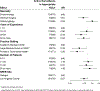
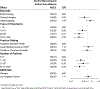
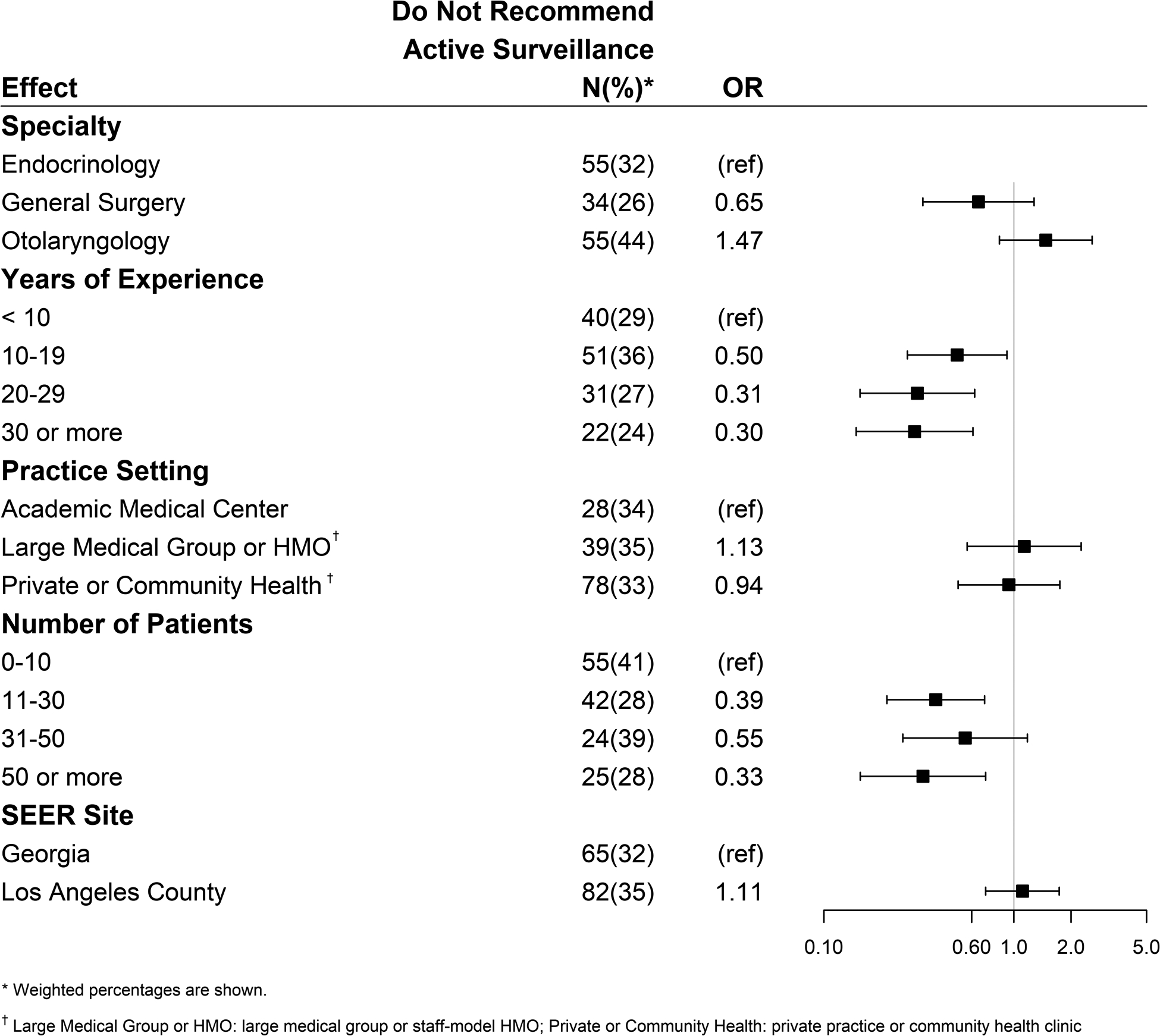
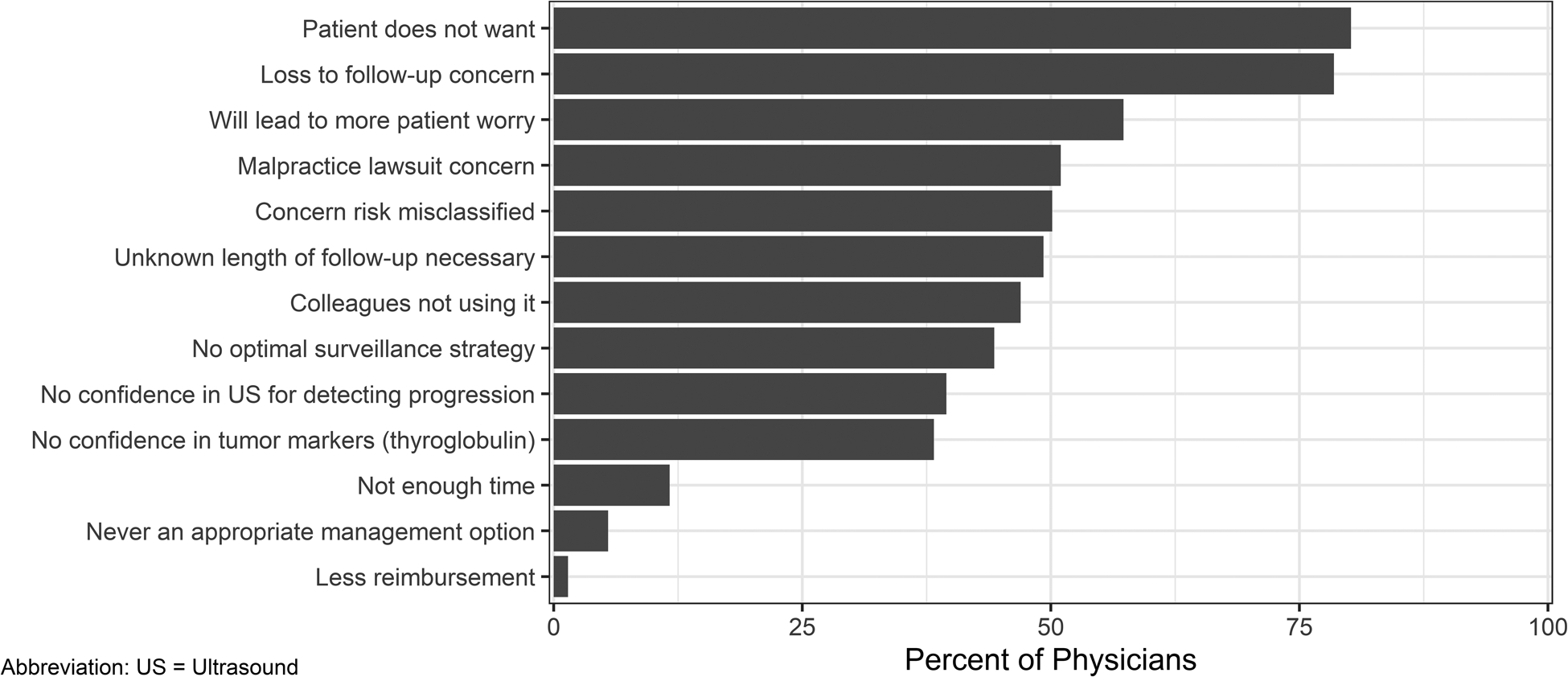
Of the 654 eligible physicians identified, 448 responded to the survey (69% response rate). The majority (76%) believed that active surveillance was an appropriate management option, but only 44% used it in their practice. Characteristics of physicians who stated that active surveillance was appropriate management, but did not report using it included more years in practice (reference group < 10 years in practice): 10–19 years - OR 0.50 [CI 0.28–0.92]; 20–29 years - OR 0.31 [CI 0.15–0.62]; ≥30 years - OR 0.30 [CI 0.15–0.61] and higher patient volume 11–30 patients per year (OR 0.39 [CI 0.21–0.70]) and >50 patients per year (OR 0.33 [CI 0.16–0.71]) compared to ≤ 10, with no significant difference in those seeing 31–50 patients. Physicians reported multiple barriers to implementing active surveillance including patient does not want (80.3%), loss to follow-up concern (78.4%), more patient worry (57.6%) and malpractice lawsuit concern (50.9%).
Conclusion and Relevance:
Despite most physicians considering active surveillance to be appropriate management, more than half are not using it. Addressing existing barriers is key to improving uptake.
-
Subjects:
-
Keywords:
-
Source:Ann Surg. 276(1):e40-e47
-
Pubmed ID:33074908
-
Pubmed Central ID:PMC8549720
-
Document Type:
-
Funding:HHSN261201000035C/CA/NCI NIH HHSUnited States/ ; U58 DP003875/DP/NCCDPHP CDC HHSUnited States/ ; R01 HS024512/HS/AHRQ HHSUnited States/ ; HHSN261201000035I/CA/NCI NIH HHSUnited States/ ; U58 DP003862/DP/NCCDPHP CDC HHSUnited States/ ; R01 CA201198/CA/NCI NIH HHSUnited States/ ; HHSN261201800003C/CA/NCI NIH HHSUnited States/
-
Volume:276
-
Issue:1
-
Collection(s):
-
Main Document Checksum:urn:sha-512:326ca3ac90568c91ab611091ef66f8dc13da6f0f9171af86934c251824295dd039079e9dac1cd706d73c203b54665143e7194d7ae18faa4b6313cbe51c7c03e8
-
Download URL:
-
File Type:
 [PDF
- 689.36 KB
]
[PDF
- 689.36 KB
]
Supporting Files


File Language:
English
ON THIS PAGE



CDC STACKS serves as an archival repository of CDC-published products including
scientific findings,
journal articles, guidelines, recommendations, or other public health information authored or
co-authored by CDC or funded partners.
As a repository, CDC STACKS retains documents in their original published format to ensure public access to scientific information.
As a repository, CDC STACKS retains documents in their original published format to ensure public access to scientific information.
You May Also Like
COLLECTION
CDC Public Access