


Trends in the use of active surveillance and treatments in Medicare beneficiaries diagnosed with localized prostate cancer
Supporting Files

-
7 2021
-
File Language:
English
Details
-
Alternative Title:Urol Oncol
-
Personal Author:
-
Description:Background:
The treatment for men diagnosed with localized prostate cancer has changed over time given the increased attention to the harms associated with over-diagnosis and the development of protocols for active surveillance.
Methods:
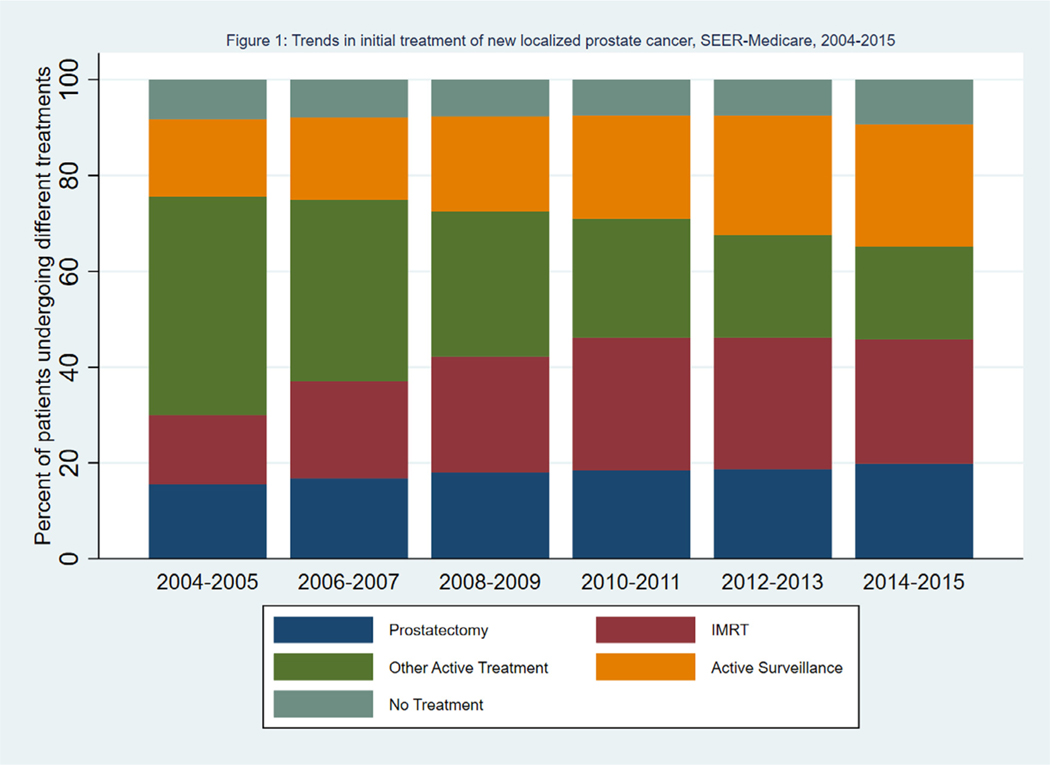
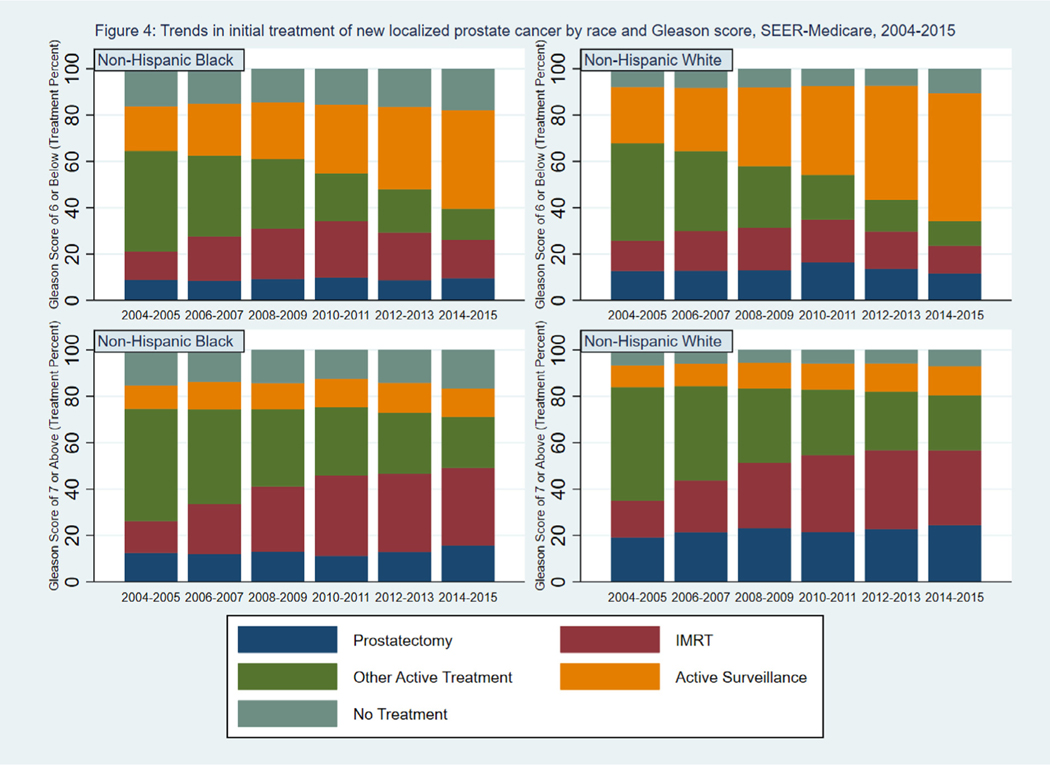
We examined trends in the treatment of men diagnosed with localized prostate cancer between 2004 and 2015, using the most recently available data from Surveillance, Epidemiology, and End Results Program (SEER)-Medicare. Patients were stratified by Gleason score, age, and race groups.
Results:
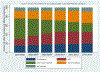
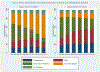
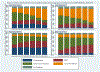
The use of active surveillance increased from 22% in 2004–2005 to 50% in 2014–2015 for patients with a Gleason score of 6 or below and increased from 9% in 2004–2005 to 13% in 2014–2015 for patients with a Gleason score of 7 or above. Patients with a Gleason score of 7 or above had increased use of intensity-modulated radiation therapy and prostatectomy, especially among patients aged 75 years and older. Among patients with a Gleason score of 6 or below non-Hispanic black men were less likely to undergo active surveillance than non-Hispanic white men.
Conclusions:
There has been a large increase in the use of active surveillance among men with a Gleason score of 6 or below. However, non-Hispanic black men with a Gleason score of 6 or below are less likely to receive active surveillance.
-
Subjects:
-
Keywords:
-
Source:Urol Oncol. 39(7):432.e1-432.e10
-
Pubmed ID:33308973
-
Pubmed Central ID:PMC8374746
-
Document Type:
-
Funding:
-
Volume:39
-
Issue:7
-
Collection(s):
-
Main Document Checksum:urn:sha-512:11aa51bcfd5df97c23a20521da274c6a0cfc4ef9d246d8e8b88befa9d61b9152c2fde26c79ba9f896ae8bf21fd88389b0b11d4924e4d3687ddcd65075f9edf81
-
Download URL:
-
File Type:
 [PDF
- 1.23 MB
]
[PDF
- 1.23 MB
]
Supporting Files


File Language:
English
ON THIS PAGE



CDC STACKS serves as an archival repository of CDC-published products including
scientific findings,
journal articles, guidelines, recommendations, or other public health information authored or
co-authored by CDC or funded partners.
As a repository, CDC STACKS retains documents in their original published format to ensure public access to scientific information.
As a repository, CDC STACKS retains documents in their original published format to ensure public access to scientific information.
You May Also Like
COLLECTION
CDC Public Access