



Overall survival with warfarin versus low-molecular-weight heparin in cancer-associated thrombosis
Supporting Files

-
11 2021 ; 11-2021
-
Available in CDC Stacks on November 01, 2022, 12:00 AM

File Language:
English
Details
-
Alternative Title:J Thromb Haemost
-
Personal Author:
-
Description:Background:
When compared with warfarin, low-molecular-weight heparin (LMWH) reduces the incidence of recurrent venous thromboembolism (VTE) in cancer. However, a survival benefit of LMWH over warfarin for the treatment of cancer-associated VTE has not been established.
Methods:
Using the Surveillance, Epidemiology and End Results (SEER) and Medicare linked database from 2007 through 2016, we identified Medicare beneficiaries (aged ≥66 years) who were: (1) diagnosed with primary gastric, colorectal, pancreatic, lung, ovarian, or brain cancer; (2) diagnosed with cancer-associated VTE; and (3) prescribed LMWH or warfarin within 30 days. The primary outcome was overall survival (OS). Patients were matched 1:1 using exact matching for cancer stage and propensity scored matching for cancer diagnosis, age, year of VTE, and time from cancer diagnosis to index VTE. Cox proportional-hazards regression was performed to estimate hazard ratios (HR) and 95% confidence intervals (95% CI).
Results:
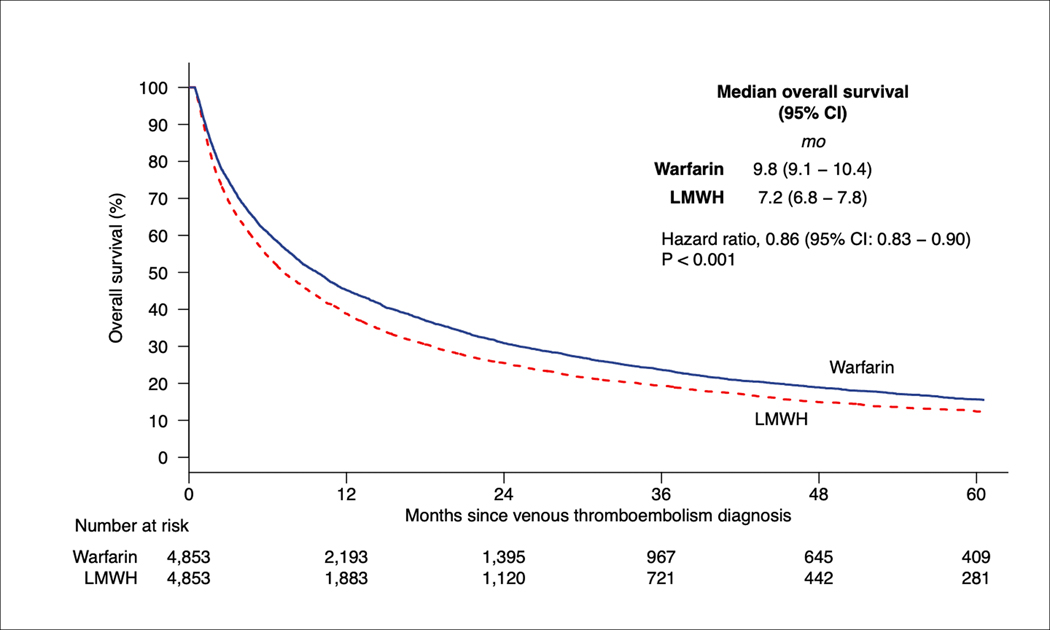
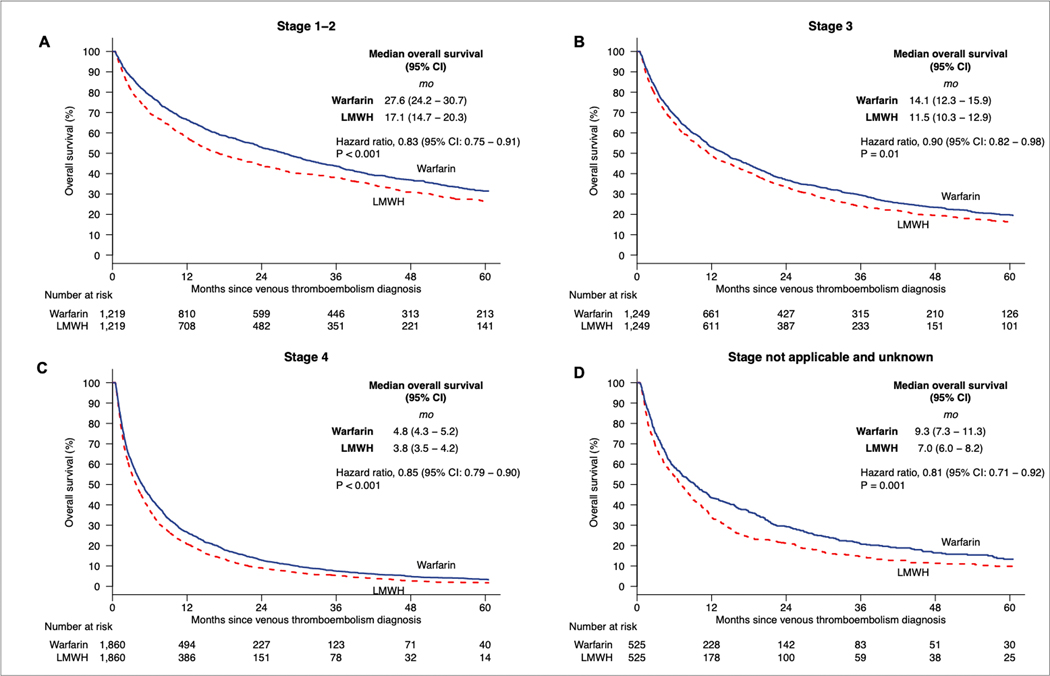
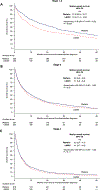
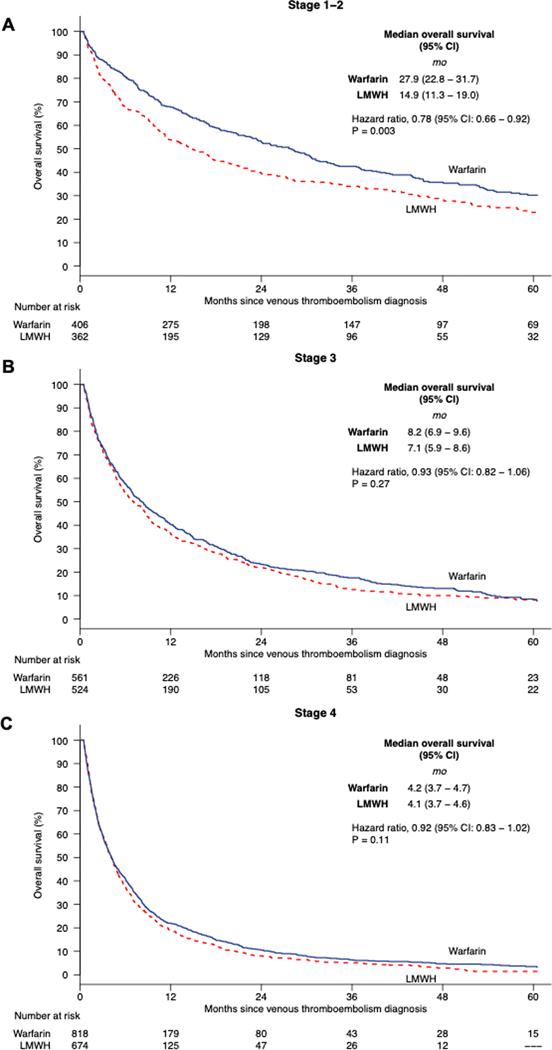
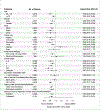
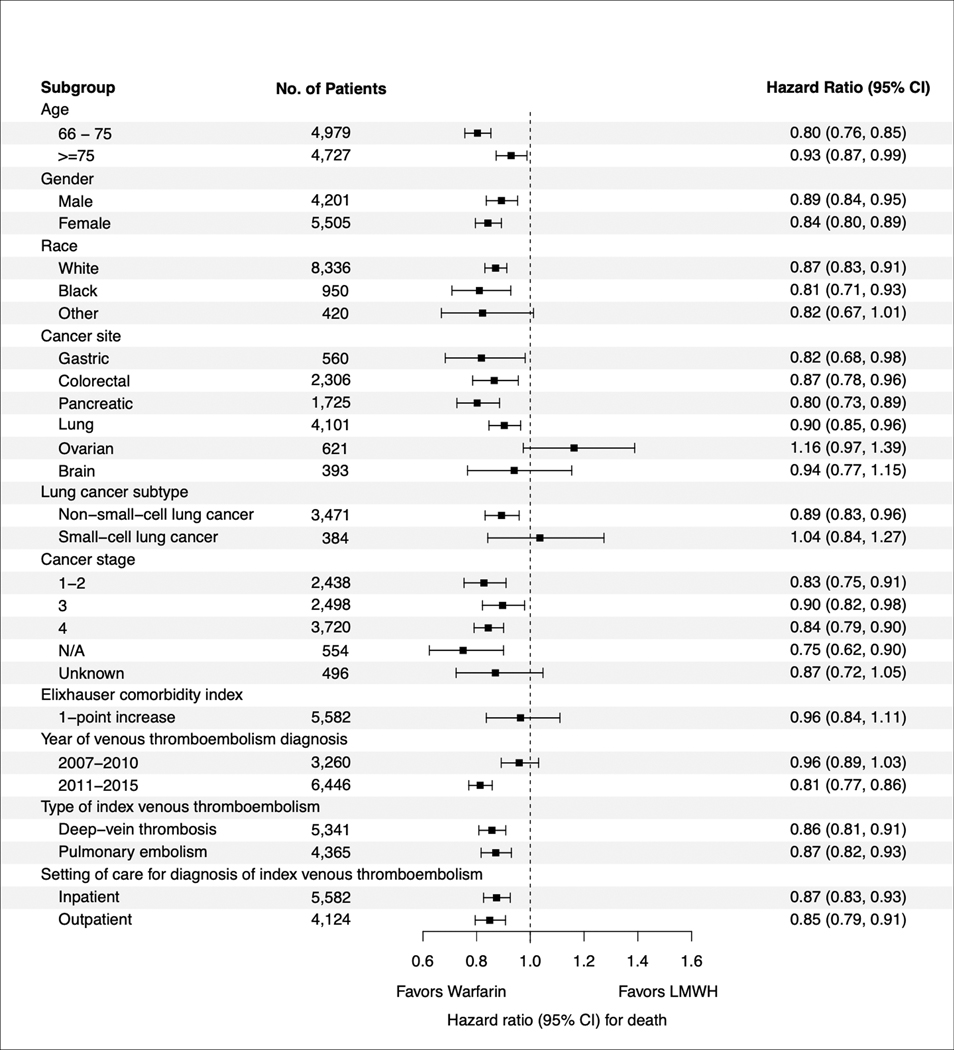
A total of 9,706 patients were included. Warfarin was associated with a significant improvement in OS compared to LMWH (median OS, 9.8 months 95%CI, 9.1 to 10.4 versus 7.2 months 95%CI, 6.8 to 7.8; HR, 0.86; 95% CI 0.83 to 0.90; P<0.001). The survival advantage was most pronounced in pancreatic (HR 0.82 95% CI, 0.74 to 0.90, P<0.001) and gastric cancers (HR 0.82 95% CI, 0.68 to 0.98, P=0.03). The observed differences in survival were consistent across subgroups including cancer stage, age, comorbidity burden, and year of VTE.
Conclusions:
In this population-based study, warfarin was associated with improved OS compared to LMWH for the treatment of cancer-associated VTE. -
Subjects:
-
Keywords:
-
Source:J Thromb Haemost. 19(11):2825-2834
-
Pubmed ID:34490999
-
Pubmed Central ID:PMC8530982
-
Document Type:
-
Funding:HHSN261201000140C/CA/NCI NIH HHSUnited States/ ; HHSN261201000035C/CA/NCI NIH HHSUnited States/ ; U01 HL143365/HL/NHLBI NIH HHSUnited States/ ; HHSN261201000035I/CA/NCI NIH HHSUnited States/ ; HHSN261201000034C/CA/NCI NIH HHSUnited States/ ; U58 DP003862/DP/NCCDPHP CDC HHSUnited States/ ; P30 CA006516/CA/NCI NIH HHSUnited States/ ; T32 HL007917/HL/NHLBI NIH HHSUnited States/
-
Volume:19
-
Issue:11
-
Download URL:
-
File Type:
 [PDF - 1.61 MB]
 -
Collection(s):
-
Main Document Checksum:urn:sha-512:dc51cb5570a46c194d5c27cc34cbc3ac77ceaa29f9021e0fbf66c85a564774662d57d030a3932d78664ac29536e38ecff5697e82c4bc5742b7c6896bdde54f9c
Supporting Files


File Language:
English
 Was this page helpful?
 Found an issue?

CDC STACKS serves as an archival repository of CDC-published products including
scientific findings, journal articles, guidelines, recommendations, or other public health information authored or
co-authored by CDC or funded partners.
As a repository, CDC STACKS retains documents in their original published format to ensure public access to scientific information.
As a repository, CDC STACKS retains documents in their original published format to ensure public access to scientific information.
You May Also Like
COLLECTION
CDC Public Access