


Mortality Trends from 2003 to 2009 among Adolescents and Young Adults in Rural Western Kenya Using a Health and Demographic Surveillance System
Supporting Files
Public Domain

-
Nov 05 2012
-
File Language:
English
Details
-
Alternative Title:PLoS One
-
Personal Author:
-
Description:Background
Targeted global efforts to improve survival of young adults need information on mortality trends; contributions from health and demographic surveillance system (HDSS) are required.
Methods and Findings
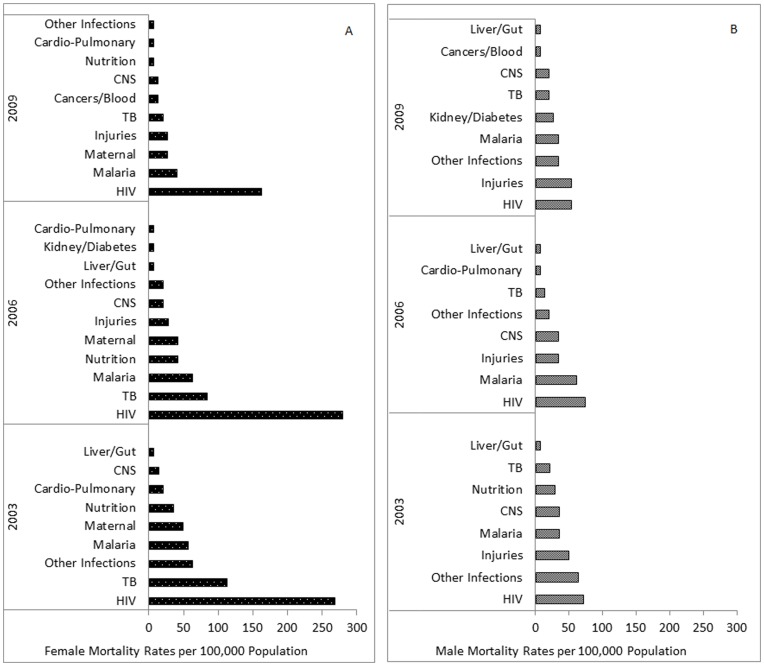
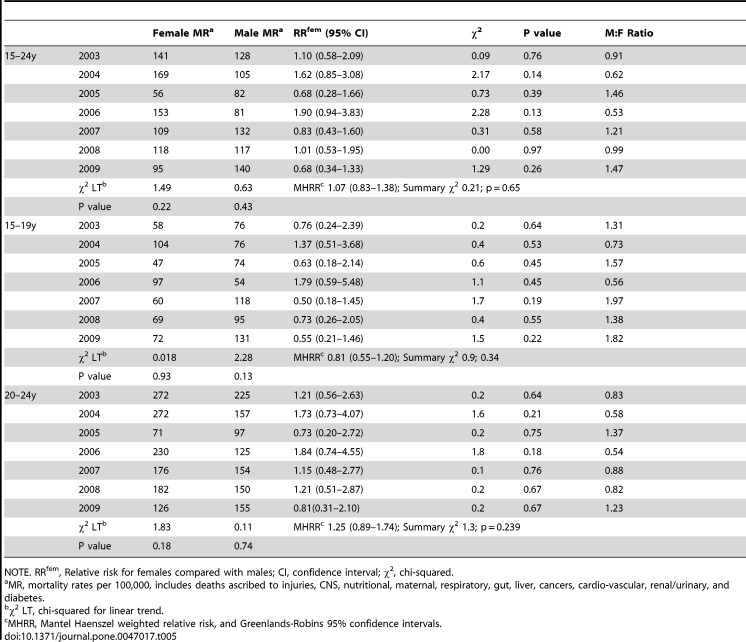
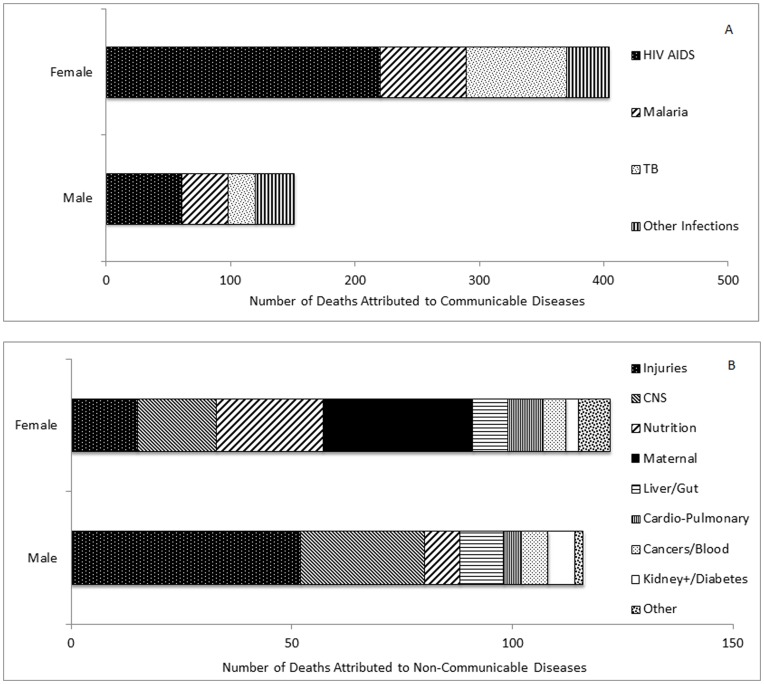
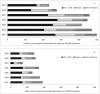
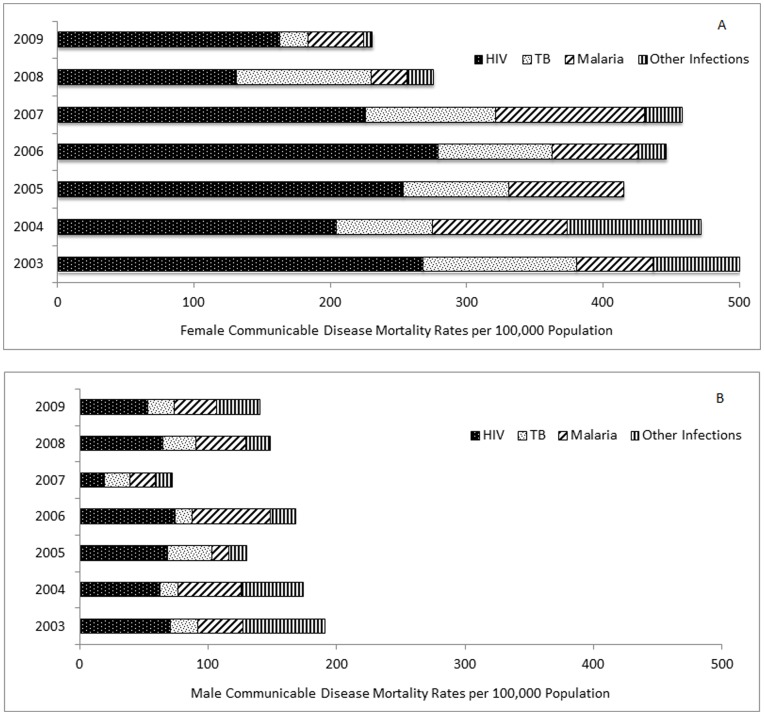
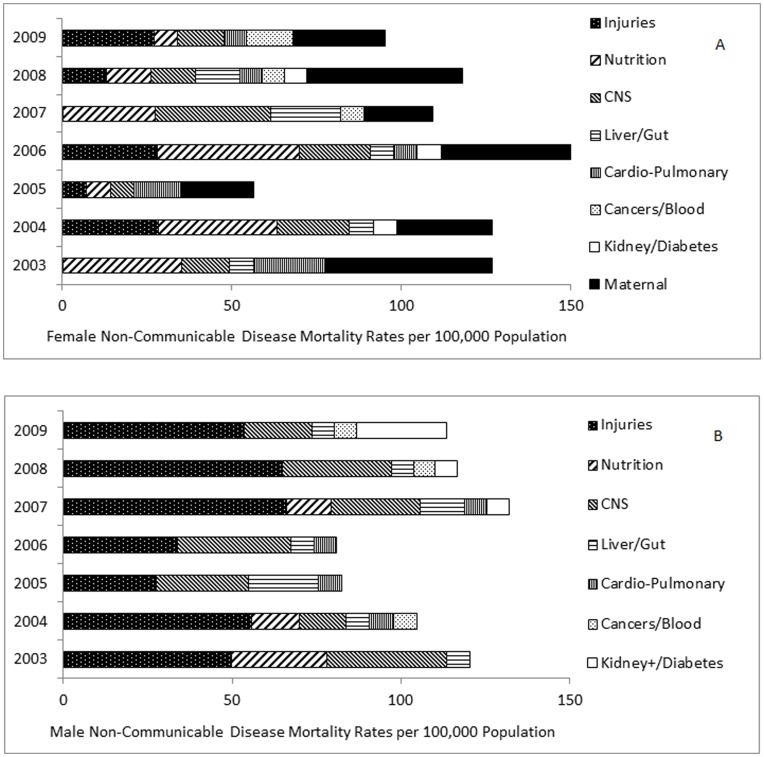
This study aimed to explore changing trends in deaths among adolescents (15–19 years) and young adults (20–24 years), using census and verbal autopsy data in rural western Kenya using a HDSS. Mid-year population estimates were used to generate all-cause mortality rates per 100,000 population by age and gender, by communicable (CD) and non-communicable disease (NCD) causes. Linear trends from 2003 to 2009 were examined. In 2003, all-cause mortality rates of adolescents and young adults were 403 and 1,613 per 100,000 population, respectively, among females; and 217 and 716 per 100,000, respectively, among males. CD mortality rates among females and males 15–24 years were 500 and 191 per 100,000 (relative risk [RR] 2.6; 95% confidence intervals [CI] 1.7–4.0; p<0.001). NCD mortality rates in same aged females and males were similar (141 and 128 per 100,000, respectively; p = 0.76). By 2009, young adult female all-cause mortality rates fell 53% (χ2 for linear trend 30.4; p<0.001) and 61.5% among adolescent females (χ2 for linear trend 11.9; p<0.001). No significant CD mortality reductions occurred among males or for NCD mortality in either gender. By 2009, all-cause, CD, and NCD mortality rates were not significantly different between males and females, and among males, injuries equalled HIV as the top cause of death.
Conclusions
This study found significant reductions in adolescent and young adult female mortality rates, evidencing the effects of targeted public health programmes, however, all-cause and CD mortality rates among females remain alarmingly high. These data underscore the need to strengthen programmes and target strategies to reach both males and females, and to promote NCD as well as CD initiatives to reduce the mortality burden amongst both gender.
-
Subjects:
-
Source:PLoS One. 2012; 7(11).
-
Document Type:
-
Place as Subject:
-
Volume:7
-
Issue:11
-
Collection(s):
-
Main Document Checksum:urn:sha256:95b340cde6e4afdd8907f97f0f95d811d6ec8da0ff184276c01e2b8b253a8756
-
Download URL:
-
File Type:
 [PDF
- 777.45 KB
]
[PDF
- 777.45 KB
]
Supporting Files


File Language:
English
ON THIS PAGE







CDC STACKS serves as an archival repository of CDC-published products including
scientific findings,
journal articles, guidelines, recommendations, or other public health information authored or
co-authored by CDC or funded partners.
As a repository, CDC STACKS retains documents in their original published format to ensure public access to scientific information.
As a repository, CDC STACKS retains documents in their original published format to ensure public access to scientific information.
You May Also Like
COLLECTION
CDC Public Access